Cambridge: my old stamping ground

Last month we were in Cambridge, my old stamping ground, for my godson’s wedding.  In the mid-70s I spent three years studying there at one of the University’s many colleges.  It was such an intense period, life lived at one hundred miles an hour. The University was an exotic, parallel universe, one that appeared totally divorced from the real world of normal people.

But they seem like another lifetime, my Cambridge days.  I rarely think about them now. 

Jesus College

Trudging the streets again, over 30 years since my last visit to the city, the memories come flooding back.  Here’s the room in which I lived in my freshman year, anxious, ill at ease, a stranger in a strange land. And there’s the stinking drainage channel into which I fell one drunken night, establishing a reputation with my peer group that I could never quite shake off. 

This here is the spot where Phil streaked one Rag Week, pedalling his bicycle furiously along King’s Parade, wearing nothing but a big grin and a policeman’s helmet, cheered on by dozens of adoring college cronies.  And over there is the library where I spent most of my days, studying feverishly in a desperate attempt to prove to myself that, despite my humble origins, I was as good as the rest of them.

Gonville and Caius College chapel

You see, although I made a few pals there, including one very close friend who would later be my best man when Mrs P and I were married, I never felt I truly belonged. I think psychologists today refer to this as “impostor syndrome” or “charlatan syndrome”. 

Cambridge University was – and is – one of the world’s outstanding places of higher education.  The standards are so high, the demands so rigorous. At the time it seemed impossible that I, just an ordinary working-class lad from West London, deserved my place.  Meanwhile the privately educated students from rich families who made up the bulk of my peer group seemed to sail through it, their boisterous belief in themselves undermining my own, oh-so-fragile, self-confidence.

Gargoyles, Gonville and Caius College

I know now that I got it all wrong. 

For the most part, the self-confidence of my fellow students was bluff.  Underneath it all most of them were unsure of themselves too, making it up as they went along, hoping they wouldn’t get found out, wouldn’t be revealed as frauds unworthy of their places at this great cathedral of learning. 

St John’s College

And my doubts were, in any case, unfounded.  By the time I graduated it was plain that I was clever enough.  While not quite the sharpest spine on the Cambridge University hedgehog, neither was I a dullard.  Without doubt I deserved to be there. I just wish I’d known it when I first arrived, instead of beating myself up every day.

My three years at Cambridge University were an extraordinary period in an otherwise ordinary life.  Visiting the place again has awakened painful memories, stirred some unwelcome thoughts of what was and what might have been. 

Bridge of Sighs, St John’s College

But time has moved on and so, thankfully, have I.

Once, when dreams floated like butterflies on the breeze and stardust lay thick upon the ground, a sweet, sensitive and naïve lad who shared my name and birthday went to Cambridge University to study.  He stayed three years, got educated a bit, got drunk a lot, got lost for a while, then found himself again. 

That lad’s dead now, and I should let him rest in peace.

I’m pleased I went back to visit Cambridge, my old stamping ground.  I won’t ever go back again.

_____ _____ _____ _____ _____

Postscript, March 2024 I’m currently reading “H is for Hawk” by Helen Macdonald. Helen is an English writer and naturalist, and an affiliated research scholar at Cambridge University. In the book, which won the Costa Book of the Year award in 2014, she writes about training a goshawk while struggling with grief following the death of her father. On page 128 of the paperback version she says this of her time at Cambridge: “How beautiful it is here, I think, and how supremely unlikely it is that I ever got to be here at all, a state-school kid born to parents who’d never gone to university, to whom Cambridge was the mysterious haunt of toffs and spies.” I get it Helen, I really do.

Cambridge through Chinese eyes

My last post bemoaned the hordes of tourists who clogged the narrow streets of Cambridge’s historic centre during our visit a few weeks ago.  Most of them appeared to hail from China, and as they came in groups of up to 50 they were impossible to miss or ignore. The days of Japanese mass tourism may be over, but in China the tour companies have found a worthy Far-Eastern successor.

Kings College Chapel: look carefully and you will see at least three tour groups

The new-found wealth of the People’s Republic of China has changed the face of international tourism.  We witnessed this first-hand during our trips to Tasmania (2016) and the USA’s Yellowstone National Park (2018)

In both places the bus-loads of phone-wielding, selfie-snapping Chinese tour groups were the dominant feature in the tourist landscape.  It was therefore no surprise to see so many Chinese folk in Cambridge, which is, of course, one of the UK’s major tourist destinations.

Punting on the River Cam

What was a surprise was to learn that there is another reason why the Chinese flock there in such large numbers.  In November 1928 a Chinese poet who had previously studied at Kings College, Xú Zhìmó, made a return visit to Cambridge and was moved to capture the moment in verse.  Xú is considered one of the most important modern Chinese poets, and Saying Goodbye to Cambridge Again is his most popular poem.

Xú died in controversial circumstances in a plane crash in 1931.  In 2018 he was commemorated through the creation, in the grounds of Kings College, Cambridge, of the China-UK Friendship Garden, also known as the Xú Zhìmó Garden.  Four lines of his poem are inscribed on a rock in the Friendship Garden, close to the banks of the River Cam. 

File:Kings College Xu Zhimo memorial.jpg

Photo credit: Cmglee [CC BY-SA 3.0 (https://creativecommons.org/licenses/by-sa/3.0)%5D

Xú’s poem, and the Garden commemorating the poet and his most famous work, appear to be a contributory factor in attracting Chinese tourists to Cambridge.

The translation (below) is sourced from the East Asia Student website.

Saying Goodbye to Cambridge Again
by
Xú Zhìmó

 
Lightly I leave,
as lightly I came;
I lightly wave goodbye,
to the sunlit clouds in the western sky.
 
The golden willows of that riverside,
are brides in the setting sun;
their glimmering reflections in the water,
ripple in the depth of my heart.
 
The waterlilies in the soft mud,
sway splendidly under the water.
In the gentle waves of the Cam,
I would be a water plant!
 
That pool in the shade of elm trees,
is not springwater, but a heavenly rainbow;
crumbling amongst the floating grasses,
the settling rainbow seems like a dream.
 
Looking for dreams? Push a punt
to where the grass is greener still upstream;
a boat laden with starlight,

singing freely in the glorious light of stars.
 
But I cannot sing freely,
silence is the music of my departure,
even the summer insects are quiet for me,
tonight's Cambridge is silent!
 
Quietly I leave,
as quietly I came;
I cast my sleeves a little
not taking even a strand of cloud away
.

What a beautiful, evocative poem.  But the tranquillity it conveys is a million miles away from the febrile tourist trap we visited recently. 

I wonder what Xú Zhìmó would make of Cambridge, August 2019?

Cambridge creaking at the seams

Last month we spent a few days in Cambridge.  So, it seems, did everyone else. Back in the day I was a student at Cambridge University for three years but I was never there in August, the height of the tourist season.  And, of course, tourism – both home-grown and international – has expanded massively in the 42 years since I graduated. I was, therefore, totally unprepared for the crowds we encountered during our visit.

Gonville and Caius College

Cambridge has a lot to offer the tourist.  Here’s what Lonely Planet has to say about its attractions:

Abounding with exquisite architecture, exuding history and tradition, and renowned for its quirky rituals, Cambridge is a university town extraordinaire.  The tightly packed core of ancient colleges, the picturesque riverside ‘Backs’ (college gardens) and the leafy green meadows surrounding the city give it a more tranquil appeal than its historic rival Oxford … The buildings here seem unchanged for centuries, and it’s possible to wander around the college buildings and experience them as countless prime ministers, poets, writers and scientists have done.

Sounds idyllic, doesn’t it?

I’ve got a lot of time for Lonely Planet.  Their guidebooks are invariably well-written, and often encourage the more intrepid visitor to get off the beaten track and walk roads less travelled, which is the best way to get under the skin of a country or a city.  But, based on what we experienced a few weeks ago, the words “tranquil appeal” seem sadly out of place in any description of Cambridge in August 2019.

Peterhouse College

We had a lot to pack into our visit, and so were out and about by 9am.  At first all seemed well, the streets lively but not uncomfortably busy.  Then, around 10am, the coach parties began to arrive. 

Long crocodiles of visitors, up to 50 in a single group, descended on the historic city centre from all directions, following obediently behind their flag-waving guides.  Soon the narrow medieval streets were crazily crowded, visitors jostling one another to get a view of – or even better, a selfie in front of – one of the city’s architectural gems. 

St John’s College, and bicycles galore

“Tranquil appeal?”  I don’t think so!

Lonely Planet is also unrealistic in suggesting that the average tourist can “wander around the college buildings.”  Many of the colleges are doing whatever they can to keep the hordes at bay, barring their doors and placing stern messages outside warning the masses that THIS COLLEGE IS CLOSED TO VISITORS. 

Others, Kings for example, take a different view and charge a pretty penny for admission.  Of course, everyone wants to see Kings College Chapel up close and personal, so the college bursar must be raking it in.

Interior of Kings College Chapel

I will confess that these attempts to deny or charge for admission don’t worry me personally.  As a graduate of the university I can get in pretty much anywhere, and without spending a dime, so long as I flash my alumni card and behave myself. 

But I’ve a lot of sympathy for the serious tourist, who maybe has travelled a long way and spent a small fortune to visit Cambridge, only to find that lots of the places he wants to see won’t let him in or will only do so in return for a fistful of dollars.

Kings College Chapel, viewed from “the Backs”

Tourism is hugely controversial in Cambridge.  In 2017 over eight million tourist visits were recorded, in a city of just 146,000 people.  The city is creaking at the seams. Tourists keep some shopkeepers afloat with their purchases, but other business owners complain that these are the “wrong tourists,” visitors who just don’t spend enough or buy the right stuff. 

For Cambridge residents going about their normal daily business the crowded streets must be distressing.  But tourism reportedly accounts for 22% of jobs in the local economy, and only the most hard-line critics would seriously consider killing the goose that lays the golden egg.

The Mathematical Bridge, Queen’s College

Mass tourism is a mind-bending conundrum, but not one that is unique to Cambridge.

In another blog I wrote at length about the impact of tourist numbers on the wildlife of Yellowstone National Park in the USA.  There, as in Cambridge, the scale of tourism is in danger of destroying the very thing that tourists want to see.

As an habitual tourist I was, and am, part of the problem.  I cherish the prospect of being a tourist again, in Cambridge, in Yellowstone, or elsewhere, but what will be the cost to the places I want to visit and those who live in them? 

I don’t have the answer, but it seems plain to me that things can’t go on as they are.

*

In case you’re wondering why, despite my protestations about the Cambridge crowds, there are so few people in the photos that illustrate this post the answer is simple: Mrs P hates anyone getting between her camera lens and the focus of her interest. She’s been known to wait a long, long time for a clear shot, and when she can’t get one she gets very cross indeed. You have been warned!

The best man I ever knew

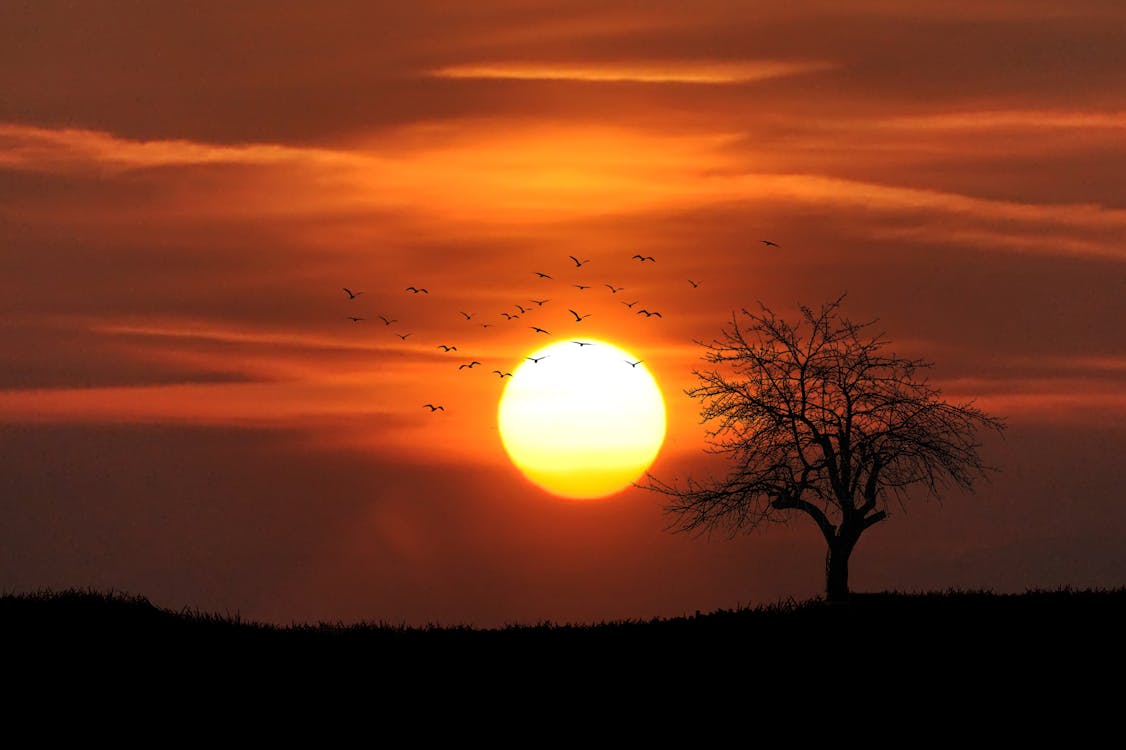
Flock of Birds Flying over Bare Tree Overlooking Sunset

PHOTO CREDIT: Flock of Birds Flying over Bare Tree Overlooking Sunset. From Pixabay via Pexels

The news came in a short, handwritten letter from his mother: Pete and his family had been involved in a terrible accident.  Their car had caught fire following a crash in London; his wife and baby son had died at the scene.  He could have got clear with only minor injuries, but went back into the inferno in a desperate but ultimately futile attempt to save Livy and Simon. 

In a critical condition, Pete was admitted to a hospital burns unit where he clung to life for a few weeks.  But in the end the fight was just too much for him, or maybe he knew somehow that Livy and Simon were gone, and that life without them would be pointless? 

When I learned that he was dead I felt that part of me had also died.  Pete was more alive than any person I’d ever met, and it seemed impossible that he’d passed over.

We’d met in our first week at secondary school, and we were like chalk and cheese.  Our backgrounds were so different, his parents comfortably middle class, mine ordinary working class.  He was a confident, outgoing Christian, I an awkward, reserved atheist.  His politics were naturally Tory, mine instinctively socialist.  His brain was wired for maths and science, while I favoured the arts and humanities.  He burned the candle at both ends, I saved my candles in case the lights went out one day.

It seemed inconceivable that two boys who were so different could become friends, and yet within days we were inseparable.  Was it because of our differences that we became so close?  Did each of us offer the other a new perspective on life, a chance to broaden our horizons and to gently challenge our own values and beliefs, but without undermining our own self-esteem and sense of self-worth?

Thomas J Watson Jr, an American businessman, is famously quoted as saying this about friendship:

‘Don’t make friends who are comfortable to be with. Make friends who will force you to lever yourself up.’

I can relate to this.  I know I am a more complete person for having known Pete, despite disagreeing with him on lots of things.  I like to think that he, were he still alive, would say the same about me. 

But I didn’t become his friend to ‘lever myself up,’ which suggests a degree of calculation that is totally alien to me.  I became his friend because despite – or perhaps because of – our many differences, he intrigued me, and the more I got to know him the more I realised that what separated us was less important than what we shared: kindness, generosity, good humour, thoughtfulness, loyalty and mutual support. 

The accident happened thirty years ago this summer, when Pete was just 33 years old.  His full name was Charles Peter Johnston Morris, and he was the best man I ever knew.

A different fly

So, at last, after what seems like months of posturing, we have a new Prime Minister.  Politicians, don’t you just love ‘em?  During the last decade of my career I had the dubious pleasure of spending a lot of time with politicians.  This was in local government, so their capacity to wreak mayhem and misery was geographically constrained, but it didn’t stop many of them having a damn good try.

Flies Reproducing Life

PHOTO CREDIT: “Flies Reproducing Life” by JC-canon is licensed under CC BY-NC-ND 2.0

To be fair, some of the politicians I had dealings with were capable, decent, well-meaning human beings, regardless of party affiliation.  The majority were, however, cut from an altogether different cloth, incompetent, totally lacking in self-awareness and less trustworthy than an alligator with terminal toothache.

Douglas Adams, one of the funniest British writers of the late 20th century, had the measure of politicians.  He wrote, in the Restaurant at the End of the Universe:

“The major problem – one of the major problems, for there are several – one of the many major problems with governing people is that of whom you get to do it; or rather of who manages to get people to let them do it to them.  To summarize: it is a well-known fact that those people who must want to rule people are, ipso facto, those least suited to do it.  To summarize the summary: anyone who is capable of getting themselves made President should on no account be allowed to do the job.”

Mark Twain’s masterpiece of pithy observation, written a century earlier, shows that – unsurprisingly, I suppose – the marriage of naked ambition and gross ineptitude is not a modern phenomenon.  He wrote:

“Reader, suppose you were an idiot. And suppose you were a member of Congress. But I repeat myself.”

In their separate ways, Adams and Twain highlight democracy’s greatest flaw: the people who get themselves elected to serve us.  But to put it another way, aren’t we the fatal weakness?  Us, the electorate, we gullible souls who put an ‘X’ next to the name of a person we’ve almost certainly never met and assume that he or she will do right by us?  We, who rarely ask the right questions or listen intelligently to the answers when we do.

I’ll leave the final words on this subject to Derbyshire folksinger / songwriter Lester Simpson.  The title of his song We Got Fooled Again is a clue to Simpson’s take on the political process, but if there’s any doubt the first two lines tell us all we need to know:

“In the name of progress we believe the lies
And get the same old shite, just different flies”

Couldn’t have put it better myself.