Spending time with the Gruffalo and his pals

A few days ago we took an evening trip to Twycross Zoo to spend a bit of time with the Gruffalo and his pals. The Zoo is highly regarded for its work on the protection and breeding of endangered species, particularly primates, but the Gruffalo is a recent addition to their collection! He will be staying at Twycross for just a few weeks, and so was attracting a lot of interest.

The Gruffalo eyes up the mouse, probably thinking “mmm, looks tasty!”

If you’re not familiar with it, The Gruffalo is a world famous children’s picture book written by English author Julia Donaldson and illustrated by German artist Axel Scheffler. First published in 1999, the book has been translated into over 100 languages and has sold over 13.5 million copies worldwide. The story was later made into a 30-minute animated film and has been adapted into several stage productions. A follow-up book, The Gruffalo’s Child, was published in 2004 and has also proved to be hugely popular. This much-admired youngster also made a guest appearance at Twycross, alongside his even more famous father.

The mouse fights for his life by telling the owl about his fierce protector, the Gruffalo.

The plot of The Gruffalo is simple: a mouse takes a walk through the woods in search of food, where he meets three animals – an owl, a fox and a snake – each of whom would like to eat him for dinner. In order to escape the mouse invents a scary story, telling each predator that he is on his way to meet the fierce and fearsome Gruffalo, who will be very very displeased if anything bad happens to him. And so the mouse is released unharmed, but is then shocked to meet a real, live Gruffalo who also fancies snacking on mouse.

Can the little mouse survive the terrible tusks, claws, teeth, and jaws of the horrid Gruffalo? To find out what happens next, you’ll just have to track down a copy of the book! Maybe your local library will have one?

North American Wilds zone: salmon leap, while a beaver watches

It’s no surprise that the Gruffalo has become an iconic character in children’s literature, and so it is also no surprise that Twycross Zoo chose him to lead their special Lanterns of the Wild Christmas event. The mile (1.6km) long trail was lit by more than 2,000 vibrantly coloured lanterns, all carefully designed and deployed to dazzle the eyes and stimulate the imagination. But it wasn’t all about the Gruffalo. The trail also featured lantern dioramas of 10 environmental eco-zones, including lush rainforests, icy tundra and deep oceans.

North American Wilds zone: the carved presidents of Mount Rushmore watch over wildlife typical of the American Plains, including bison and elk, while a wolf howls from the mountain top.

Each eco-zone starred some of the wonderful wildlife found in that part of the world, making a clear link with the zoo’s primary mission. As well as being bright and cheerful, some of the dioramas were highly imaginative, such as the beaver dam in the North American Wilds zone, a dam over which salmon were attempting to leap while baffled beavers looked on. A second diorama of the North American Wilds featured the iconic carved heads of former US presidents at Mount Rushmore, complete with local wildlife including elk, bison and a wolf.

Tigers are the stars of the Asian Jungle zone

A third diorama that particularly caught my eye was the Asian Jungle eco-zone, in which majestic tigers were the stars of the show. Many years ago Mrs P and I were fortunate to visit India to watch wild tigers, and when I saw the lanterns at Twycross the memories came flooding back.

We were not alone as we walked the lantern trail. Visitors were there in huge numbers, all them seeking a bit of colourful pre-Christmas entertainment. Hopefully the event raised lots of additional, much needed income for Twycross, and maybe also raised its profile amongst people who previously knew little about the Zoo’s efforts to support wildlife conservation across the globe.

Bodies like Twycross Zoo play a vital role in species conservation, and in educating the public on conservation issues. Well done to the management for coming up with this seasonal initiative to help get their message across; if the numbers and reaction of people on the night is any guide, Lanterns of the Wild was a big success. The word on the streets is that there will be another lantern trail next Christmas, although probably without the Gruffalo. If there is, Mrs P and I will be keen to support it, Gruffalo or no Gruffalo.

Who’s a big boy then? – Rocco the rhino spotted at last!

I don’t normally post to my blog on Mondays, but as today (22 September) is World Rhino Day I thought I’d bring forward my deadline to share an update on Yorkshire Wildlife Park’s “teenage” superstar…

When a baby Eastern Black Rhinoceros was born at Yorkshire Wildlife Park in January 2024, the management knew they were onto a winner. Great news for species conservation, obviously, but great news too for visitor numbers. I mean, who doesn’t love a baby rhino? The marketing department went into overdrive, and Rocco the Rhino – named after a public vote – quickly became the Park’s pin-up superstar. The only problem was that, for us at least, Rocco proved to be disappointingly elusive.

Mrs P and I visited the Park several times during the 18 months after the birth, and top of our wish list was always a sighting of Rocco, who was – to judge from the publicity photos – the epitome of armoured cuteness. But we were always disappointed. Instead of roaming their enormous paddock. Rocco and his mum and dad were holed up in their indoor quarters and therefore visible to visitors only via a grainy CCTV system. When we asked about the best time to see him, we were told that the doors to the rhinos’ outside world opened at 11:30am, but it was up to Rocco and his parents to decide whether or not they wanted to come out.

We were also advised that sometimes the doors would remain closed beyond the 11:30am deadline to give Rocco’s mum Najuma a much needed rest. Rocco, we were told, was an energetic and demanding calf who was causing his poor mother a good deal of stress, and the keepers felt it was important to consider her welfare as well as the needs of the infant rhino. Fair enough, I suppose, but it was unfortunate that Rocco was never out and about when we were visiting the Park.

But at last, just a couple of weeks ago, we finally caught up with Rocco in person. At last! The only downside of this encounter was that Rocco is no longer the cute little calf we had been longing to see. He’s now around 20 months old, and his build and bulk more closely resemble that of his poor old mum. To put it into human terms, I suppose he’s now a sturdy teenager. Impressive? Yes, definitely. Cute? No, sadly those days are gone for good.

Putting aside our disappointment at missing out on his cute phase, Rocco’s birth gives cause for celebration. Najuma and Rocco’s dad Makibo came to Yorkshire Wildlife Park in 2018 as part of an international breeding programme to save the species, which is classed as critically endangered. Here’s what the Park’s website has to say about its plight:

Eastern Black Rhinos are the rarest of the 3-remaining subspecies. Between 1970 and 1992, their population declined by 96% to 2300 from a devastating period of poaching for their horns…Thanks to global conservation efforts, Black Rhino numbers have steadily risen to around 6000 individuals. The European Breeding Programme currently holds around 100 individuals in various wildlife parks and zoos.

Source: Yorkshire Wildlife Park website, retrieved on 8 September 2025

It’s good to know that ethically responsible organisations like Yorkshire Wildlife Park are doing their bit to support the conservation of this wonderful species. Finally catching up with Rocco, after so many missed opportunities, was a big thrill. Hopefully before too long he’ll have a brother or sister, and if he does we will visit the Park regularly in the hope of spotting the new arrival before it grows too big to be cute!

Of course, there are many other species – including several conservation priorities – living at the Park. The following photos offer a glimpse of some that we encountered on our recent visit. Maybe I’ll write at length about these species in future posts to this blog?

.

Ladies and gentlemen, let’s hear it for rats!

Rats have always had a bad press. When, around 60 years ago, our pet cat gifted my mother a dead rat and expected to be praised for his hunting skills, mum lost it completely, freaking out in a way that I never witnessed at any other point in her life. And when, in the 1932 film Taxi, James Cagney famously addressed Buck Gerrard as “you dirty yellow-bellied rat”, it was not a term of endearment! No one, it seems, thinks highly of rats.

This branch is just a metre above a bird table. Within seconds of this photo being taken, the rat was down and snacking enthusiastically.

Just why is it that rats are so widely loathed and feared? Their perceived connection with disease has a lot to do with it. Rats have long been associated with plague, their fleas being held responsible for the spread of the Black Death that wiped out one third of Europe’s population in the mid-14th century. Except it’s not true, as recent research has shown. The Black Death was mostly spread by human lice and fleas. So if any species deserves to be loathed and feared because of the ravages of the plague, it is presumably us and not the poor old rat!

Rats are also associated with filth – witness Cagney’s reference to a dirty rat. Wrong again! The rat is by instinct a clean critter, and will immediately start to groom itself if its fur gets dirty. Of course, some of the places in which rats hang out are themselves dirty – sewers, rubbish dumps and so on. But hey, we’ve all got to live somewhere, and at least – just like cats – rats work hard to keep themselves clean.

The James Cagney quote also implies that rats are mean, callous animals. But this too is a misconception: research has shown that rats demonstrate emotional intelligence, and are strongly supportive of one another within their social groups.

Historically, rats have also been feared for the threat they pose to human food stocks, particularly grain stores. In the famous German folk-tale, the Pied Piper of Hamelin was hired to deal with just this problem. It is a conflict of interests that is probably less of an issue today thanks to modern bio-secure storage systems, although admittedly that may well not be true in the developing world.

And if rats move on from our grain stores to dine out instead on the take-away food that our species carelessly throws away in the streets, so be it. The solution is simple: don’t buy what you can’t eat, but if you get this wrong then at least dispose of your unwanted fries or burger or kebab somewhere that wandering rats can’t get at it. Scavenging behaviour amongst rats is for them a matter of survival; thoughtless littering by members of our own species is simply a matter of lazy selfishness.

With human food stores no longer available to them, some rats now turn to bird food. The only rats I ever see are grazing on or around bird tables and feeders, nibbling enthusiastically upon the food people have left out for their avian friends. Mrs P’s photos clearly illustrate this behaviour. It upsets some birders, but I regard it as a privilege to be able briefly study an animal that is otherwise largely hidden from me. The rats don’t hang around for long, and the birds are soon back. Everyone’s a winner.

Away from the bird table it is true that rats can be a threat to birds, disturbing nests, driving away parent birds and predating eggs and chicks. The problem is most serious on islands with no history of rodents. On such islands, if rats arrive and become established – normally thanks to the folly of humankind – the effect on seabird colonies can be devastating. In such circumstances the only way to save the birds is to eradicate the rats, a project that is lengthy, laborious and expensive. It can be done, however, as was demonstrated when invasive rats – which had arrived as stowaways on ships – were finally eradicated from Lundy, a small island off the Devon coast in the south of England.

Although their effect on bird colonies cannot be denied, rats can also be beneficial to wildlife. The African Giant Pouched Rat, which is native to the savannahs of southern Africa, can be trained to assist in the prevention of wildlife crime by using its acute sense of smell to detect smuggled ivory, rhino horn and pangolin scales. Cheaper to train than sniffer dogs, and able to operate in spaces that are inaccessible to canines, these so-called “hero rats” are an important new weapon in the war for wildlife. They have also been used elsewhere in other innovative ways, including the detection of landmines and tuberculosis pathogens.

Rats are intelligent animals, more complex than they appear at first glance. They will always be controversial. I hate the devastation they cause in some island seabirds colonies, and accept that their presence in our well-ordered 21st century lives may sometimes be unsettling. But the rats are only doing what comes naturally for them, and from an evolutionary perspective they are doing it rather well. Overall, I would suggest, they are not nearly as bad as popular culture and urban myth would have us believe. And so, ladies and gentlemen, let’s hear it for rats!

Exotic no longer – the Great White Egret

Watching wildlife is addictive. Over several decades Mrs P and I have travelled the world to get our fix of animals and birds that we had no hope of ever seeing in the UK. Take Great White Egrets, for example. When we started our quest, they were impossible to find here. We encountered them first in the USA and India, and were well pleased with our achievement. And yet today we see them regularly in wetland habitats across the UK. The Great White Egret is exotic no longer.

At Nalsarovar Bird Sanctuary, Gujarat, India, 2013

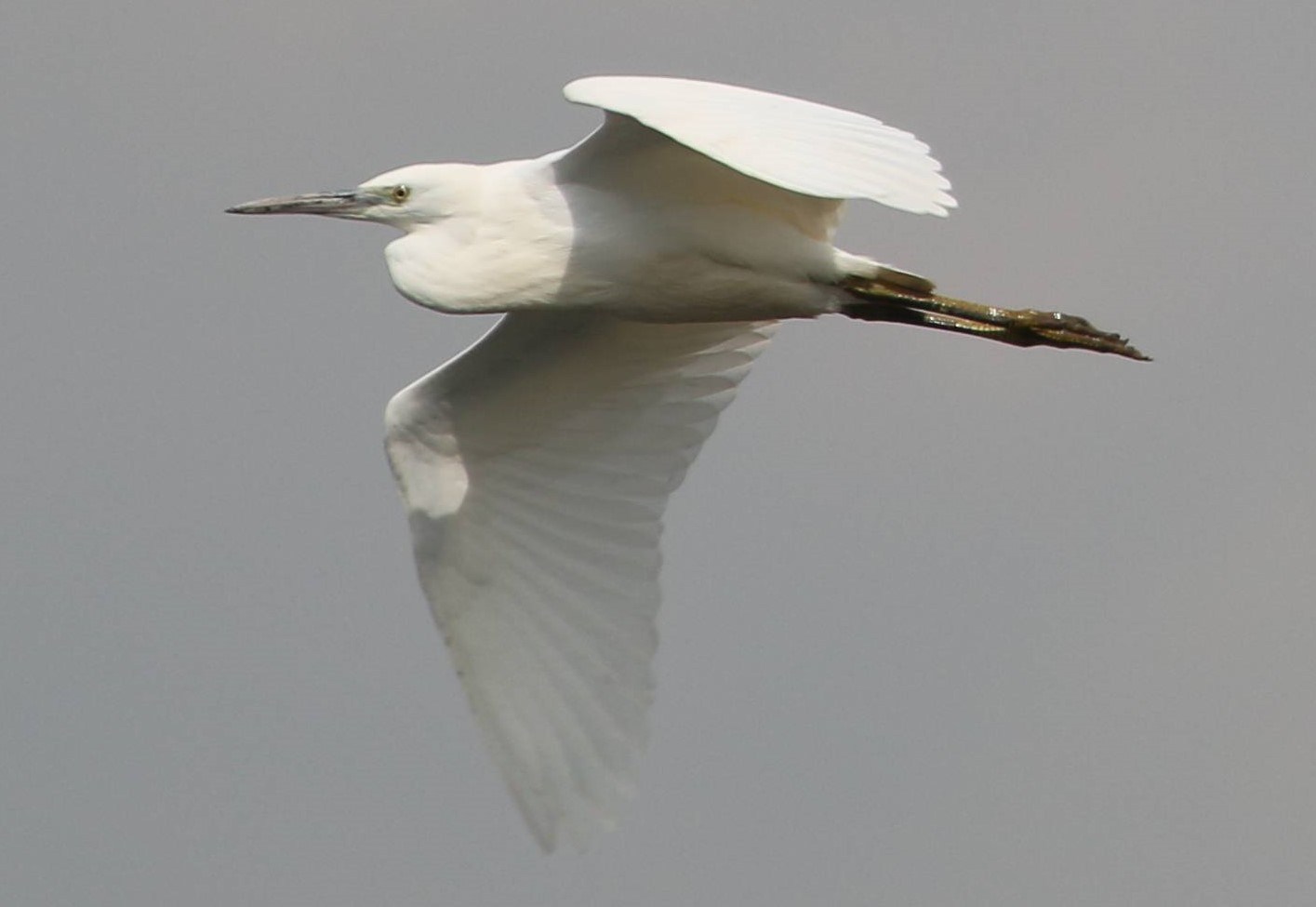
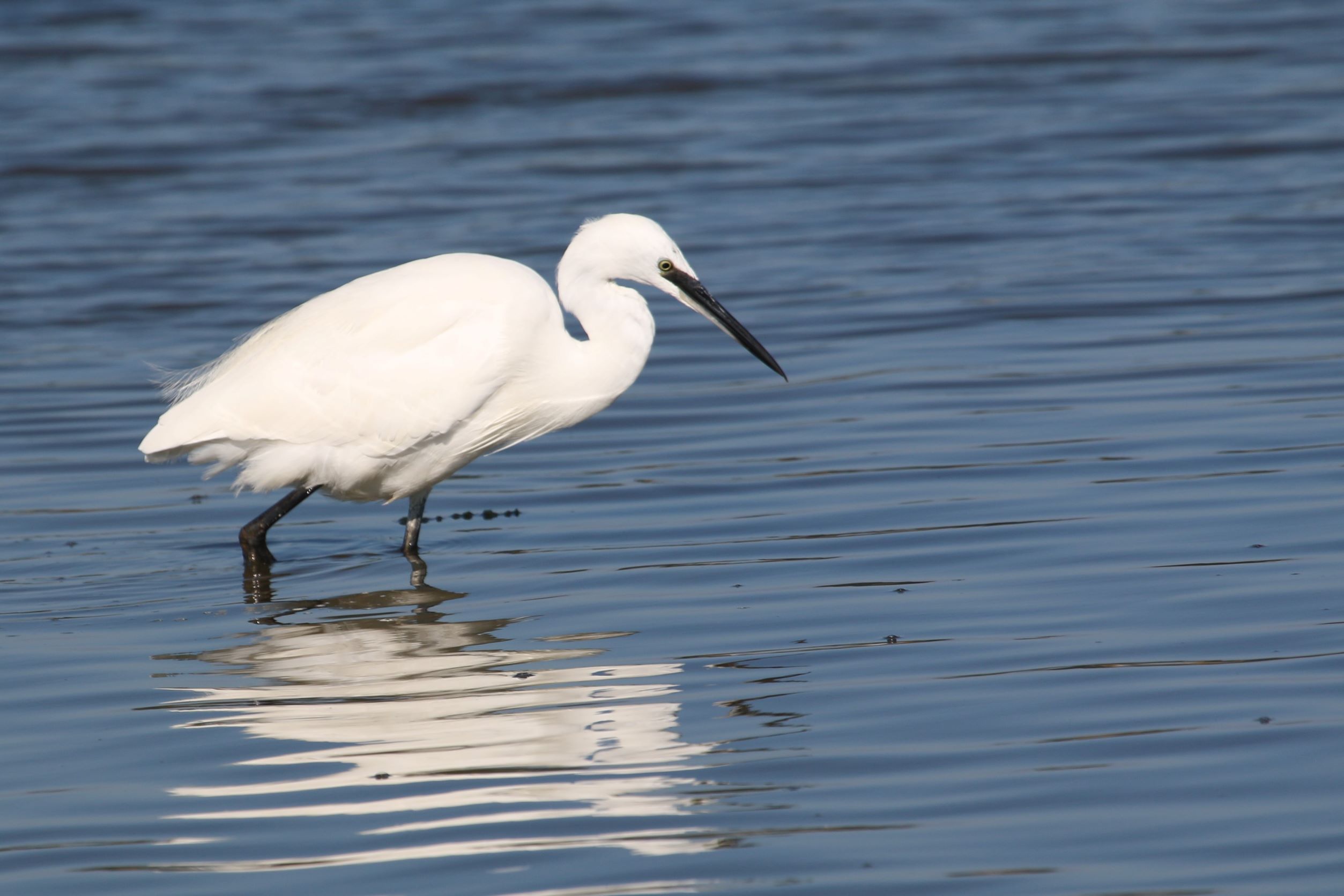
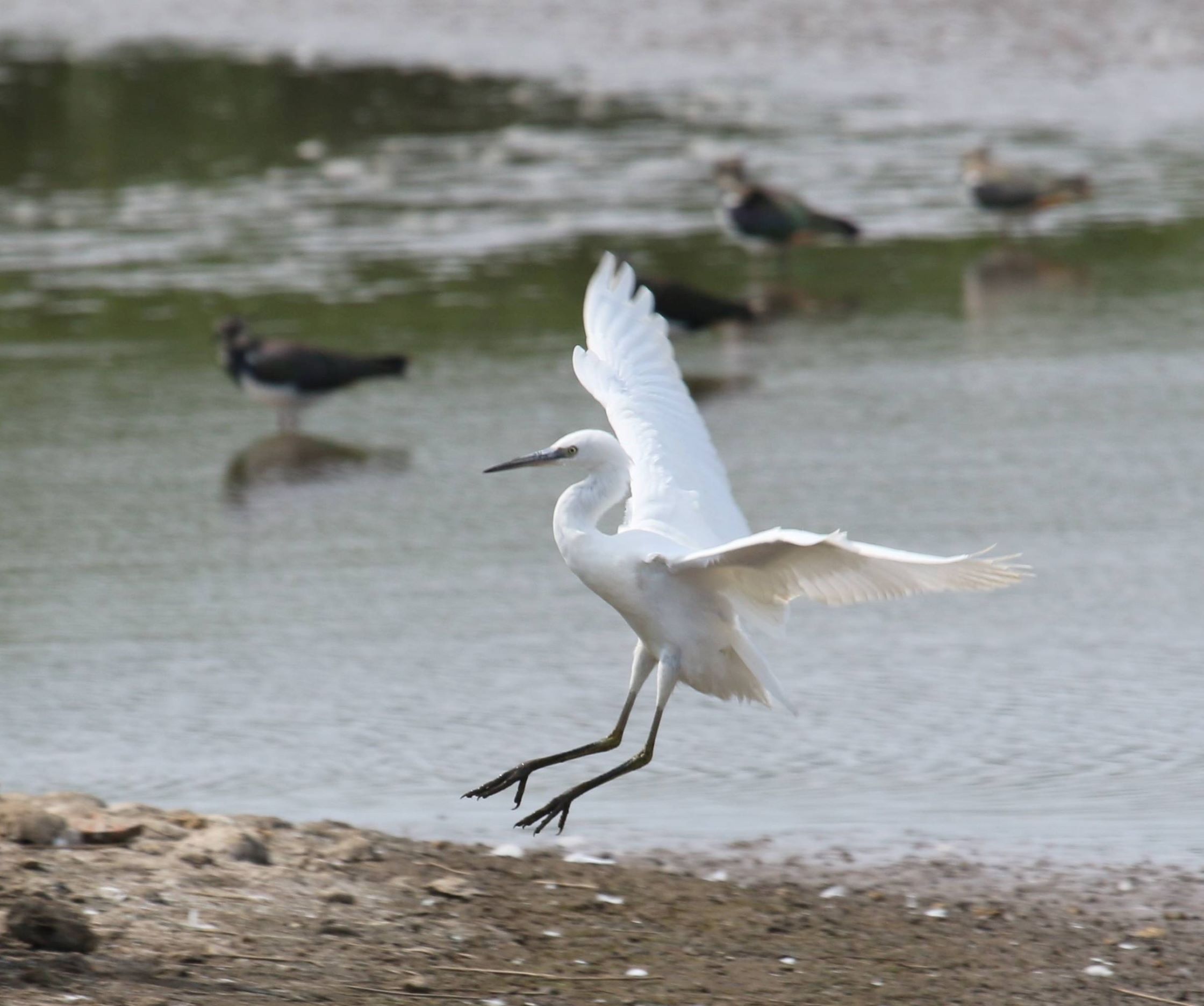
The Great White Egret is a large, white heron. It is easy to distinguish from the Grey Heron, a species familiar to birders throughout this country, but can be confused with Little Egrets. The Little Egret is, as its name suggests, a good deal smaller than the Great White Egret, and has yellow feet and a black bill – the Great White, meanwhile, has black feet and a yellow bill. Confused? Me too! Numbers of Little Egrets have surged in recent years, something I wrote about in this post from 2021.

Seen in Texas, USA, 2012

Until around 15 years ago, Great White Egrets were impossibly rare visitors to these shores, and few birders ever got to see them. All that has now changed. The bird had been slowly expanding its range northwards and westwards in Continental Europe for some time, and around 2010 finally began to make the flight across the English Channel to see what the British Isles had to offer.

Great White Egret alongside the more familiar Grey Heron, at RSPB Blacktoft Sands Nature Reserve, East Yorkshire, 2024

The key drivers behind the expansion in Continental Europe are unclear. Possible explanations include improvements to habitat, reduced persecution, and – inevitably – climate change.

Whatever the reason, British birders are clearly beneficiaries. Accurate, up-to-date population data is difficult to track down, but it appears that overwintering Great White Egrets now number at least 100 individuals. They are most frequently found in south-east England and East Anglia, but are moving steadily northwards and can now also be seen in Scotland too.

At RSPB Welney Nature Reserve, Cambridgeshire, 2022

The species first bred in the UK in 2012, and there could now be more than 20 breeding pairs spread across the country. There is every likelihood that numbers will continue to grow for years to come, meaning that Mrs P and won’t be returning to the US or India when we feel the need to re-acquaint ourselves with this handsome heron!

Searching for seals (timing is everything!)

We recently spent a couple of days searching for seals. It’s not difficult if you know where to look, particularly at this time of year. There are a few UK beaches where grey seals haul out in large numbers, the females to give birth to new pups and the males to mate with those females as soon as they’re given the opportunity.

A mother’s love. Taken at Donna Nook, 27 November 2015.

The UK’s grey seals are a conservation success story. Back in the early 20th century just a few hundred made their home here. Today, the total stands at around 120,000, which accounts for roughly 40% of the entire world population.

Grey Seal at Horsey Gap, 4 November, 2024.

The recovery of these impressive marine mammals in the UK is thanks largely to a change in the law in 1970. Before that date the seals were heavily persecuted by fishing communities, which regarded them as pests. The new law gave them protection for the first time, allowing them to get on with their lives as nature intended.

Grey Seals on the beach. Horsey Gap, 4 November 2024.

The boom in grey seal numbers has made it easier for members of the public to get up close and personal with them. But improved access also increases the risk of disturbance, and to help mitigate this “seal wardens” are on hand at several beaches to watch over them and intervene when problems arise.

One of these beaches is at Horsey Gap on the north-east coast of Norfolk. When we visited earlier in the month the wardens were doing a great job of telling people more about the seals under their protection. We learned that…

  • male grey seals (bulls) live up to 25 years, reaching sexual maturity at six years. Females (cows) can live up to 35 years, and start to breed at some point between the ages of three and five years.
  • grey seals can dive to depths of 300m, and stay under water for around 20 minutes.
  • grey seal milk contains up to 50-60 % fat, ten times more than a Jersey cow’s milk.
  • when they are born pups weigh around 13kg, but just three weeks later they weigh around 45kg.
  • female grey seals abandon their pups after suckling them for just 17 to 23 days. The pups stay behind on the beach, living off their fat reserves, for another three weeks while they moult off their white coats and grow a grey waterproof one.
  • adult cow seals weigh up to 250kg, while bulls weigh up to 350kg (to put this into context, former world heavyweight boxing champion Mike Tyson weighed in at a mere 103kg for his controversial fight with Jake Paul in Dallas on 15 November 2024!).

Little and large. Donna Nook, 14 November 2014

Our visit to Horsey Gap was towards the start of the pupping season, meaning that we saw fewer adult seals than we’d hoped, and just a couple of white-coated pups. In the winter 2021/21 season, 2,500 pups were born at Horsey and nearby Winterton, so clearly the best was yet to come. But although not the spectacular sight we’d expected, it was still a great experience to watch them squabbling in the waves and chilling out on the beach.

Adorable! Donna Nook, 27 November 2015

It was a similar story at Donna Nook, an area of Lincolnshire coastline that is well known for its grey seals. Unlike Horsey Gap, which was new to us, we have previously visited Donna Nook on a couple of occasions. When we were there in mid November 2014, and again in late November 2015, large numbers of adult seals were hauled out and many fine looking pups were on show, the epitome of adorable cuteness. Even better, the seals were lying at the very top of the sweeping sandy beach, almost within touching distance of fascinated onlookers who were gathered behind the wire fencing that kept the two parties apart.

Squabble on the beach. Donna Nook, 14 November 2014

This year, however, we visited very early in November 2024, and at the time of our visit only a few grey seals had so far arrived for the pupping season. More disappointing still, those that were there had settled down close to the water’s edge and were therefore a very long way from their human audience. The warden explained that it would take a high tide, and perhaps a day or two of stormy weather, to drive the animals further up the beach to a place where they would be easier to observe.

Messy pup. Donna Nook, 14 November 2014,

We left Donna Nook a little deflated. Our previous visits encouraged us to expect much more, but the experience is a clear reminder that, when you watch wildlife, timing is everything. We got it slightly wrong this year. Oh dear, we’ll just have to go back!

Luckily, Mrs P took lots of great seal photos on our two previous visits to Donna Nook, and I have used some of them to help illustrate this post. They are a clear demonstration that, if you get the timing right, watching grey seals at pupping time is one of the UK’s great wildlife spectacles.

My surprising discovery about Tufted Ducks

Tufted Ducks are a familiar sight at wetland habitats in our part of the UK. Although less plentiful than Mallards and Canada Geese, they are nevertheless a bird that I would expect to see whenever we visit local reservoirs, lakes and ponds. For me they are a fixture in our birding landscape. But, as I recently discovered to my surprise, that’s not quite true: Tufted Ducks, or “Tufties” as Mrs P and I prefer to call them, first arrived in this country less than 200 years ago.

Records suggest that Tufties started to colonise the UK in 1849. A few decades earlier the Zebra Mussel Dreissena polymorpha had been accidentally introduced into the country, and as this invasive species began to thrive Tufted Ducks followed in pursuit of a much-favoured source of food.

The number of resident Tufted Ducks in the UK grew steadily until at least the early 2000s, and it now breeds in most of England, as well as parts of lowland Scotland and localised areas of Wales and Ireland. The breeding population is around 18,000 pairs. In winter, numbers swell with the arrival of around 100,000 migrant birds from as far away as central Russia.

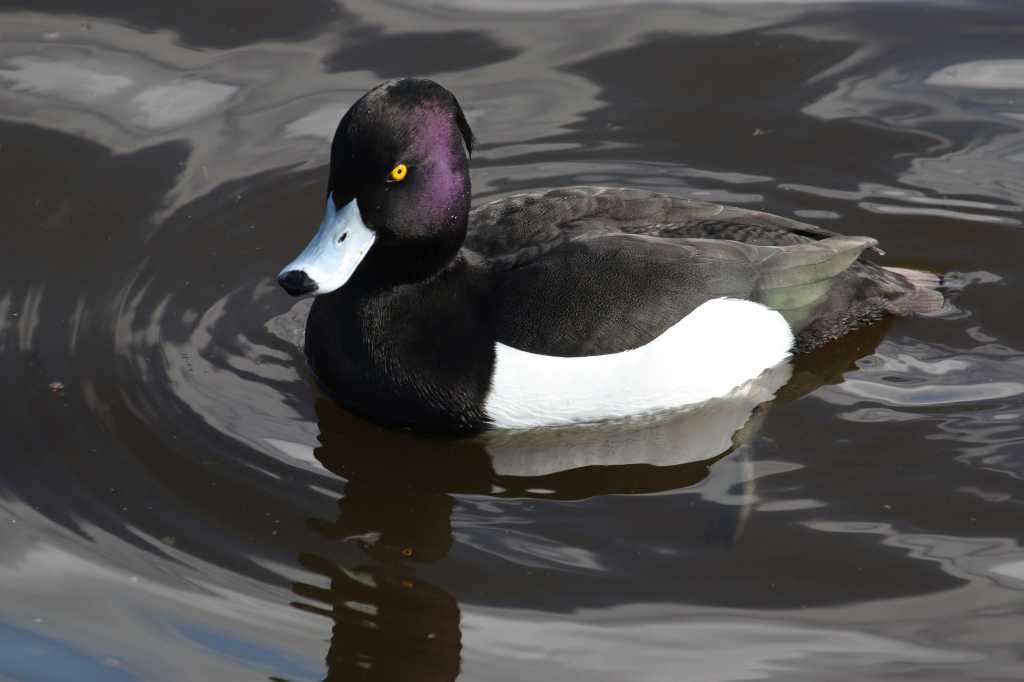
Male Tufties are handsome black-and-white birds, with a characteristic tuft and bright yellow eyes – totally memorable. Although the females also sport a tuft and yellow eyes, their drab buff-brown plumage renders them somewhat forgettable. Scouring Mrs P’s vast photographic archive, I discovered that nearly every photo that she’s ever taken of this species features the male. That, I think, tells you all you need to know about the differing visual appeal of male and female Tufted Ducks!

Tufties are fun to watch, busy little ducks that paddle swiftly across open stretches of water, before diving in pursuit of aquatic invertebrates and bivalve molluscs. It seems like they belong in this landscape and must therefore have been here forever, which makes it difficult to believe that British nature lovers at the start of Queen Victoria’s reign would have been denied the pleasure of their company.

The lesson to draw from this, I guess, is to remember that what we see today is just a snapshot in time. Species come and species go; it’s a natural process, although human activity speeds it up and can cause major instability. I wonder which birds species are entirely absent from the UK today, but will be taken for granted by British birders in the 22nd century?

Monkey business at Yorkshire Wildlife Park

Yorkshire Wildlife Park opened in 2009 on the site of a former riding school and petting zoo, and has grown steadily ever since. We aim to visit several times each year, to check up on old friends and to look out for new kids on the block. And I’m delighted to report that thanks to a couple of old friends getting it together there is indeed a new kid on the block, in the form of Carlos, a beautiful young Venezuelan Red Howler Monkey.

Carlos was born on 29 April 2023. He was exactly 5 months old when this photo was taken.

This species of howler monkey is native to the western Amazon basin, in parts of Venezuela, Colombia, Ecuador, Peru and Brazil, where they live in the tree canopy. Their diet consists largely of leaves, supplemented with a mixture of nuts, fruits, seeds, flowers and small animals. Howlers are named for the ear-splitting guttural roar that males produce to mark their territory and warn off potential intruders.

Venezuelan Red Howlers can live up to 20 years in the wild, but have become increasingly rare due to hunting and habitat destruction. Collections in zoos and conservation centres are therefore an important insurance policy helping to support the long-term future of the species. Yorkshire Wildlife Park is home to England’s only Venezuelan Red Howlers, and the good news is that the adult monkeys who live there have been doing their bit to boost numbers.

Carlos was born at the end of April 2023, the second child of mum Tila and dad Geronimo. Their first offspring was born in October 2021, and Yorkshire Wildlife Park was understandably proud that this ground-breaking birth of a Venezuelan Red Howler Monkey had taken place on their turf. Within a few days the Park was sharing Tila and Geronimo’s news with the world, telling anyone who cared to listen that their son was to be named Pablo.

Interestingly, Pablo is now called Pabla and is referred to as Carlos’s big sister. Oops! Media releases in the days following the birth of baby Carlos were quick to point out that “It’s still too early to tell the sex of the baby”, implying that keepers may have been a bit too eager to do just that when the first youngster was born. It wasn’t until nearly three months after his birth that Carlos’s gender and name were revealed on Facebook, accompanied by a piece of video footage clearly showing him to be a very well endowed young man – no mistakes this time!

The name Carlos was apparently chosen to reflect the monkey’s Hispanic heritage, while at the same time marking the fact he was born just a few days before the UK’s new king was crowned. But whether King Charles III is amused to have a red-haired, prehensile-tailed, ballsy baby monkey named after him must forever remain a mystery.

Mrs P and I first encountered Carlos in early July 2023, just a few days before his gender and name were announced to the world. Although he clearly wanted to remain close to his mum most of the time, he was already demonstrating an adventurous spirit when he set off to explore the trees growing in his enclosure. His agility was plain to see, as was his burgeoning manhood – check it out by following the link to my short video on YouTube.

When we visited Yorkshire Wildlife Park again two weeks ago Carlos had clearly grown in both size and confidence. As my video shows, he strutted arrogantly about the place like a teenager of our own species, fearlessly challenging himself to scuttle along – and dangle precariously from – ropes that are strung across the Red Howlers’ enclosure. What a great guy he’s become.

Watching Carlos’s performance, as well as the antics of his parents and sister, is a real joy. I wonder what new monkey business they’ll be up to when we next pay them a visit?

The LBJ, the app, and the frustrations of birdwatching

Mrs P and I have been birdwatching for nearly 40 years. It’s a great way to pass the time, one that allows us to escape temporarily from the pressures of modern living and instead get up close and personal with nature. But it’s not without its frustrations, of which the most frustrating thing of all is the LBJ. And in case any Americans reading this are wondering, that has nothing at all to do with Lyndon Baines Johnson – aka LBJ – the 36th president of the US!

For the uninitiated, in the British birding community LBJ stands for “little brown job”, which Wikipedia tells us is “an informal name used by birdwatchers for any of the large number of species of small brown passerine birds, many of which are notoriously difficult to distinguish.” The problem is compounded by the fact that your average LBJ never sits still for long, instead flitting hither and thither between bushes, briars and other forms of cover. As a rule, you only get a fleeting glimpse of an LBJ before it goes back into hiding. LBJs are a birder’s worst nightmare.

IMAGE CREDIT: “Cetti’s Warbler” by Mike Prince is licensed under CC BY 2.0. Sourced via Openverse

An alternative approach to identifying LBJs is via their songs. Unfortunately Mrs P and I haven’t been listening carefully enough over the last four decades, with the result that the number of species we can identify by their song alone can be counted on the fingers of one hand. But – much to my amazement – modern technology has come to the rescue, in the form of an app on my mobile phone.

A casual discussion with a bird enthusiast last year first brought the Merlin Bird ID app to our attention. It’s dead simple, which is fortunate as mobile phones aren’t my thing. When a bird is singing just fire up the app, which will analyse the song against its database and tell you which bird you’re (most probably) listening to. Simple but effective, as we discovered last week, when it led us to identify our first ever Cetti’s Warbler.

The Cetti’s was heard – and briefly seen – just a few metres from this spot. Unfortunately Mrs P was unable photograph it, and I’m grateful to Mike Prince for the image of the illusive LBJ at the top of this post

Mrs P and I were at Straw’s Bridge – aka Swan Lake – a local nature reserve that I first wrote about nearly three years ago. We go there mainly to enjoy the wildfowl, but were intrigued this time by glimpses of an LBJ that we couldn’t identify, moving between a series of bushes by the edge of the lake. It proved typically illusive, but just when we were about to give up and move on the bird started to sing in short, loud bursts. I whipped out my phone, and in a just a few seconds we learned its identity.

For confirmation I cross-checked with other information provided by the app. Its photo of the Cetti’s clearly matched the brief glimpses we’d had of the bird, and the textual description of its appearance and behaviour was bang on: a “dumpy and broad-tailed warbler, warm brown above and pale grayish below, with a narrow eyebrow…favours tangled vegetation near water, including reedy marshes with bushes and scrub. Often heard but rarely seen. Explosive, rich staccato song often draws attention.” Follow the link below to hear the song of the Cetti’s Warbler’s.

I found this recording of a singing Cetti’s Warbler on YouTube, courtesy of Birdfun.

The species is a new arrival in the UK, first breeding here – in the south-eastern county of Kent – in the early 1970s. Since then its range has slowly expanded northwards, but until our LBJ encounter last week we’d no idea the Cetti’s warbler had reached our home county of Derbyshire. Without the help of the bird identification app we would probably never have known.

In principle, I would rather leave the modern world behind when I’m out in nature. Mobile phones have their place, but a birdwatching trip isn’t one of them…or so I thought until Merlin Bird ID helped us identify our first Cetti’s Warbler. Having seen that 21st century technology can help us vanquish one of birdwatching’s biggest frustrations – the LBJ – I guess I might need to revise my opinion.

Let’s all celebrate International Polar Bear Day!

Today, 27 February, is International Polar Bear Day. Established by Polar Bears International, the day seeks to increase awareness of the plight of these iconic creatures and to raise funds to help with their conservation. The organisation was born in 1994, the brainchild of a group of wildlife enthusiasts who’d enjoyed great views of polar bears near Churchill in the far north of the Canadian province of Manitoba. Coincidentally, Churchill is also the place where Mrs P and I were thrilled by views of wild polar bears over a decade ago.

Churchill has been described as the Polar Bear Capital of the World. OK, it’s true that the ones saying it mostly have a vested interest in that they sell wildlife viewing tours to people like me and Mrs P, but they’ve got a point. If you’re determined to see a polar bear in the wild, the Churchill Wildlife Management Area is the place to go during “bear season,” which lasts for a period of five to six weeks each year. Polar Bears are big business in Churchill!

The signage leaves you in no doubt what to expect – or at least hope for – on a trip to the Churchill Wildlife Management Area.

The little town of Churchill, which has a resident population of fewer than 900, lies on the shores of Hudson Bay. To put it politely the place is bloody remote, being more than 1,000 miles north of the provincial capital of Winnipeg. Churchill is inaccessible by road; to get there you must travel by air or rail.

Its primary source of income is tourism, with thousands of visitors making the journey north every year to view the polar bears (in October and November), beluga whales on the Churchill River (in June and July) and the Northern Lights throughout the winter months.

During bear season the occasional polar bear will make it past the security cordon and end up wandering through downtown. For this reason, residents are said to leave their doors and cars unlocked at all times in case someone urgently needs to retreat to a place of safety. But for guaranteed – and safe – sightings, tourists take trips outside town on tundra buggies. These are big, bespoke vehicles with huge tyres, vehicles specially designed to cope with the challenging terrain of the Wildlife Management Area.

Our buggy was remarkably comfortable, bordering on luxurious. The cabin was heated, had an onboard loo (for any North Americans reading this, that’s a restroom!) and, most importantly of all, was totally bear proof.

To the rear of our tundra buggy was an open-air viewing platform, enabling great photographic opportunities without any windows to get in the way. The platform had a corrugated steel mesh floor through which we could watch bears as they passed beneath. One bear even stood on its hind legs to sniff curiously at the feet of the awe-struck passengers, with just a couple of inches / centimetres of perforated metal separating the two parties. That, my dear friends, is why there’s onboard loo!

The person standing on the rear viewing platform gives an indication of the size of this tundra buggy.

The views we enjoyed of polar bears during our tundra buggy rides were truly extraordinary, particularly when two of the bears were sparring with one another. These were, without doubt, some of the best – and closest – wildlife encounters of my life. We also took a helicopter trip out over the Wildlife Management Area one day, and saw several bears from an entirely different angle. In addition, helicopter vision helped give us a better appreciation of the bleak terrain that the polar bears inhabit.

Yes, the four white blobs are indeed polar bears, all chilling out in a bleak tundra landscape!

There was a range of other wildlife to be seen, but polar bears were the undoubted stars of the show. It was an absolute privilege to see them, and hopefully – if we, as a species, can get climate change control – similar opportunities will be available to future generations of wildlife enthusiasts.

Polar bears are magnificent, iconic creatures, and to lose them would be a tragedy. All power to the good folk at Polar Bears International for fighting the good fight on their behalf. Here’s wishing them, and anyone reading this, a wonderfully happy International Polar Bear Day.