Last weekend should have been one of the highlights of our year, three whole days at the British Birdwatching Fair. Affectionately known as Birdfair, it’s an annual celebration of the natural world, not just birds but wildlife and conservation as a whole, in the UK and beyond. I blogged about it last year; you can read my post here. Birdfair is an important milestone in our calendar, marking the passing of another summer, and Mrs P and I were devastated – but not surprised – that Covid-19 played havoc with it in 2020.
Instead, Birdfair went virtual, with a range of lectures, workshops and other stuff presented online. “Entry” was free, but we were pleased to make a significant donation to support this year’s BirdLife International conservation project, which is to protect Borneo’s spectacular Helmeted Hornbill from the ravages of the illegal wildlife trade.
The virtual Birdfair was a good try, but inevitably lacked some of the magic that happens when thousands of people passionate about wildlife and conservation are physically gathered together. And that vague sense of disappointment just about sums up our 2020 birding year, which – courtesy of Covid-19 – has been a bit short on excitement.
Middleton Hall
Inevitably, therefore, our thoughts have turned to happier, pre-Covid days. The RSPB’s Middleton Lakes reserve lies on the Staffordshire / Warwickshire border, just up the road from historic Middleton Hall, an impressive Grade II listed building dating – in part – from the medieval period.
The reserve is managed as a refuge for wintering wildfowl, breeding wetland birds and passage migrants. Formerly a flourishing hub of the gravel extraction industry, the site covers 160 hectares (395 acres). It was acquired by the RSPB in 2007, and the conservation charity has been working hard ever since to return the ravaged landscape to nature.
When we visited in May 2019 it was the common woodland birds that were most evident, attracted by strategically distributed piles of seeds, nuts and other goodies. Some of the adults were wearing their breeding finery, but others looked bedraggled, worn down by the rigours of parenthood.
Robin
Blackbird
Juvenile robin
Nuthatch
Grey Squirrel
Some of the “usual suspects” seen at Middleton Lakes in May 2019
Meanwhile scruffy juveniles were doing their best to blend into the background, and yet simultaneously demanding to be fed again and again. Typical fledgling behaviour, of course, and rather endearing unless you happen to be the poor, harassed parent of said fledgling!
At one point a sneaky Grey Squirrel, unobserved by the birds, slipped in and stole food that was intended just for them. He looked in peak condition, and not at all ashamed of his blatant thievery.
As well as the “usual suspects” we encountered a few surprises as we wandered the reserve. In particular we were delighted to hear a cuckoo – so rare these days – and to glimpse a Small Copper butterfly, which is a colourful species we rarely come across. They, and all the more familiar birds and animals we spotted, made the day memorable.
Small Copper
Reserves like Middleton Lakes raise the spirits, demonstrating that if it’s given a chance nature will fight back and reclaim land that has been wrecked by man. When the Covid-19 madness is finally done with we’ll certainly return to see what else it has to offer.
We’d got big plans for 2020. No overseas visits – we wanted to spend a full year in the UK recovering from our 2019 New Zealand adventure – but plenty of travel here at home: a week in Norfolk, a few days in Liverpool, a fortnight in Cornwall, a long weekend at the British Birdwatching Fair in Rutland, and a Scottish odyssey centred around a two-weeks stay in the Orkney Islands. But Covid-19 has blown our plans out of the water: we’re going nowhere in 2020.
Instead, 2020 has become a year of simple pleasures. For more than three months we barely left the house, other than to buy food, so there was plenty of time to read. As a means of escape I’m working my way through the Jeeves novels and short stories by controversial novelist PG Wodehouse. Sir Pelham Grenville Wodehouse is claimed by some to be the funniest writer of all time in the English language. That’s overstating his abilities, I reckon, but he’s definitely brought me some welcome comic relief in recent weeks.
Written over a period of 60 years between 1915 and 1975, the Jeeves stories comprise a series of tales about upper class buffoon Bertie Wooster, a supremely stupid representative of the English idle rich who’s always getting into scrapes, and Jeeves, his smart, suave and sophisticated personal manservant, who invariably comes to his rescue. The early 20th century class system portrayed by Wodehouse is achingly absurd – grotesque, even – and one is left wondering how Britain ever achieved its prominent position on the international stage when ineffectual prats like Wooster ruled the roost.
My lockdown reading!
The Jeeves stories allow us to glance over our shoulders at a (thankfully) long-lost world, one in which rich White Englishmen did what they liked and everyone else did what they were told. However the books are wittily written, and as long as we remember the historical context and laugh at the appalling aristocracy rather than with them, it’s just harmless, escapist nonsense. And god knows, in the year of Covid-19, we all need opportunities to escape.
Speaking of escapism, we’ve also been using lockdown constructively to binge our way through all eight seasons of Game of Thrones. We missed out on it first time around, but if ever there was an opportunity to find out what all the fuss is about it’s now, when we’ve got loads of time on our hands and not a lot to do with it.
Small Tortoiseshells have been common this year
And what a treat it’s been, an epic fantasy, a seething cauldron of death and deceit, dwarves and dragons, debauchery and depravity. Blood and guts litter the landscape in nearly every episode, while power-mad tyrants battle for ultimate control and leave mayhem in their wake. To be honest, it seems not unlike a normal day in the politics of your average western democracy.
For an old cynic like me it’s always been tempting to assume that something as popular as Game of Thrones must be cheap and nasty, just populist rubbish that combines mass appeal with minimal merit. It isn’t. Quite the reverse, in fact. The production values are superb, the characterisation vivid, the narrative complex and compelling. There are few positive aspects of Covid-19, but for us one of them has been creating the space and motivation to finally watch a TV show that just about everyone else on the planet has already seen. Love those dragons!
With opportunities to go out and about strictly limited, initially by government edict and then by our own caution, we’ve spent more time than ever before in our little garden. Thanks to my bad back and knackered knees I don’t look after the garden as well as I should, and it therefore has a slightly wild and unkempt appearance, like my Covid-19 hairstyle. But despite this – or perhaps because of it – the birds and the bees and the butterflies have visited regularly throughout the summer.
2020 has provided an abundance of bumblebees
One day I even spotted a bat, clinging to a pondside plant in broad daylight. It was during a hot spell and I assume he’d gone to the pond to take on water. He took off before Mrs P could grab her camera, circled two or three times around the garden before flying away. A rare treat, something we’d probably have missed in a “normal” year when we’re away from home for much of the time.
Less rare, but still a treat, is a visit from Milky Bar. Regular readers of this blog will know all about Milky Bar, a local cat who claims our garden as his own. Although he occasionally exerts himself by hunting insects, he is probably the most idle cat in existence and spends most of his time with us sleeping, waking just occasionally to chase patches of shade as the sun tracks westwards across the sky. Milky Bar is a great character, and his visits throughout lockdown always lifted our spirits.
Milky Bar: the most idle cat in existence
It would be banal to say that 2020 has been a year like no other, but clearly what’s happened in recent months was unimaginable as 2019 drew to a close. Mrs P and I have got off lightly. The virus has – so far, at least – passed us by, and as we’re retired and financially secure we’ve been spared the worries about the future that have afflicted so many working people. Instead we’ve spent our days here at home, comfortable and content.
It could have been so much worse and we’ll be forever grateful for our good fortune, and for life’s simple pleasures.
* * *
Postscript: for all you CAT-LOVERS out there, here are links to other posts featuring Milky Bar:
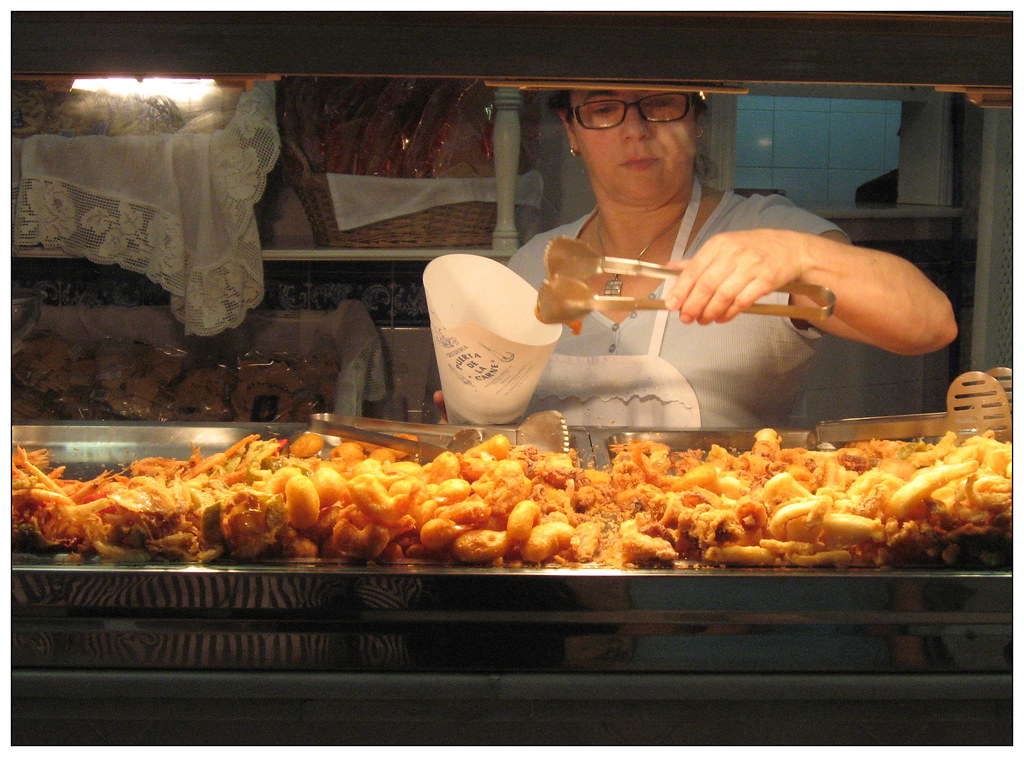
First the good news: after a wait of over five months, Mrs P has at last had a proper haircut. My wonderful missus likes to wear her hair short, in a simple elfin style. The closure of hair salons during lockdown therefore made her miserable, as her locks edged inexorably towards her shoulders. A state of emergency was duly declared, and the Platypus Man was called upon to wield a pair of scissors. I think it’s safe to say I have not found a new career.
PHOTO CREDIT: Guilherme Petri via Unsplash
The government finally allowed hair salons in England to re-open on 4 July, but when she contacted her hairdresser Mrs P was dismayed to learn that other members of the sisterhood had beaten her to it. It seems that women-folk right across our neighbourhood had been suffering similar torments, but they’d been quicker off the mark in booking appointments. Five anguished weeks followed before, at last, hairdresser Sue was able to fit her in.
Returning from her appointment, Mrs P bounced into the house like a new woman. The measures the salon had put in place to protect clients and customers from coronavirus had been thorough but not onerous, enabling my good lady to relax while Sue got down to business.
And down to business Sue did indeed get, snipping, clipping and primping merrily until order was restored to my wife’s rampant mane. Both literally and figuratively, a weight has been lifted from her shoulders: Mrs P’s got her mojo back. She looks great.
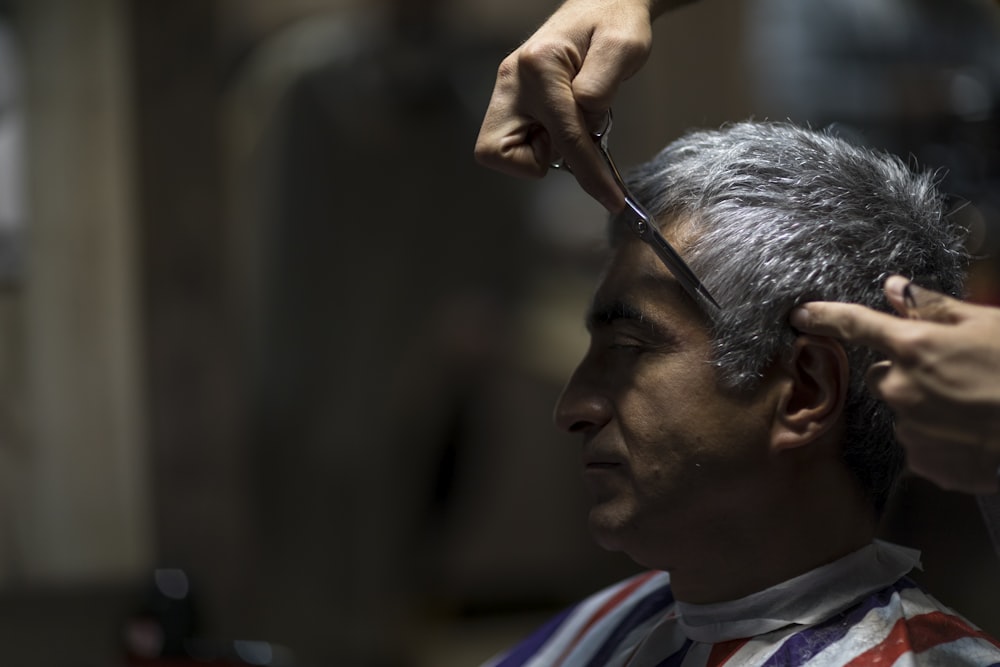
But now for the bad news: my good lady has declared that I too must have a haircut. I generally avoid male barbers like the plague, being pathologically incapable of holding up my end in random banal conversations about soccer, cars or superhero movies. Instead, I let Sue sort out my hair as and when necessary. However, it’s been more than six months since I last sat in her chair of shame, and I’m enjoying a new sense of freedom.
PHOTO CREDIT: Mostafa Meraji via Unsplash
You see, male pattern baldness is embedded in my genes, and has been making its presence known for two or three decades. I’ve not got much hair left now, and I cherish every last strand that has remained faithful to me.
Moreover, I’m a child of the sixties and look back lovingly to my hippy past. OK, I wasn’t a real hippy, but I admired their hedonistic lifestyle and carefree attitude to the cultural norms of their parents. To celebrate their values, in my university years I allowed my hair to grow until it brushed my shoulders, long, thick and luxuriant.
Ah, those were the days!
It’s occurred to me in recent months that the haircutting hiatus initiated by Covid-19 offers the ideal opportunity for a new beginning. Or perhaps more accurately, the chance to relive my glory years.
I therefore boldly suggested to Mrs P that lockdown is just the beginning, that now is the perfect moment for me to grow what’s left of my hair down to my shoulders again, and maybe even to have a ponytail. Her reply was short and to the point: it’s not going to happen, and if I don’t get it cut voluntarily she’ll do it herself when I’m asleep.
Huh!
So we’ve agreed on a compromise. Mrs P’s booked her next appointment with Sue for early November, and one for me 30 minutes later. Could be worse, I guess: at least I’ll have a couple more months to enjoy my rediscovered hirsute-ness.
And with any luck we’ll be in lockdown again by November, and hair salons will be closed until spring 2021. That should give me plenty of time to explore my inner hippy. Peace, man!
The Hen Harrier is probably the most persecuted bird in the UK. To draw attention to its plight and encourage its conservation, campaigners at the charitable organisation Hen Harrier Action have declared a date in early August to be Hen Harrier Day. The timing is significant: on 12 August each year – the so-called Glorious 12th– the grouse shooting season begins, and it is this so-called “sport” that’s been at the heart of the Hen Harrier’s dreadful decline.
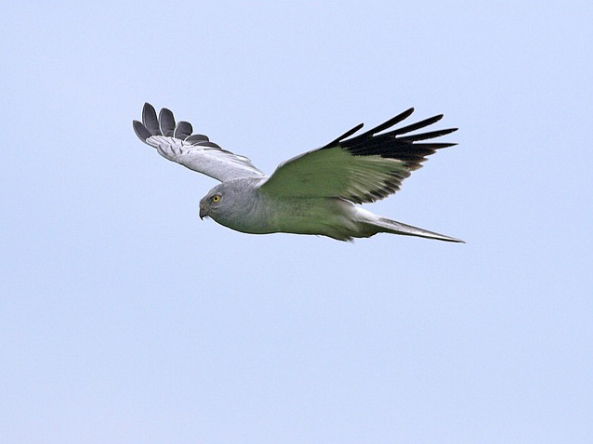
Hen Harriers are ground-nesting birds of upland moors. In winter they relocate further south to coastal areas, heathland and farmland. Males are blue-grey with a white rump, pale underside and black wing tips. Females are brown above and streaky below, with a white rump and a banded tail. The bird is almost identical to the Northern Harrier that’s found widely over the US and Canada – scientists are divided over whether they are essentially the same species, or just very close cousins.
To attract a mate the male Hen Harrier puts on a breath-taking display of aerial gymnastics, soaring, twisting, spiralling and plummeting above heather-clad moorland to catch the attention of the local ladies. It’s called sky-dancing, and is mesmerising to watch.
Later, after mating, the male will seek to strengthen the pair-bond and show off his spectacular agility by passing prey to his mate in mid-air, enabling the much less conspicuous female to return to the nest without attracting the attention of predators. The RSPB have posted a brilliant video on YouTube which perfectly captures both behaviours. It’s nearly five minutes long, but definitely worth a look:
From an international perspective, the Hen Harrier is not endangered: it’s spread very widely across northern Eurasia, and Birdlife International categorises it as a species of “Least Concern.” However, the picture is very different in the UK, where its classification is “Red.” Here, the species is fully protected under the Wildlife and Countryside Act, 1981.
The root cause of the Hen Harrier’s problems in the UK is its feeding preferences. Although its diet consists primarily of small mammals, it also takes some birds. It is this, and particularly its appetite for Red Grouse, that has brought it into conflict with gamekeepers.
The role of the gamekeeper is to serve his employers by ensuring that grouse shooters have sufficient quarry available to satisfy their vile blood-lust. Grouse moors are big business: a day spent blasting Red Grouse out of the sky can cost upwards of £1,500 (around $US 2,000), and fewer birds means reduced income for the moors’ owners. For this reason the pressure’s on gamekeepers – implicitly, if not explicitly – to eliminate any natural predators of the quarry species.
Lobbyists for the shooting industry protest their innocence: “it ain’t us guv’nor,” they plead, “we’d never hurt those cute harriers. We love the UK’s conservation laws. Honest!” But evidence to the contrary is overwhelming:
A 2019 government-commissioned study has shown that 72% of satellite-tagged hen harriers are likely to have been illegally killed on or next to grouse moors. Hen harriers are 10 times more likely to die or disappear in suspicious circumstances on or near a grouse moor than in any other habitat.
The case for the prosecution is clear, and although the shooting lobby comes up with a wealth of arguments in its defence these arguments are – to quote the immortal words of the great Douglas Adams – a load of dingo’s kidneys. The Hen Harrier Day website provides more details of the disinformation spread by those seeking to defend the status quo: you can read them by clicking here and turning to the section headed “six myths about driven grouse shooting.”
It’s reckoned that the UK as a whole has habitat to support 2,600 pairs of Hen Harriers, but in the last national survey (2016) there were only 545 territorial pairs. These are mostly in Scotland, where Mrs P and I have enjoyed watching them on numerous occasions swooping over the moors of the Orkney Islands. The views have invariably been at a distance, making successful photography an almost impossible challenge, but it always feels like a privilege simply to watch this rare and spectacular bird going about its business.
Scientists calculate that England alone has the potential to support over 300 pairs of breeding Hen Harriers. However in 2019 there were only 12 successful nests, and the fact that this is a record high for recent years reflects the seriousness of the situation. These dire numbers were the context in which annual Hen Harrier Days began in 2014:
Hen Harrier Days are community days of action, an opportunity for all of us to press for an end to wildlife crime and the wider abuse of our uplands…[They] are fun events for all the family and take many forms: in the countryside, in town, online, celebrity speakers, gigs, walks, picnics and more. Hen Harrier Days are normally organised locally by local people.
Sadly, although unsurprisingly, this year Covid-19 rendered impossible the type of event that had previously taken place. So in 2020 Hen Harrier Day moved online, hosted by popular broadcaster and campaigning naturalist Chris Packham, and up-and-coming young presenter Megan McCubbin. It worked well; key species information and hard-hitting conservation messages being mixed in with a variety of relevant music, art and literature, and the promotion of some fund-raising initiatives that will support Hen Harriers.
To be honest, some of it was difficult to take, particularly when Mark Thomas, head of the RSPB’s Investigations Team, spoke about the persecution of raptors – including Hen Harriers – in the Peak District. It was shocking and heart-breaking to hear details of the carnage taking place there, and as we live just a few miles from the Peak District National Park it feels personal.
Having heard from Mark Thomas and others on the day, it would be easy to give up in despair, to conclude that this is a battle conservationists cannot win. But Mark’s not giving up, and neither should we.
Hen Harrier Day helps raise the profile of the bird, draws attention to the criminal activity perpetrated by those who see the harrier as an obstacle to driven grouse shooting, and builds momentum in the political arena. As the experts pointed out on the day, we can all do something to help the cause, even if it’s just giving a bit of cash to practising conservationists who are working hard on the ground to combat raptor persecution.
Speaking of which, one of the initiatives linked to Hen Harrier Day 2020 has been an art auction run in conjunction with Derbyshire Wildlife Trust. Derbyshire is our county, and as Mark Thomas has pointed out its Peak District moors are a hotbed of raptor persecution. The Peak District should be home to several pairs of Hen Harriers, but sadly Mrs P and I have never seen one here on our “home turf.”
We are life members of the Derbyshire Wildlife Trust, and Mrs P decided to do her bit by getting creative to support the auction. Using her favourite papercraft technique – iris folding – she designed an image of two Hen Harriers sky-dancing, and sent it off for auction. You can see her creation below:
At the time of writing the bid for Mrs P’s iris-fold picture stands at £60 (around $US 80). In all, total bids for the 73 lots stand at over £3,000 (around US$ 4,000). Isn’t it great to see so many people – both the artists who produced the images for sale, and the bidders who are prepared to stump up some cash for them – getting involved to support the conservation of a bird that needs all the help it can muster?
The battle to save the UK’s population of Hen Harriers is far from lost. Well done to Hen Harrier Action for leading the campaign to protect them, for spreading the message, and for inspiring me to hope that – one day – I may see a Hen Harrier here in Derbyshire.
My wife doesn’t much care for my taste in music. Only last week she berated my choice of lunchtime listening, asking why we couldn’t have “something normal, instead of that weird, wailing rubbish you like so much.” I protested, putting up a spirited defence of my preferred genre, only to be told that as well as its questionable musicality, folk has an image problem, being dominated by “screeching women in swirly, diaphanous dresses and bearded men in sandals.”
Huh, methinks the lady doth protest too much! Mrs P has accompanied me to – and enjoyed – various folk gigs in recent years, and at no point have we seen a sandal or anything even remotely diaphanous. Plenty of beards, though.
For me, one of the attractions of folk songs is their powerful narrative drive. Folk songs tell stories. Before the oral tradition was supplanted by near-universal literacy, song was one of the main ways in which ordinary people communicated with one another over space and time about their hopes, fears and beliefs, about the challenges of their daily lives, about major events that helped shape their existence, and about the endless cycle of the seasons. Although illiteracy is largely a thing of the past in the UK, contemporary folk music maintains the storytelling tradition.
IMAGE CREDIT: Via Wikimedia Commons – Unknown author / Public domain
I first came across the Ellan Vannin Tragedy in the late 1960s, sung on television by The Spinners – a popular Liverpool folk band of the day – and rediscovered it during our 2018 visit to the Isle of Man.
The song tells the story of the sinking of the S.S. Ellan Vannin in 1909. En route from Ramsey in the Isle of Man to Liverpool, the ship ran into a violent storm as it crossed the Irish Sea, and foundered in Liverpool Bay. All 15 passengers and 21 crew died. Also lost was a consignment of mail and 60 tonnes of cargo, which included approximately 60 sheep.
Writing over half a century later Hughie Jones, one of the Spinners, poignantly captured the details of the tragedy. In this YouTube video you can hear Hughie performing his song in front of a live audience. I suspect the soundtrack’s taken from an old vinyl recording – listen to the clicks and crackles! The video is illustrated by a series of fascinating archive photos assembled by Lexi Duggan, and includes the complete lyrics.
I find the audience’s gentle singing of each chorus particularly moving and love the way this gets louder as the song progresses, reflecting the participants’ growing confidence and engagement as the sad story unfolds. For me, The Ellan Vannin Tragedy is folk at its best, tunefully telling a story which deserves to be remembered, while evoking a strong emotional response in the listener. And not a sandal or a diaphanous dress in sight!
Postscript – Ellan Vannin means “Isle of Man” in the Manx language. The ship was built in Glasgow at a cost of £10,673. She entered service with the Steam Packet Fleet in June 1860, at which point she was known as the Mona’s Isle (Mona is the first known name for the Isle of Man, recorded in Latin by Julius Caesar in 54 BCE). She was substantially rebuilt in 1883, being converted from a paddle steamer to a propeller-driven ship, and to mark her reincarnation she was renamed the Ellan Vannin. Following the tragedy on 3 December 1909, no other ship in the Steam Packet Fleet has borne the name.
* * *
Links to other posts featuring a favourite folk song
The Seasons, performed by Jimmy Aldridge and Sid Goldsmith, featured in Liebster Award, Part 2
Well, not magic really, but definitely quirky. The roundabout on the children’s playground at the Isle of Man’s Silverdale Glen is powered by water flowing from the nearby boating lake. Shifting the lever releases water which drives a waterwheel, which in turn powers the carousel. The roundabout is the only working example of its kind in the British Isles.
Silverdale Glen was developed as a visitor attraction in the last years of the 19th century. The site included a boating lake, café and a park for games and walking as well as roundabouts, and is a legacy of the Isle of Man’s growth as a tourist destination.
The waterwheel that drives the carousel originally came from the nearby lead / silver / zinc mines at Foxdale. When the mines were closed in 1911 the wheel was transported to Silverdale and reinstalled near the lake to provide the power needed to drive the ride-on horses. The link below will take you to my short YouTube video of the roundabout in action.
The roundabout has undergone numerous renovations in the century since it began operations. In 2007 the wooden horses – which were acquired second-hand from a steam-driven funfair in England – were removed and replaced with fibreglass gallopers and rowboats. One of the originals has been restored and deposited at the excellent Manx Museum. You can view the catalogue image here.
Postscript – while researching the history of Silverdale Glen’s magic roundabout I came across this fascinating post by WordPress blogger Pat English. Written way back in 2010, when we were younger, more innocent and had never heard of Coronavirus, Pat’s post explores the history of roundabouts. It includes lots of colourful carousel horse designs, one inspired by Siouxsie and the Banshees. Definitely worth a look.
Environmentalists are big fans of national parks, areas of land protected by governments for their beautiful countryside, rich wildlife and cultural heritage. All civilised countries have them, wearing them like badges of honour to demonstrate their commitment to conservation.
The word “park” conjures up the idea of great size, implying huge tracts of land stretching as far as the eye can see. But the Isle of Man is tiny, less than a quarter of the area of the Lake District, England’s foremost national park. A Manx national park is out of the question, but not to be outdone the island’s government has opted for National Glens instead.
A glen is a narrow valley, the word being derived from the Gaelic language, and there’s no doubt the glens are amongst the Isle of Man’s best natural features. They are heavily wooded, featuring rushing streams, tumbling waterfalls, fizzing cascades, deep rock pools and lush vegetation. Scattered here and there along them are the remains of watermills, echoes of a bygone age.
I don’t think you’d describe the National Glens as spectacular – the scale is wrong, too small – but definitely attractive and serene. They’re a perfect getaway from the hurly-burly of 21st century living.
The Manx government has designated no fewer than 18 mountain and coastal National Glens. These are preserved and maintained in a semi-natural state by its Forestry, Amenity and Lands Division, and are freely accessible to locals and tourists alike.
Pocket-sized though they are, the National Glens are a real asset to a little island in the middle of the Irish Sea. These compact and picturesque gems give the Isle of Man an unexpected but distinctive charm. Small really is beautiful.
In my book, few things in the natural world beat the sight and sound of running water amid the myriad greens of a secluded, verdant valley. Take a look at my YouTube video for a sense of the peaceful atmosphere in Silverdale Glen, Glen Maye, Ballaglass Glen and Glen Dhoon:
The Black Guillemot isn’t a rare bird. Many thousands breed in the British Isles – the RSPB estimates 19,000 pairs in the UK – scattered along the coast in pairs or small groups. And ours is just a small part of the world population, which is estimated at between 260,000 and 410,000 pairs: these striking seabirds are also found around the coasts of the North Atlantic and Arctic Oceans, across Siberia to eastern Russia and Alaska. The species is rated as Least Concern by BirdLife International.
We’ve previously encountered Black Guillemots at various locations in Scotland, where they are relatively common, particularly in Orkney and Shetland. Here the bird is known as the Tystie, a name derived from Norse, the language of the Vikings who settled in the Scottish islands many centuries ago. A similar name is still applied to the bird in Iceland and Norway.
Black Guillemots are also found around much of Ireland, on the Anglesey coast in north Wales and at a few spots in northern England. Around 300 pairs breed on the Isle of Man, where you’d be hard pressed to find a better place to watch them than at Peel Harbour.
The hustle and bustle of fishing and recreational vessels at Mann’s busiest port makes Peel Harbour an unlikely place for these distinctive seabirds to thrive. But thrive they do. Away from human settlement they breed among rocks at the base of cliffs, or in the shelter of boulders on rocky islets, but at Peel, gaps in the harbour wall offer an attractive alternative. They appear completely at home here.
During our visit in June 2018, the Black Guillemots at Peel Harbour were displaying their distinctive breeding plumage: black all over, with a large, white oval patch on each wing. The bill matches the black plumage, but when the bird opens its mouth a bright red gape is revealed. The legs are also a vivid red. However, outside the breeding season the Black Guillemot loses its good looks, turning white, with black barring on its back, and black wings.
Peel Harbour gave us our best ever views of these splendid birds, and it was fascinating to watch them strutting their stuff, resting up and posing on the fishing boats in the harbour. They were clearly oblivious to the human activity all around them, not to mention the admiring looks of birders like us! You can enjoy a glimpse of their antics on my YouTube video:
One of the unexpected pleasures of a visit to the Isle of Man is the opportunity to see wild wallabies without all the expensive and tedious nonsense that is inevitable when flying from the UK to Australia. Native to temperate areas of eastern Australia, the Red-necked Wallaby – a.k.a. the Bennett’s Wallaby – was a familiar sight when we visited Tasmania in 2016. Amazingly, it’s also thriving on Mann, a small island in the middle of the Irish Sea between England and Ireland, around 15,000 km from its ancestral home.
Technically, the Manx wallabies aren’t wild but feral, being descended from captive animals which escaped from Curragh Wildlife Park on the north of Mann towards the end of the last century. The first escape happened in 1965:
“The first wallaby to escape from there was Wanda who escaped the first year the park opened. She wandered around the island for a year, true to her name, and returned apparently of her own accord a year later,”
A pair of wallabies is reported to have escaped at some point in the 1970s, and in 1985 there was a mass breakout. In a daring exploit reminiscent of captured British servicemen escaping Nazi POW camps in World War 2, no fewer than eight animals are said to have dug their way under the fence, and disappeared into the swampy, wooded area surrounding the Park (curragh is Gaelic for willow scrub, the predominant vegetation type here.)
Seven were eventually recaptured, but the eighth remained at large. Maybe it joined up with 1970s escapees or their descendants, or perhaps with other intrepid adventurers that made successful but unreported bids for freedom? And in 1989 there appears to have been another sizeable escape, when storms brought down a tree that smashed part of the fence surrounding the wallabies’ enclosure.
I can only conclude that, in the Park’s early days, security was somewhat lax. Or to put it less charitably, the place leaked wallabies like water through a sieve.
The exact sequence of events will never be known for certain – and some of the accounts noted above definitely seem more fanciful than believable! – but clearly over the years sufficient animals escaped from the Park to establish a sustainable breeding population. In true Aussie style, the wallabies have gone walkabout!
The Isle of Man has few native terrestrial mammals: no deer to compete with wallabies for food, and no large predators that would threaten them. The climate is also agreeable, being quite similar to that of Tasmania where the species thrives. Conditions appear ideal, and the wallabies have taken full advantage of it.
Numbers at large on the island are difficult to determine. The animals are mainly active at dusk and during the hours of darkness, when they graze on grasses, willow and young shrubs. Counting them is therefore an exercise in educated guesswork. The best estimate is somewhere around 150 animals, but who really knows?
Although they have begun to move south through the island, the wallabies remain concentrated close to their original point of origin – Curragh Wildlife Park – particularly in and around the Close Sartfield Nature Reserve.
Joey!
The Reserve comprises hay meadows, grassland, willow scrub, woodland and bog habitats, and between May and July is graced with thousands of colourful orchids. It forms part of the Ballaugh Curraghs, a wetland of international importance and designated Ramsar site. Birds love it and so, apparently, do wallabies.
During our 2018 trip to Mann we made two evening visits to the Close Sartfield Reserve, and as the light began to fade we were pleased to see a number of wallabies going about their business. We thought we’d be lucky to see them at all, but in the event they proved impossible to miss.
Some wallabies were partially hidden in the long meadow grass, watching us curiously as they grazed. Others, including a mother with a large joey in her pouch, hopped happily through the woodland, stopping occasionally to peer at us through the undergrowth. My YouTube video offers a glimpse of the youngster, and captures some of the other action we witnessed.
As we made our way through the Reserve another wallaby bounded across the board walk directly in front of us, and then stopped to browse contentedly on gorse bushes. It seemed totally unperturbed by our presence. I guess the animals have become conditioned to camera-touting humans, and take us in their stride.
The Aussie ex-pats have become unlikely island celebrities, and any visitor with an interest in wildlife wants to see them. During our second visit we saw evidence of this in the form of a professional camera crew cruising the paths through the Reserve, hoping to get perfect footage of the Isle of Man’s most exotic residents.
At the end of our second visit to Close Sartfield, as we returned to our car in the gathering gloom, we spotted a wallaby chewing enthusiastically on the grass strip running down the middle of the unsealed track that leads back to the main road. It was a surreal experience: where else in the British Isles would drivers find their journey interrupted by a masticating marsupial?
I’m sure that any Aussies reading this will wonder what all the fuss is about. After all, wallabies are common and considered unremarkable Down Under, impossible to miss but easy to ignore. However, here in the British Isles they are other-worldly beings, improbable and exotic creatures one never expects to encounter outside zoos and wildlife parks.
And what Brit doesn’t want a glimpse of the exotic, to bring colour and excitement to his otherwise dreary existence?
There’s a good good range of birdlife to enjoy on the Isle of Man, but the star of our 2018 visit was undoubtedly the Chough. Pronounced chuff – to rhyme with stuff – the Chough is a member of the crow family. It can be easily identified by its bright red bill, which is slightly down-curved, and paler pinkish-red legs.
Once locally common in the British Isles, the Red-billed Chough – to give this handsome bird its full name – suffered a catastrophic decline in numbers in the 19th and early 20th centuries. Farmers wrongly identified them as agricultural pests and blasted them out of the sky, trophy hunters shot and stuffed them, and egg collectors wrecked their chances of successful reproduction.
However, the final straw was a change in land management practice. Choughs are specialist feeders relying mostly on invertebrates, and therefore need access to an environment that supports their diet, including a mosaic of vegetation with lots of short grass and open areas. Grazing animals are essential to maintain suitable coastal and upland habitats, but a reduction in such grazing activity in the 20th century adversely affected the birds’ food supply.
Thanks to rigorous conservation efforts the Chough is now showing signs of recovery, although progress is painfully slow. The RSPB reports that in 2014 there were 394 breeding pairs spread across the British Isles, up from 284 in 1982, and of these, 30% were found on the Isle of Man. As the figures below demonstrate, numbers of breeding pairs on the island almost doubled between those two years.
Choughs can be found at various locations on the Isle of Man, but when we visited in June 2018 our best sighting was at a coastal site called the Chasms, where the sandstone cliffs are incised by deep fissures. It’s a scenic but exposed and windswept spot, where purple heather, low-growing shrubs and coarse grasses hug the ground to avoid being battered into submission and then unceremoniously deposited into the Irish Sea.
The juvenile Chough is a scruffy-looking bird with less vivid colouration than the adult
The cliff-top vegetation is ideal habitat for Choughs, and we were treated to excellent views of a couple of adults probing about in it for grubs and bugs. There was also a juvenile, a scruffy-looking bird reminiscent of a moody teenager indifferent to his appearance, its bill less brightly coloured than those of adult birds, and its plumage lacking their glossy black lustre. Click the link below to view the short video I made of the Choughs we spotted at the Chasms.
After around 30 years of birdwatching it’s unusual for us to add a new species to our British Isles life-list, so seeing these striking birds for the first time felt like a special privilege. Thank you, Isle of Man!
* * *
Researching this post, I’ve discovered lots more stuff about the Chough, some of it rather surprising. Read on and find out more.
Choughs in Cornwall
Before Covid-19 wrecked our plans, we’d intended to renew our acquaintance with Choughs during an April visit to Cornwall, England’s most westerly county. The Cornish have a special affection for these birds, which, as the table above shows, have made a comeback in the 21st century after becoming locally extinct in 1973.
The Chough was once so common in Cornwall that it was known as “the Cornish Chough.” As such it became a symbol of the county, and featured in the heraldic arms of the County Council and several prominent local families. It also appears on the arms of the Duchy of Cornwall, the private estate of Prince Charles, the Prince of Wales.
The Coat of Arms of the Duchy of Cornwall. IMAGE CREDIT: Sodacan This W3C-unspecified vector image was created with Inkscape. / CC BY-SA (https://creativecommons.org/licenses/by-sa/4.0)
Historically the county’s rugged coastal landscape was well suited to these birds: sea caves and old mine shafts offered suitable nesting sites, while the ponies that worked at the tin and copper mines encouraged the proliferation of their invertebrate diet by grazing on the cliff-top grass.
However, the esteem in which these birds were held by Cornish people could not protect them from the combined impact of shooting, egg collecting, habitat degradation and the collapse of the mining industry.
In 1973 Choughs became extinct in Cornwall, and remained absent until 2001 when some vagrant birds arrived from Ireland. A pair of these bred the following year, and with the support of the RSPB’s Cornwall Chough Project, a slow recovery is underway. In 2019 there were 12 successful breeding nests in Cornwall, from which 38 chicks fledged.
An Arthurian connection?
King Arthur, legendary 6th century leader who is said to have defended native Britons against the invading Saxons, had strong connections with Cornwall. Unsurprisingly, therefore, his story has become intermingled with that of the county’s favourite bird. It is said that after his death, the spirit of King Arthur entered into the body of a Chough. The bird’s red legs and beak are supposed to represent the blood shed by Arthur in his last battle.
Most reasonable folk regard the whole King Arthur story as romantic nonsense, or, less politely, a load of old codswallop. I’ll leave you to decide whether Choughs owe their distinctive colouration to Arthur’s untimely demise.
Choughs in Heraldry
Whatever we think of the Arthurian connection, it’s clear that in earlier times the Chough was widely known and admired in the British Isles. From the early 16th century onwards it began to appear in the heraldic arms of families with no connection to Cornwall.
The Coat of Arms of Thomas Wolsey (and, subsequently, Christ Church Collge, Oxford, which he founded).IMAGE CREDIT: ChevronTango / CC BY-SA (https://creativecommons.org/licenses/by-sa/3.0)
Most notably, Cardinal Thomas Wolsey, Lord Chancellor and chief adviser to King Henry VIII in the 1520s, commissioned a coat of arms which included two Choughs. This may have been a devout churchman’s punning tribute to the martyr Saint Thomas à Beckett, the 12th century Archbishop of Canterbury who was gruesomely murdered in his own cathedral, reflecting the fact that an archaic name for a Chough is “beckitt.”
There is, however, a less charitable interpretation. Wolsey’s vanity was legendary, and he cannot have been unaware that the commonly accepted meaning for a Chough in heraldry is “Strategist in battle; watchful for friends.”
How well this describes Wolsey, who, having failed to secure his master’s divorce from Katherine of Aragon, died while on his way to London to answer a charge of treason, is questionable. But the cardinal did have a good friend in Thomas Cromwell, who succeeded him as chief adviser to the King. Out of respect for his friend and mentor, Cromwell also included Choughs in his coat of arms when he was awarded the title Baron Cromwell in 1536.
The Coat of Arms of Thomas Cromwell, 1st Baron Cromwell. IMAGE CREDIT: FDRMRZUSA (talk · contribs). See sourced file for original authors. / CC BY-SA (https://creativecommons.org/licenses/by-sa/4.0)
It seems improbable that either Wolsey or Cromwell could spare time from sorting out the King’s disastrous matrimonial problems for a spot of birdwatching, but had they done so they would doubtless have sought the Chough, which so handsomely adorns their coats of arms.
And who could blame them? As we learned on the Isle of Man, it’s a very special bird.