Wordless Wednesday is a simple blog post featuring a photo. It seeks to convey a message or tell a story, but speaks for itself without using words. Mrs P took this photo of Polar Bears squabbling near Churchill in Manitoba, Canada in 2012.
Last Monday, 2 February, was World Wetlands Day. A wetland is a transitional area between land and water, an area where water covers the soil – or is present at or near the surface – either permanently or seasonally. Mrs P and I love a good wetland: it’s a distinct ecosystem that is a great place for a spot of birdwatching, and is notable as the favoured habitat of the handsome heron family
Grey Herons were my Mum’s favourite bird. This one has just caught itself a tasty snack.
When my father died over 30 years ago we bought my mother a set of binoculars and started taking her out on our birdwatching expeditions. She soon declared the heron to be her favourite bird, attracted I suspect by its large size and a distinctive appearance that includes a dagger-like bill, long spindly legs and an improbably bendy neck. I imagine she was also intrigued by the birds’ hunting style, in which they stand motionless for lengthy periods before stabbing explosively at any prey item foolish enough to venture too close to them. Spotting a heron quickly became Mum’s ambition whenever we took her out, and because we chose our birdwatching sites carefully she was rarely disappointed.
The Grey Heron is the UK’s most common species of heron. As these images show, Mrs P’s been photographing them for many years.
The species that Mum got to know and love is the Grey Heron, by a long way the most common member of the heron family in the UK, with over 60,000 birds overwintering here. Standing nearly 1m high and with a wingspan approaching 2m, it is an impressive bird. It feeds primarily on fish, but also eats amphibians, ducklings and other small birds, and tiny mammals such as voles. Interestingly, Grey Herons sometimes temporarily leave their wetland habitats in favour of nearby agricultural fields which they scour for rodents in the immediate aftermath of the harvest.
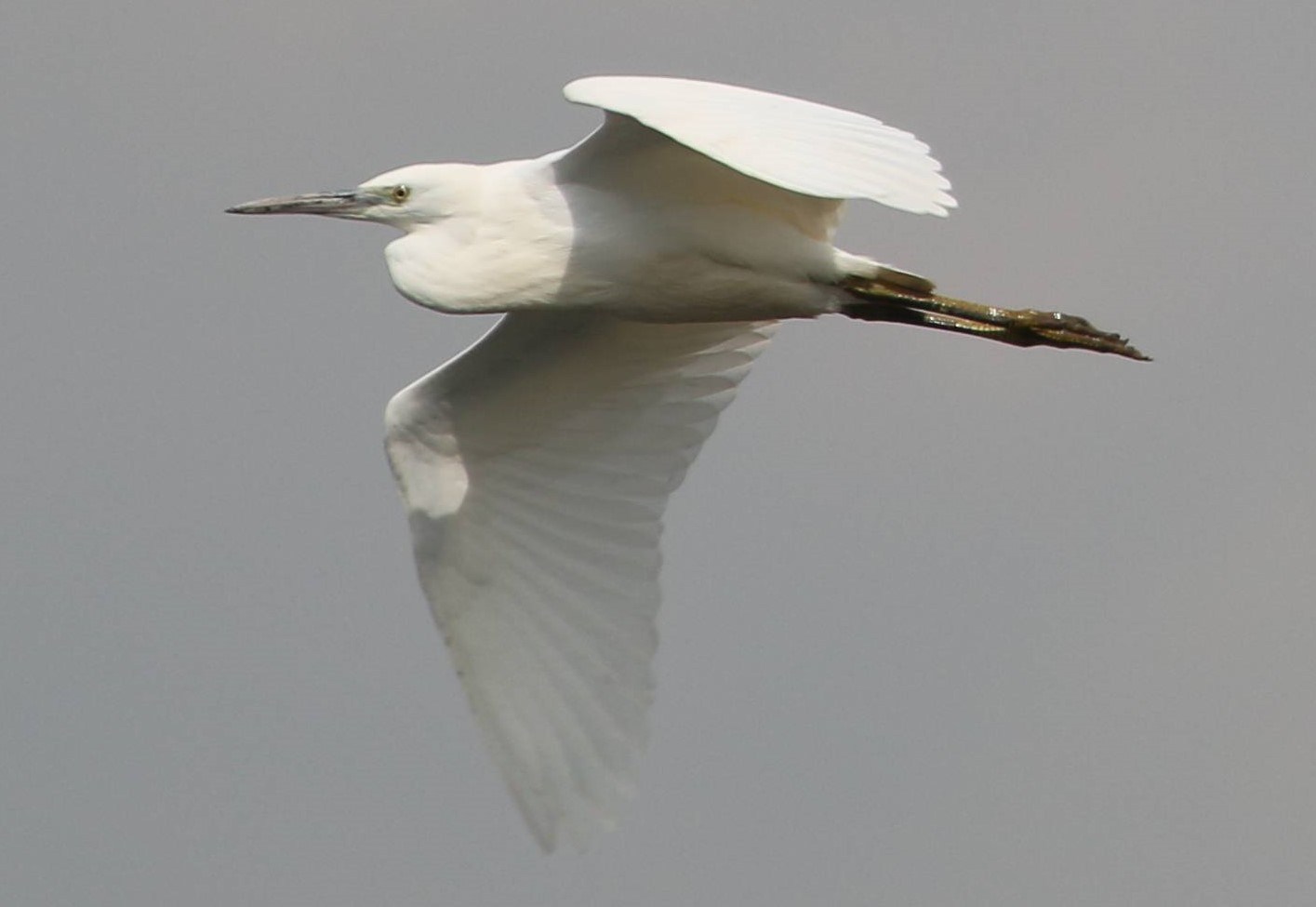
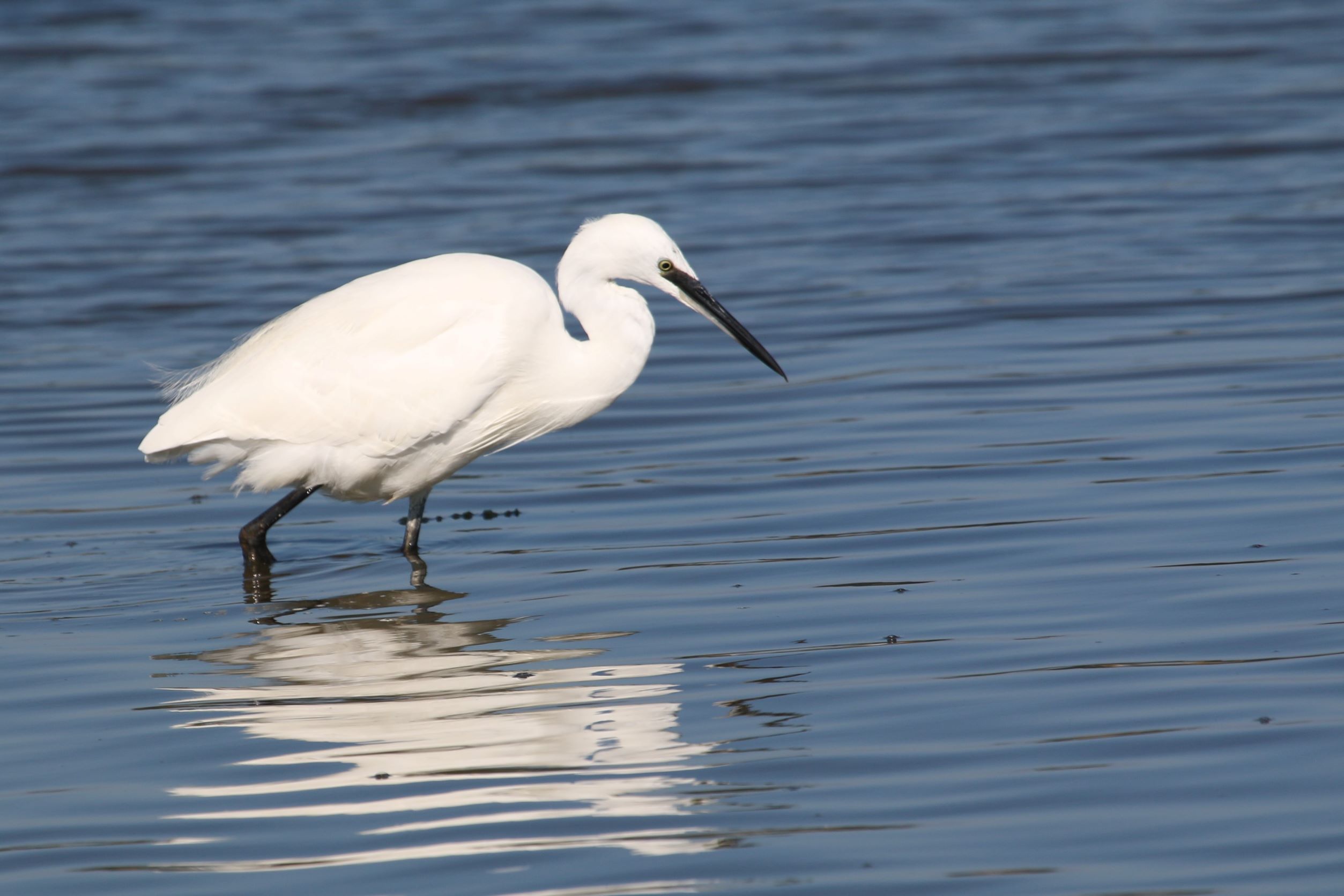
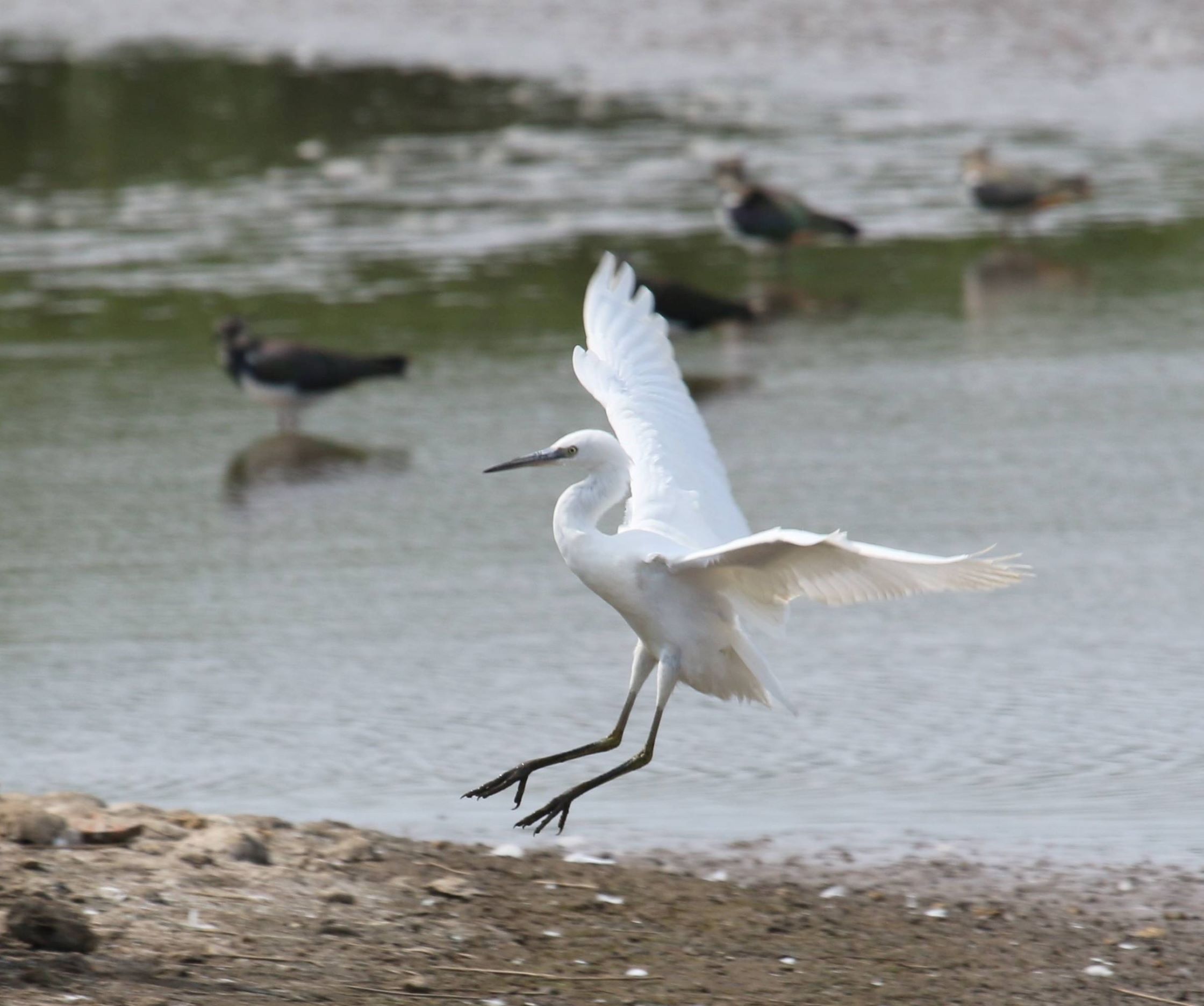
Little Egret.
The UK boasts several other members of the heron family, although none is very common. The Bittern is vanishingly rare; Mrs P and I have rarely seen one, and have never got a decent photograph. Little Egrets were once common here, but were wiped out over 100 years ago thanks to the insatiable demand of the fashion industry for the birds’ elegant feathers. I wrote about the decline and fall of the Little Egret, and the important consequences this had on bird conservation in the UK, in a post I wrote in 2024.
Great White Egret.
Little Egrets began recolonising the UK in the late 20th century, and these days we see them quite often. Sadly their return came too late for my Mum, as did the more recent arrival of the Great White Egret. She would have been thrilled, I’m sure, to see both egret species, though I suspect neither would have supplanted the Grey Heron in her affections.
Clockwise from Top Left: Green Heron (seen on Tobago in 2006); Great Blue Heron (Canada, 2014); Little Blue Heron (Costa Rica, 2008); White-Faced Heron (Tasmania, 2016); Galapagos Heron (Galapagos Islands, 1989); Bare-Throated Tiger Heron (Costa Rica, 2008); Great Blue Heron (Canada, 2015).
Across the whole world there are reckoned to be 75 separate species within the heron family, although some go under the names of egret or bittern. Herons’ solitary nature and their motionless hunting style have captured the imagination of cultures everywhere, often making them figures of mystery and deep spiritual significance as well as symbols of patience and wisdom. Every continent except Antarctica boasts resident species of heron, and as Mrs P’s photos show we’ve been privileged to see a number of these during our travels.
Clockwise from Top Left: Bare-Throated Tiger Heron (Costa Rica, 2008); Green Heron (Costa Rica, 2008); Bare-Throated Tiger Heron (Costa Rica, 2008); Indian Pond Heron (India, 2013); Little Blue Heron (USA, 2012); Great Blue Heron (Canada, 2012).
Almost all species of heron are closely associated with water, living and feeding as they mostly do on the margins of lakes, rivers, and swamps. They need wetlands, as do so many other species of birds, mammal and invertebrate, and it has been a pleasure to celebrate World Wetlands Day by featuring these magnificent birds here. My Mum, a heron lover until the very end, would definitely have approved!
The plan was simple – take a leisurely drive up to the west coast of Scotland, catch the ferry and then spend some quality time on the islands of Islay and Jura. We’d never visited either before, but they promised so much – beautiful scenery, bewitching wildlife, numerous whisky distilleries and, above all, a bit of peace and tranquillity, away from the hurly burly of our daily existence. Only it didn’t quite work out that way…
Red deer stag at Inverlussa, Jura – Such a handsome chap!
The drive north was uneventful, but things began to go wrong as soon as we arrived on Islay, the southernmost island of the Inner Hebrides. We had rented a cottage, and it didn’t live up to expectations. I’ll not bother you with the details, just believe me when I say we were not at all happy.
Kilchoman church, Islay – in the middle of nowhere!
But things were about to get a whole lot worse. After less than 48 hours on Islay a medical issue forced us to seek urgent advice. Our cottage was in a very remote location; there were no neighbours we could turn to for support, and we ended up speaking by phone to a doctor in Inverness, around 200 miles (320km) away. He diagnosed the problem, and referred us to the local hospital where we could pick up some medication. Up until this point I’d absolutely no idea there was a hospital on the tiny island of Islay!
Tarbert Bay, Jura
We set off after midnight, struggling to find our way in pitch darkness along roads that could have been in contention for the national “pothole of the year” award if such a thing existed. Eventually we found the hospital and picked up the medication.
The Paps of Jura
Fortunately the medication soon started to do its job. We took things fairly easy for the next couple of days while recovery was underway, and even managed a day trip to the nearby island of Jura. Islay and Jura were beginning to live up to their reputations, despite our discomfort.
Isla is famous for its distilleries that produce peaty, single-malt whisky. This is the Ardbeg Distillery
And then, just as we were picking up the pace again, we got a phone call. A family emergency had arisen, and we were needed back home as soon as possible. Frantic phone calls followed as we sought to cancel the other accommodation we had lined up for later in our trip, and to rearrange our ferry booking in order to get us back to the Scottish mainland as soon as possible. Luckily, everyone we spoke with was sympathetic and helpful. Although we needed to rise from our beds at 4.45am we did get safely back home to Derbyshire the next day, after around 17 hours travelling. What a nightmare!
Highland Cow at Sanaigmore Bay, Islay
Needless to say, in many ways it’s a holiday we’d rather forget. But having said that, both Islay and Jura appeared to have a lot to offer. They seemed like “our sort of place”, and in other circumstances our memories would doubtless be overwhelmingly positive. So we have tentatively agreed that we need to go back and to make some new memories, and thereby delete from our minds the nightmare that was Islay and Jura in 2025. Not this year, but probably before too much longer. Watch this space!
Wordless Wednesday is a simple blog post featuring a photo. It seeks to convey a message or tell a story, but speaks for itself without using words. Mrs P took this photo of a handsome Bullfinch at Old Moor Nature Reserve in 2014.
Wordless Wednesday is a simple blog post featuring a photo. It seeks to convey a message or tell a story, but speaks for itself without using words. Mrs P took this photo of a green iguana at Tortuguero in Costa Rica.
I don’t normally post to my blog on Mondays, but as today (22 September) is World Rhino Day I thought I’d bring forward my deadline to share an update on Yorkshire Wildlife Park’s “teenage” superstar…
When a baby Eastern Black Rhinoceros was born at Yorkshire Wildlife Park in January 2024, the management knew they were onto a winner. Great news for species conservation, obviously, but great news too for visitor numbers. I mean, who doesn’t love a baby rhino? The marketing department went into overdrive, and Rocco the Rhino – named after a public vote – quickly became the Park’s pin-up superstar. The only problem was that, for us at least, Rocco proved to be disappointingly elusive.
Now nearly 20 months old, Rocco clearly enjoys his food!
Mrs P and I visited the Park several times during the 18 months after the birth, and top of our wish list was always a sighting of Rocco, who was – to judge from the publicity photos – the epitome of armoured cuteness. But we were always disappointed. Instead of roaming their enormous paddock. Rocco and his mum and dad were holed up in their indoor quarters and therefore visible to visitors only via a grainy CCTV system. When we asked about the best time to see him, we were told that the doors to the rhinos’ outside world opened at 11:30am, but it was up to Rocco and his parents to decide whether or not they wanted to come out.
The marketing department went into overdrive, and Rocco the Rhino – named after a public vote – quickly became the Park’s pin-up superstar
We were also advised that sometimes the doors would remain closed beyond the 11:30am deadline to give Rocco’s mum Najuma a much needed rest. Rocco, we were told, was an energetic and demanding calf who was causing his poor mother a good deal of stress, and the keepers felt it was important to consider her welfare as well as the needs of the infant rhino. Fair enough, I suppose, but it was unfortunate that Rocco was never out and about when we were visiting the Park.
This video, made by staff at Yorkshire Wildlife Park at the end of March 2024, provides the view of Rocco that we sadly never got to enjoy!
But at last, just a couple of weeks ago, we finally caught up with Rocco in person. At last! The only downside of this encounter was that Rocco is no longer the cute little calf we had been longing to see. He’s now around 20 months old, and his build and bulk more closely resemble that of his poor old mum. To put it into human terms, I suppose he’s now a sturdy teenager. Impressive? Yes, definitely. Cute? No, sadly those days are gone for good.
Rocco trailing close behind his long-suffering mum Najuma
Putting aside our disappointment at missing out on his cute phase, Rocco’s birth gives cause for celebration. Najuma and Rocco’s dad Makibo came to Yorkshire Wildlife Park in 2018 as part of an international breeding programme to save the species, which is classed as critically endangered. Here’s what the Park’s website has to say about its plight:
Eastern Black Rhinos are the rarest of the 3-remaining subspecies. Between 1970 and 1992, their population declined by 96% to 2300 from a devastating period of poaching for their horns…Thanks to global conservation efforts, Black Rhino numbers have steadily risen to around 6000 individuals. The European Breeding Programme currently holds around 100 individuals in various wildlife parks and zoos.
It’s good to know that ethically responsible organisations like Yorkshire Wildlife Park are doing their bit to support the conservation of this wonderful species. Finally catching up with Rocco, after so many missed opportunities, was a big thrill. Hopefully before too long he’ll have a brother or sister, and if he does we will visit the Park regularly in the hope of spotting the new arrival before it grows too big to be cute!
No longer a calf, Rocco’s growing up fast!
Of course, there are many other species – including several conservation priorities – living at the Park. The following photos offer a glimpse of some that we encountered on our recent visit. Maybe I’ll write at length about these species in future posts to this blog?
Wordless Wednesday is a simple blog post featuring a photo. It seeks to convey a message, but speaks for itself without using words. Mrs P took this photo of a White-Bellied Sea Eagle on the Arthur River in Tasmania, Australia in 2016.
Wordless Wednesday is a simple blog post featuring a photo. It seeks to convey a message, but speaks for itself without using words. Mrs P took these photos of meerkats at the Yorkshire Wildlife Park.
Wordless Wednesday is a simple blog post featuring a photo. It seeks to convey a message, but speaks for itself without using words. Mrs P photographed this Yellow-throated Euphonia in Costa Rica in 2015.
Wordless Wednesday is a simple blog post featuring a photo. It seeks to convey a message, but speaks for itself without using words. Mrs P photographed this grisly encounter between two iguanas in Costa Rica in January 2014.




 Now I'm 64