Celebrating World Wetlands Day with the heron family
Last Monday, 2 February, was World Wetlands Day. A wetland is a transitional area between land and water, an area where water covers the soil – or is present at or near the surface – either permanently or seasonally. Mrs P and I love a good wetland: it’s a distinct ecosystem that is a great place for a spot of birdwatching, and is notable as the favoured habitat of the handsome heron family

Grey Herons were my Mum’s favourite bird. This one has just caught itself a tasty snack.
When my father died over 30 years ago we bought my mother a set of binoculars and started taking her out on our birdwatching expeditions. She soon declared the heron to be her favourite bird, attracted I suspect by its large size and a distinctive appearance that includes a dagger-like bill, long spindly legs and an improbably bendy neck. I imagine she was also intrigued by the birds’ hunting style, in which they stand motionless for lengthy periods before stabbing explosively at any prey item foolish enough to venture too close to them. Spotting a heron quickly became Mum’s ambition whenever we took her out, and because we chose our birdwatching sites carefully she was rarely disappointed.


The Grey Heron is the UK’s most common species of heron. As these images show, Mrs P’s been photographing them for many years.
The species that Mum got to know and love is the Grey Heron, by a long way the most common member of the heron family in the UK, with over 60,000 birds overwintering here. Standing nearly 1m high and with a wingspan approaching 2m, it is an impressive bird. It feeds primarily on fish, but also eats amphibians, ducklings and other small birds, and tiny mammals such as voles. Interestingly, Grey Herons sometimes temporarily leave their wetland habitats in favour of nearby agricultural fields which they scour for rodents in the immediate aftermath of the harvest.

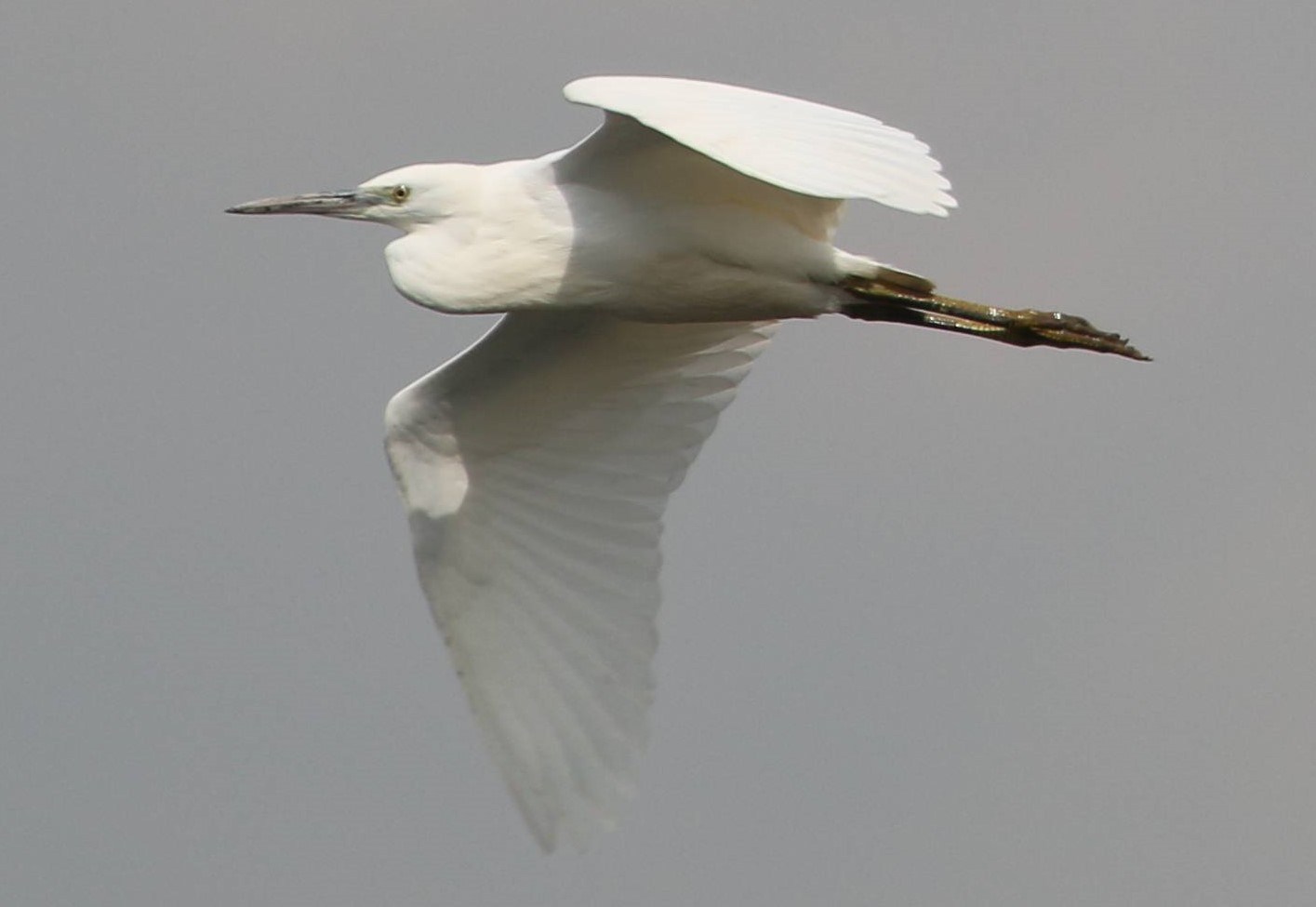
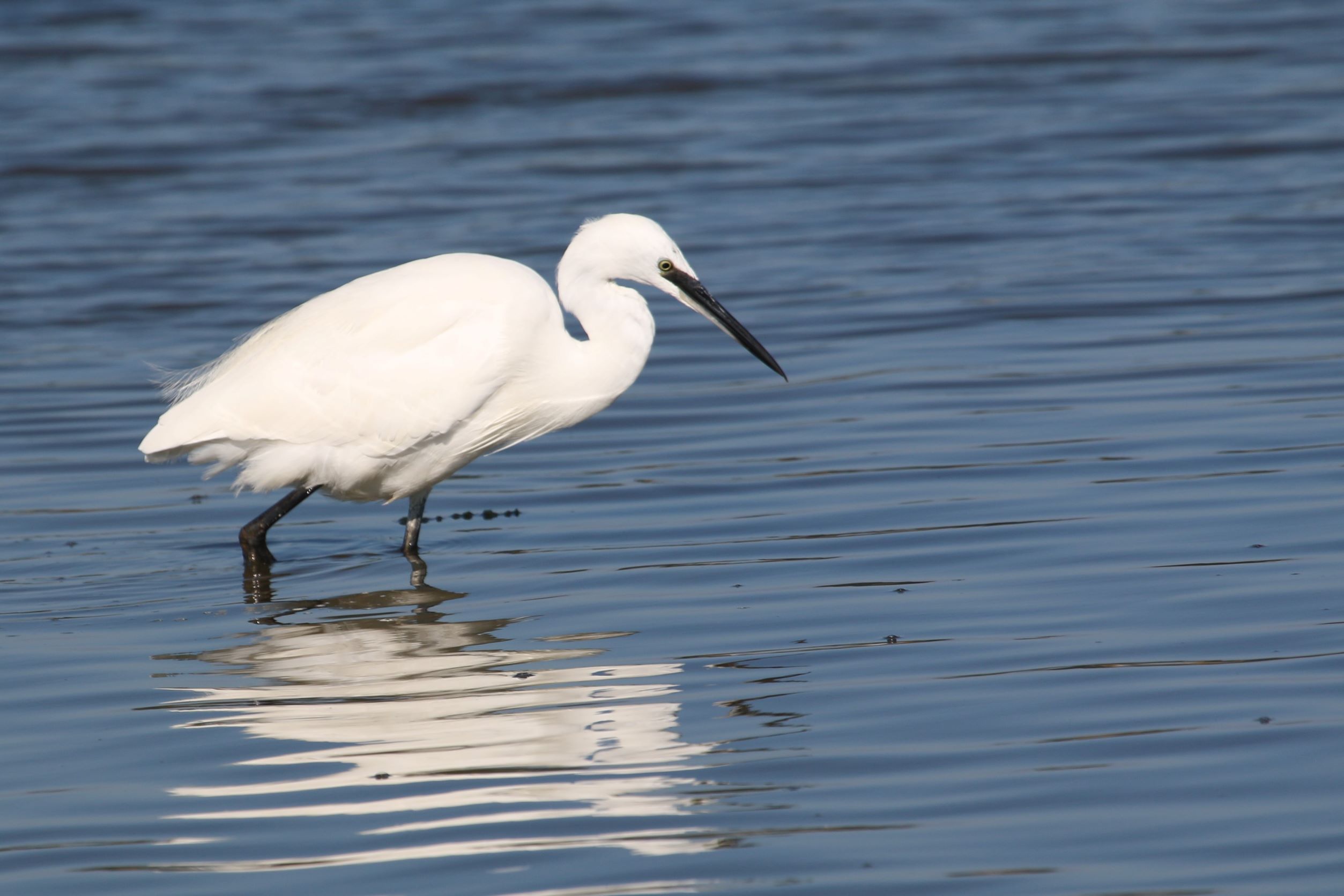
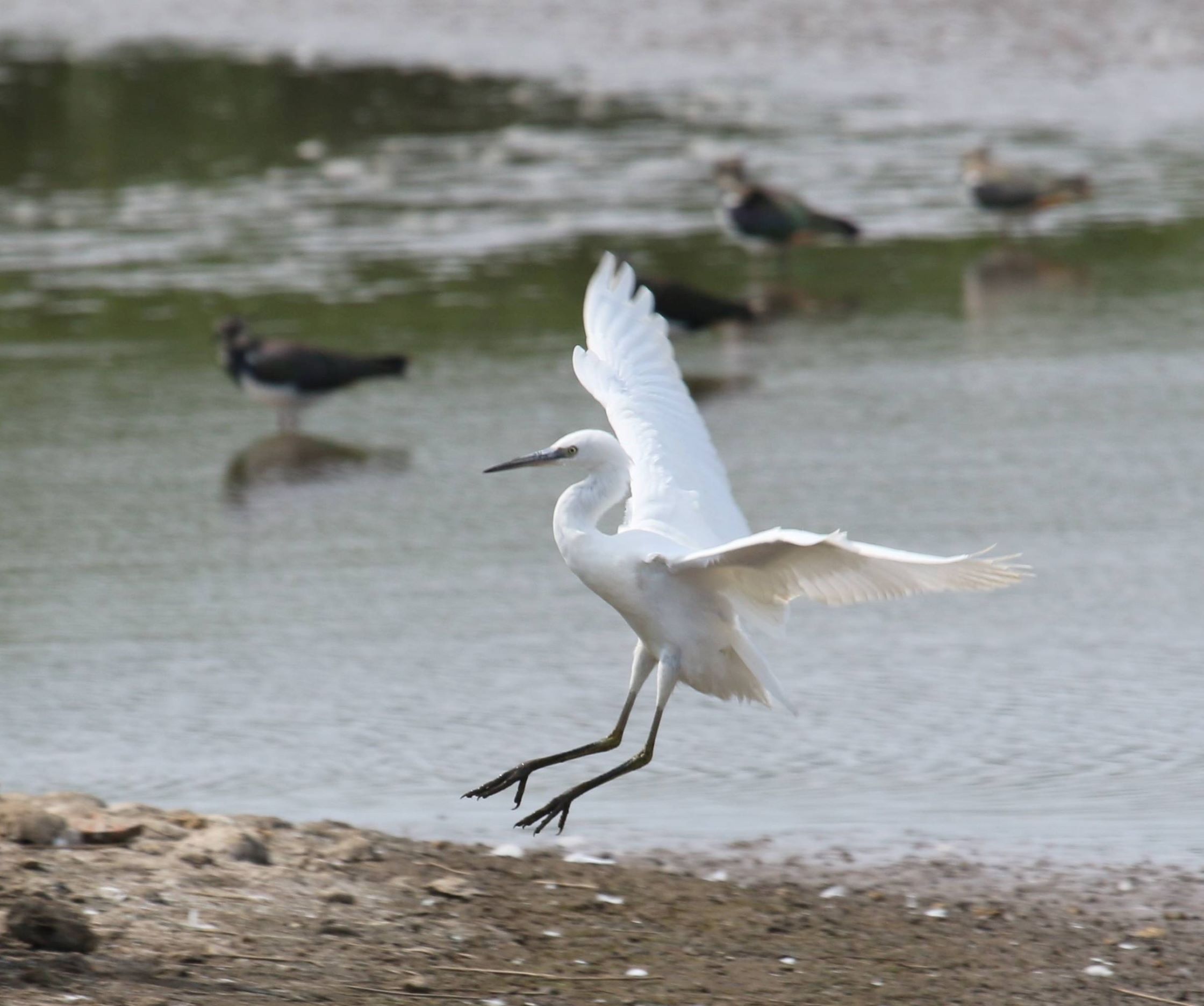
Little Egret.
The UK boasts several other members of the heron family, although none is very common. The Bittern is vanishingly rare; Mrs P and I have rarely seen one, and have never got a decent photograph. Little Egrets were once common here, but were wiped out over 100 years ago thanks to the insatiable demand of the fashion industry for the birds’ elegant feathers. I wrote about the decline and fall of the Little Egret, and the important consequences this had on bird conservation in the UK, in a post I wrote in 2024.


Great White Egret.
Little Egrets began recolonising the UK in the late 20th century, and these days we see them quite often. Sadly their return came too late for my Mum, as did the more recent arrival of the Great White Egret. She would have been thrilled, I’m sure, to see both egret species, though I suspect neither would have supplanted the Grey Heron in her affections.


Clockwise from Top Left: Green Heron (seen on Tobago in 2006); Great Blue Heron (Canada, 2014); Little Blue Heron (Costa Rica, 2008); White-Faced Heron (Tasmania, 2016); Galapagos Heron (Galapagos Islands, 1989); Bare-Throated Tiger Heron (Costa Rica, 2008); Great Blue Heron (Canada, 2015).
Across the whole world there are reckoned to be 75 separate species within the heron family, although some go under the names of egret or bittern. Herons’ solitary nature and their motionless hunting style have captured the imagination of cultures everywhere, often making them figures of mystery and deep spiritual significance as well as symbols of patience and wisdom. Every continent except Antarctica boasts resident species of heron, and as Mrs P’s photos show we’ve been privileged to see a number of these during our travels.


Clockwise from Top Left: Bare-Throated Tiger Heron (Costa Rica, 2008); Green Heron (Costa Rica, 2008); Bare-Throated Tiger Heron (Costa Rica, 2008); Indian Pond Heron (India, 2013); Little Blue Heron (USA, 2012); Great Blue Heron (Canada, 2012).
Almost all species of heron are closely associated with water, living and feeding as they mostly do on the margins of lakes, rivers, and swamps. They need wetlands, as do so many other species of birds, mammal and invertebrate, and it has been a pleasure to celebrate World Wetlands Day by featuring these magnificent birds here. My Mum, a heron lover until the very end, would definitely have approved!

Boat-billed Heron, Costa Rica 2008
 Now I'm 64