Birdwatching banishes the Blue Monday blues

The third Monday of January is known to some in the UK as Blue Monday, supposedly the most depressing day of the year. The theory was first espoused in 2005 by a “life coach,” which immediately raises a vitally important question: what the hell is a life coach? Stage coaches – definitely! Football coaches – maybe. But a life coach – really? Surely life’s complicated enough already without total strangers waltzing up to tell us how to do it better. Dear god, why do we insist on doing stuff like this to ourselves?

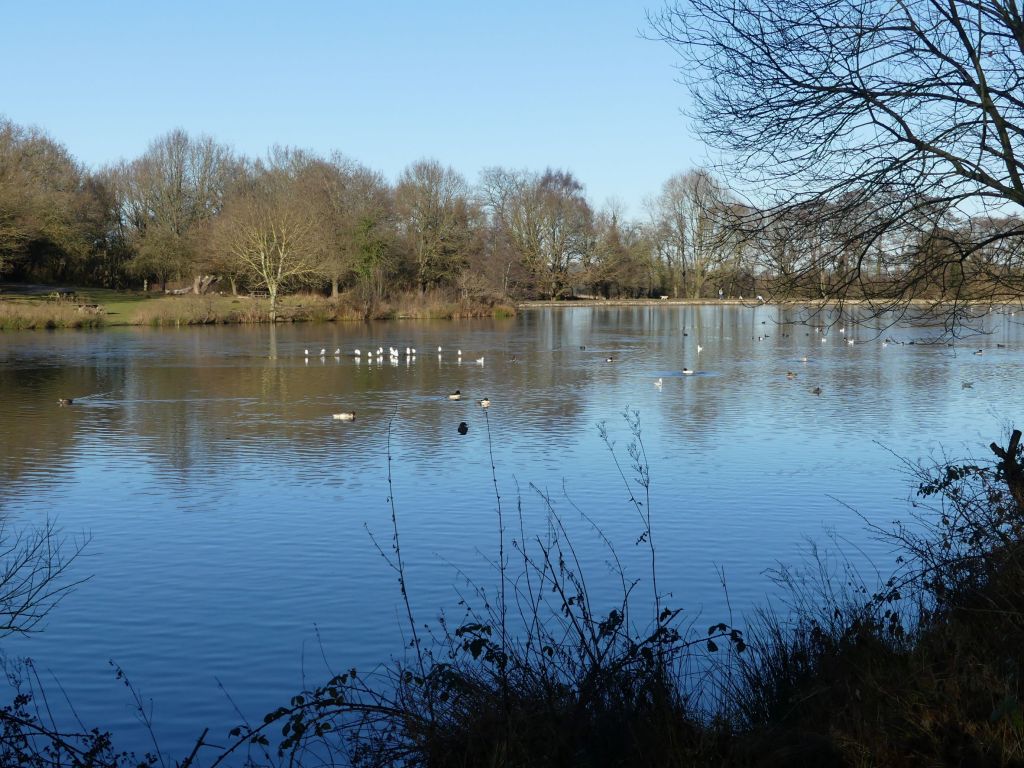
The larger of the Hardwick ponds, 15 January 2022

But I digress! According to believers in Blue Monday, on this particular day we’re likely to be regretting the impact of Christmas excesses on waistline and wallet, and will already have miserably failed to stick to our New Year Resolutions. Daylight hours will be short, the weather inclement and television schedules probably packed with unwatchable rubbish and unwanted repeats. And Mondays are, of course, loathed by anyone with a traditional Monday-to-Friday work pattern.

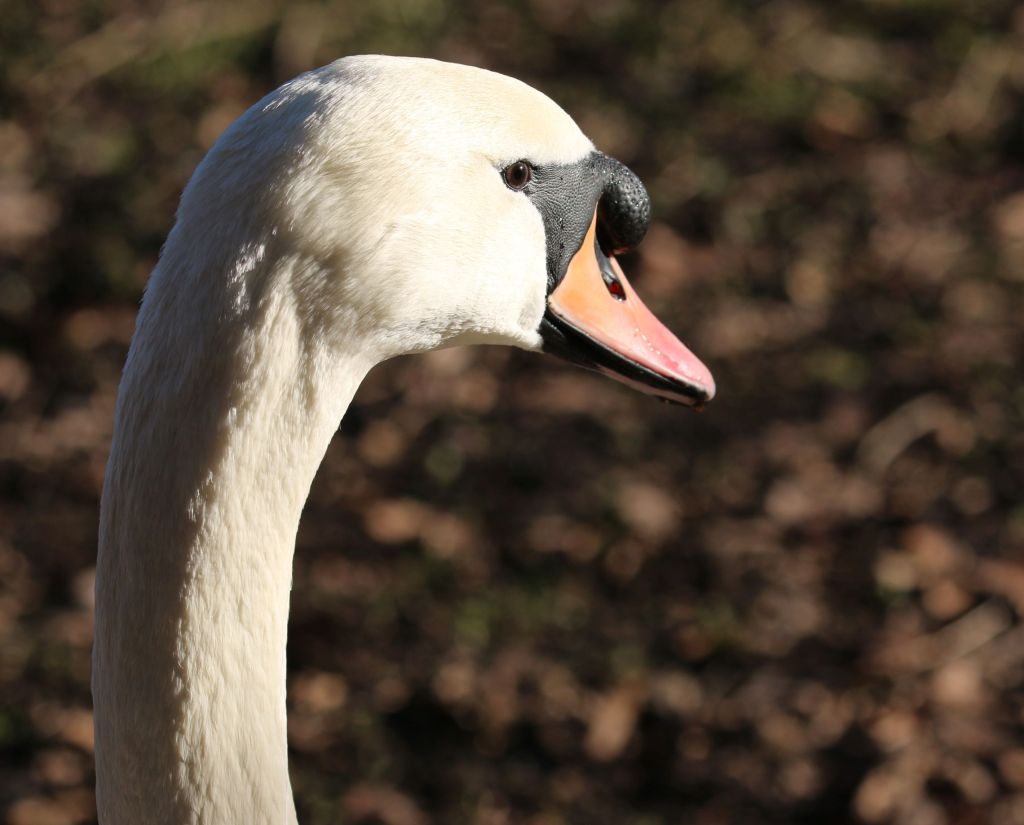
“Most of the usual suspects were there, including…Mute Swans”

It’s nonsense, of course, total bunkum. Even the guy who first came up with the notion is reported to have subsequently disavowed it, describing Blue Monday as a self-fulfilling prophecy that “is not particularly helpful”. But, just to be on the safe side, this year Mrs P and I decided to banish the Blue Monday blues from our lives by doing a spot of birdwatching.

The weather, as it turned out, was perfect, one of those crisp, cold and gloriously sunny midwinter days that make you feel glad to be alive. So we quickly got togged up in our thermals, grabbed cameras and binoculars, and headed off up the M1 to Hardwick ponds.

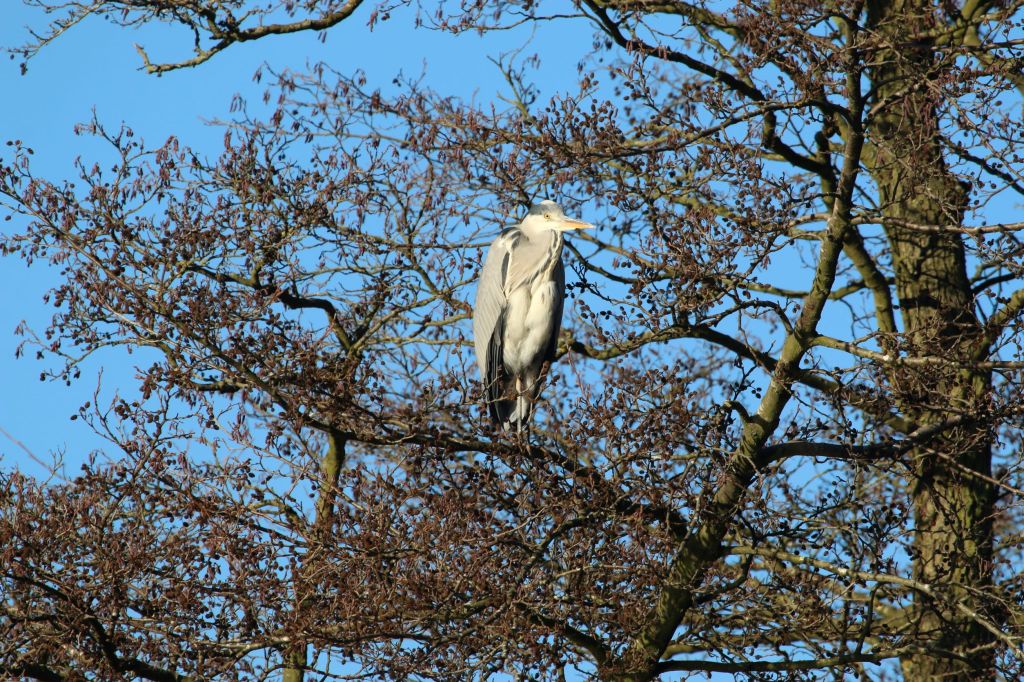
A single Grey Heron, perched high in a tree, surveyed events below with magisterial disdain

Hardwick Hall in Derbyshire is one of our home county’s most significant stately homes, and its impressive parkland includes several large bodies of water that are a haven for a variety of wildfowl. We try to visit Hardwick ponds several times each year, and are never disappointed.

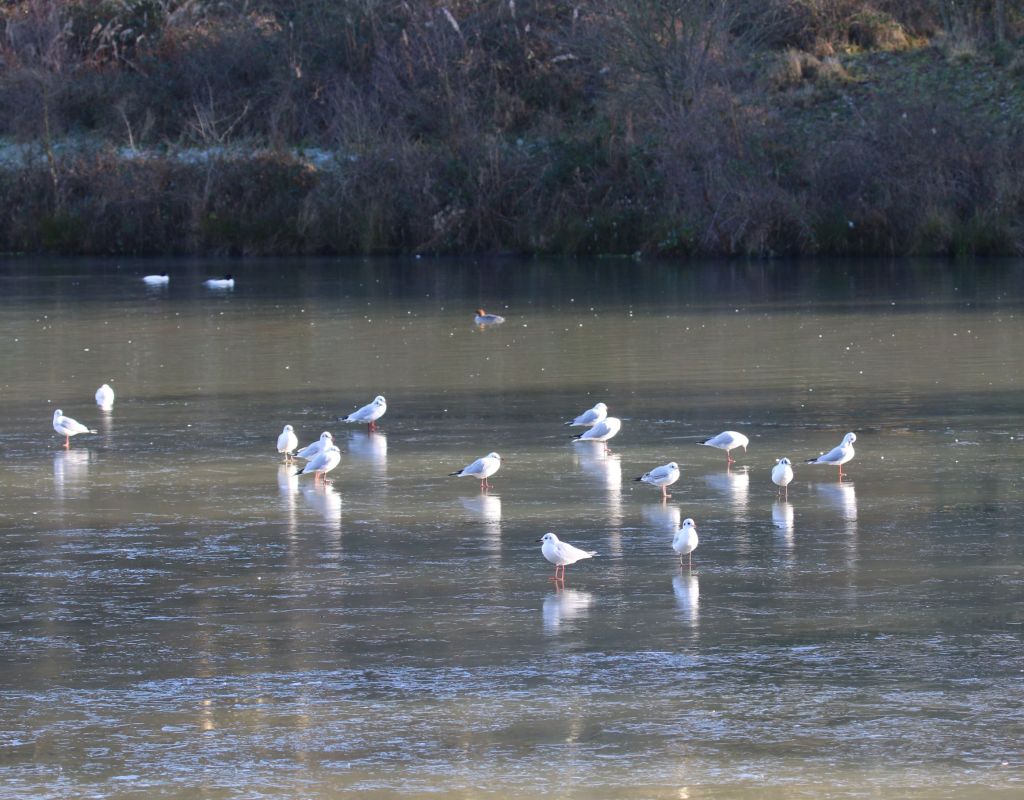
On this occasion both of the larger ponds were partially frozen. Black-headed gulls, wearing winter plumage and puzzled expressions, stood awkwardly on the ice contemplating this unexpected turn of events. The ducks and geese, however, were having none of it and instead sought out those areas of the ponds that remained ice-free.

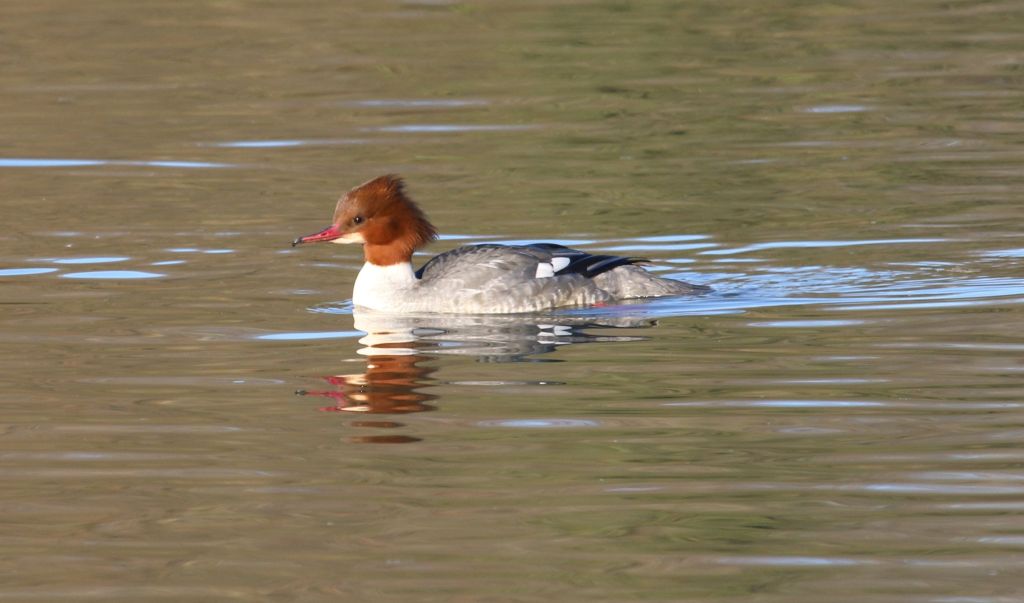
Female goosanders are largely grey, with a distinctive reddish-brown head, white chin, and white secondary feathers on the wings

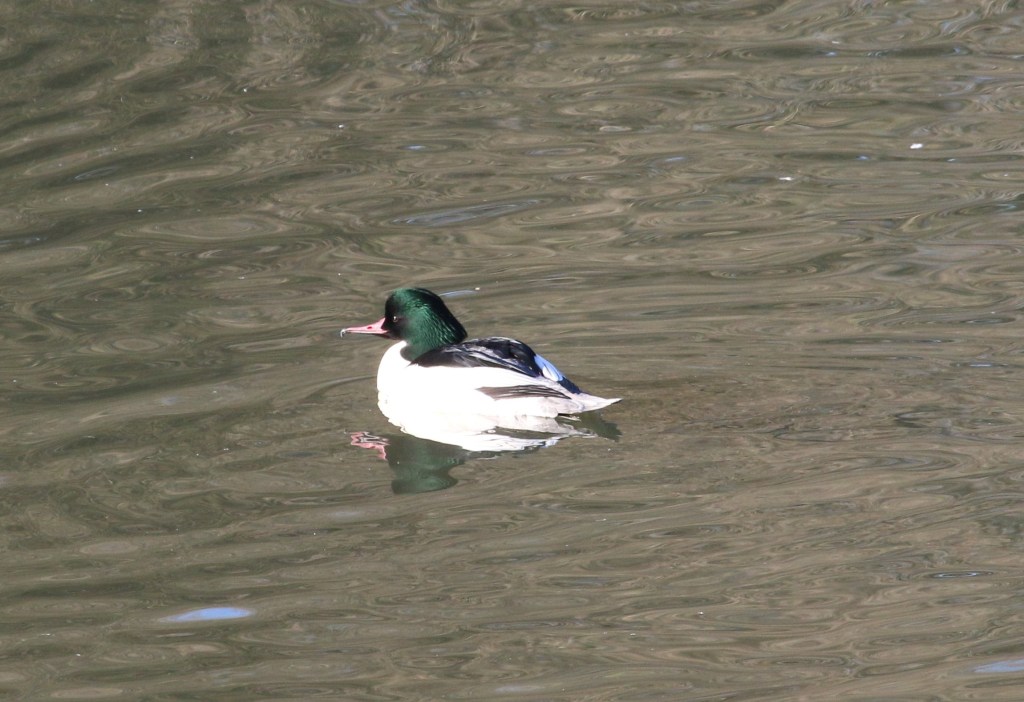
Most of the usual suspects were there, including Canada Geese, Mute Swans and a Great Crested Grebe. A single Grey Heron, perched high in a tree, surveyed events below with magisterial disdain. Nothing remarkable in any of this, of course, but what really caught our eye was a gang of good-looking Goosanders.

Goosanders are streamlined diving ducks, fish-eaters that use their long, serrated bills to catch and hold on to their slippery prey. They are members of the sawbill family, which also includes the similar-looking Red-Breasted Merganser. To add to the confusion Goosanders can also be seen in the USA, but there they are known as Common Mergansers!

Male goosanders have a white body and a black head which sports an iridescent green gloss. They have a black back, and a grey rump and tail.

Whereas the Red-Breasted Merganser is most commonly seen around the UK’s coastline in winter, Goosanders favour freshwater. Their summer habitat is the fast-flowing upland rivers of Northern England, Scotland and Wales, where they nest in holes in riverbank trees. In winter they move to gravel pits and reservoirs, as well as lakes or large ponds such as those at Hardwick.

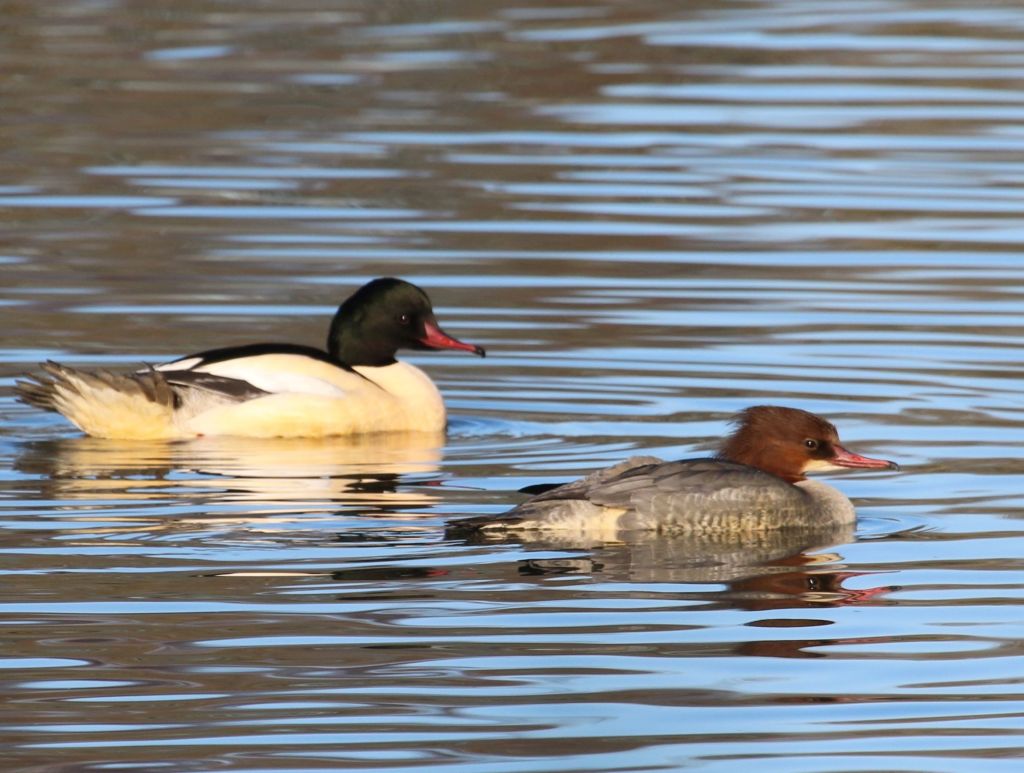
In common with most species of duck, the Goosander displays a high degree of sexual dimorphism. Adult males have a white body and a black head which sports an iridescent green gloss. The have a black back, and a grey rump and tail. Females are largely grey, with a distinctive reddish-brown head, white chin, and white secondary feathers on the wing.

A graphic lesson in sexual dimorphism: male on the left, female on the right, but both the same species!

The Goosander is a relatively new arrival in the UK, having first bred in Scotland in 1871. Its numbers slowly built up there for a century, until in 1970 the species crossed the border to begin colonising England and Wales. There are now thought to be close to 4,000 breeding pairs across the UK as a whole, with the wintering population numbering around 12,000 birds.

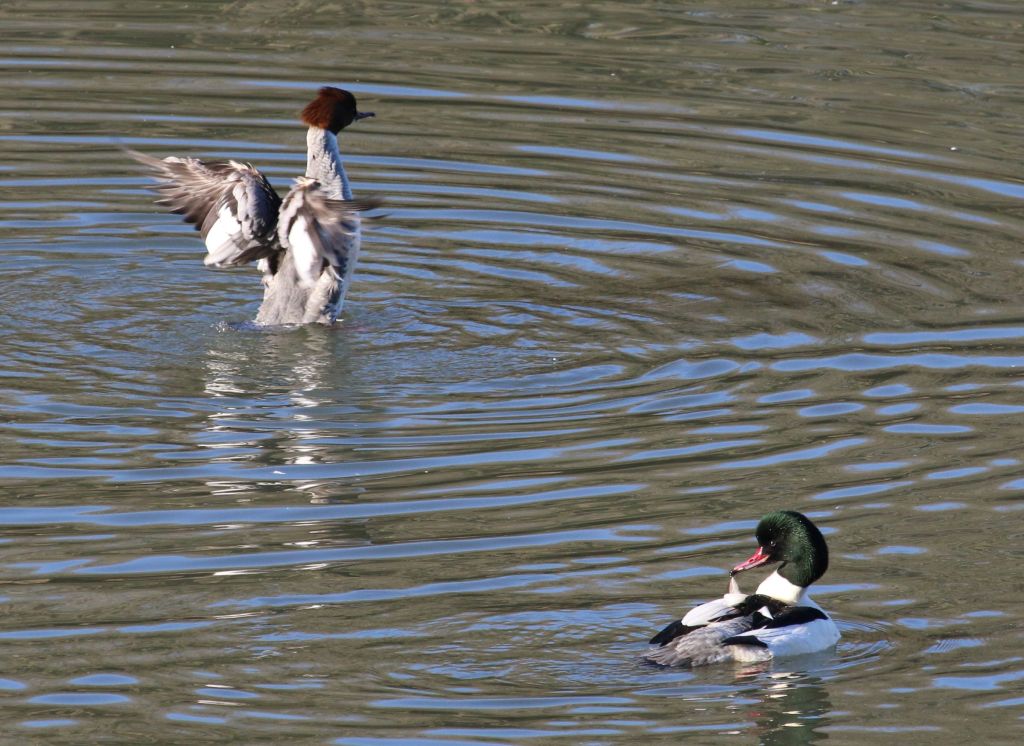
Female goosander having a flap, observed by a preening male

At least a dozen members of that wintering population were present at Hardwick ponds on 15 January, many more than we’ve ever encountered before at a single viewing. It was a delight to see them, and all the other birds that were strutting their stuff that morning. You can catch a glimpse of the Goosanders – and some of Hardwick’s other avian residents too – by clicking on the link below to my short YouTube video.

Blue Monday may have come calling for us last week, but I’m pleased to report that we were very much not at home!

“Black-headed gulls, wearing winter plumage and puzzled expressions, stood awkwardly on the ice”. See also one female and two male Goosanders in the open water to the rear of the gulls.

Yorkshire Wildlife Park: Saving the Warty Pig

Yorkshire Wildlife Park has plenty of iconic critters that are certain to impress visitors. The black rhinos, polar bears and Amur tigers, for example, are guaranteed to provoke appreciative oohs and ahs from delighted punters. But there’s other stuff too, animals that are pretty much unknown to all but the most dedicated wildlife geeks, animals that are maybe a bit more difficult to love. Warty Pigs, for example. I mean, whoever heard of a Warty Pig? And who cares?

I care! It’s true that Visayan Warty Pigs aren’t obviously cute or charismatic, but so what? All living things are intrinsically valuable, worthy of our respect and protection regardless of their looks or lifestyle. And there’s a reason why we’ve never heard of them: they’re all but extinct in the wild, and hail from the Philippines, a little known and unglamorous part of the globe that few of my fellow citizens could locate on a world atlas even if they’ve heard of the place at all.

The Visayan Warty Pig is classified as “critically endangered.” It is endemic to six of the Visayas Islands in the central Philippines, but is believed to be extinct on four of these. Their natural habitat is the rainforest, but between 95% to 98% of it has been lost to commercial forestry and slash-and-burn farming. With their natural food sources severely depleted, the pigs have resorted to raiding cultivated land, and are consequently persecuted as agricultural pests. They are also hunted for bushmeat.

There seems little doubt that, without a major conservation effort and captive breeding, the Visayan Warty Pig is doomed to extinction. Fortunately, there are many programmes, both in the Philippines and in zoos across the world, that are dedicated to saving the species.

And here’s where Yorkshire Wildlife Park is doing its bit. We’ve visited YWP several times over the last couple of years, and have been pleased to see a decent-sized group of adult females and youngsters going about their business in the ample, wooded Warty Pig enclosure. They are feisty, entertaining animals and you can enjoy some of their antics by clicking on the link below to my short video on YouTube.

The adult male – which boasts impressive facial warts, as well as a stiff, spiky crest of hair – lives next door to the main family group, replicating behaviour in the wild where males live apart from the females most of the time.

The male plainly knows his stuff, and his managed encounters with the females have produced multiple, humbug-striped piglets. My brief research on the internet confirms that other zoos are having similar breeding success, suggesting that Visayan Warty Pigs can thrive in captivity. Hopefully, one day, some of their descendants can be reintroduced to the wild, where they rightly belong.

A colourful evening at Yorkshire Wildlife Park

We first visited Yorkshire Wildlife Park (YWP) a few months after I retired, and have returned several times since I have some reservations about keeping wild creatures in captivity (don’t we all?), but the place seems OK. The animals are plainly well cared for, with plenty of space to roam. Importantly, the Park supports a number of conservation initiatives to breed highly endangered species in captivity, and seeks to educate visitors about their plight. I’ll write more about some of these conservation projects later in the year.

To help raise the money needed to care for its animals YWP is always looking for new ways to encourage visitors. Last year we’d planned to visit the Park’s Light and Lantern Festival held around Christmas, but Covid restrictions got in the way. This year the restrictions have been, well, less restrictive…but the weather was miserable throughout December, so we gave it a miss.

Finally, last week, conditions improved and we made the decision to hot-foot it 45 miles (72km) up the M1 to the outskirts of Doncaster to catch the Festival before it ends in mid-January. It was definitely worth the trip, as Mrs P’s photos show. With the exception of one hyena, which was racing madly around its spacious enclosure like Usain Bolt in his prime, living animals were notable by their absence. I suspect they were all sleeping peacefully in their dens and nests, blissfully unaware of the numerous visitors trekking round the Park, ooh-ing and aah-ing at the spectacular illuminations.

The lanterns celebrate many of the animals living at the Park – including lions, leopards and okapi – and some that don’t. A T-Rex and sundry other dinosaurs paid homage to animals that none of us will ever see in the flesh. Let’s hope that the conservation initiatives supported by YWP, and similar bodies throughout the UK and beyond, mean that the species currently living there won’t suffer a similar fate to that of the dearly departed dinos.

Call of the wild – starlings fly home to roost over our house

I hear them long before they become visible. Starlings are gathering over the hills to the south of the estate where we live. It begins as an avian whisper, barely audible above the ambient sounds of wind and distant traffic. And then it starts to build, unseen birds chattering excitedly with one another, shouting, squawking, screaming joyously. A wall of sound, the call of the wild.

The cacophony echoes all around me. I scan the sky in the direction from which I know they will appear. Still nothing. But it’s only a matter of time. They will be here. At this time of year they fly over our estate every day at around 4pm, heading towards their roosting site. Today will be no different.

At last they start to arrive. First a lone outrider, silent and determined, appears from behind the house at the rear of our garden. It passes over me and disappears into the distance. Then two others, calling to one another as they fly.

Seconds later the main flock arrives, hundreds of birds in close formation. A deafening, spellbinding squadron of starlings, known to science as a murmuration, fills the sky.

Although the birds clearly have a destination in mind, they briefly break off from their journey to swoop and swirl above my head, like a bunch of boastful aviators flaunting their skills at an air show. The murmuration takes on a life of its own, sketching ever more complex and beautiful patterns on the canvas of the evening sky. The noise is louder than ever, drowning out everything else.

And then, as suddenly as they arrived, they take their leave. The flock heads off to who-knows-where, and the sound of their relentless chitter-chatter fades. A few laggards appear from the south, flying swiftly in pursuit of the main flock, keen to catch up with their buddies before they roost for the night.

Seconds later they too have gone and I’m left alone with my thoughts, marvelling at the extraordinary event I have just witnessed.

* * * * *

In some parts of the country murmurations at this time of year can number several hundred thousand birds, occasionally more than a million. By these standards, the aerial display that takes place above our garden every winter’s afternoon is tiny. But to me it is far from insignificant.

What a privilege it is, to stand in our modest back garden on our boring suburban housing estate in the unremarkable, overpopulated East Midlands of England, and experience the call of the wild. It is a moving, mesmerising experience, and the wonder of it fills me with joy. Long may it continue.

A remarkable woman, Little Egrets and birth of the RSPB

Our birdwatching has been limited this year, as a result of the Covid restrictions and our continuing caution in the face of this frightening pandemic. We’ve seen no rarities during our occasional birding forays, but one bird we have been pleased to meet up with is the Little Egret. When we started birdwatching over three decades ago these elegant members of the heron family were almost entirely absent from the UK, but they can now routinely be seen in many parts of the country. Their return is a conservation success story.

* * *

Little Egrets were once present here in large numbers, but were wiped out by mankind’s greed. In 1465, for example, 1,000 egrets were served up at a banquet held to celebrate the enthronement of a new Archbishop of York. A century later they were becoming scarce and by the 19th century they’d all but disappeared.

Egrets in continental Europe fared little better, although here it was fashion rather than food that drove the decline. They had been a major component of the plume trade since at least the 17th century, but in the 19th century demand exploded for feathers, and other bird parts, to decorate the hats of wealthy upper- and middle-class women. We know, for example, that in the first three months of 1885, 750,000 egret skins were sold in London, while in 1887 one London dealer sold 2 million egret skins.

Seen from a modern perspective the wanton slaughter of any species to feed the vanity of shallow fashionistas is appalling. Fortunately, however, it also appalled some of the women at whom the plume trade was notionally directed, initiating a chain of events that led to the formation of the Royal Society for the Protection of Birds (RSPB). Today the RSPB is the UK’s largest nature conservation charity.

One of the women determined to stop the slaughter was Emily Williamson (1855-1936). At first she appealed to the all-male British Ornithologists’ Union to take a stand, but when they ignored her letters she realised this was a problem that women themselves could solve.

In 1889 Emily invited a group of like-minded women to her home in Didsbury on the outskirts of Manchester, to discuss how to the stop the vile plumage trade. The meeting established the Plumage League. Its rules were simple, and to the point:

  • ‘That members shall discourage the wanton destruction of Birds, and interest themselves generally in their protection.’
  •  ‘That Lady-Members shall refrain from wearing the feathers of any bird not killed for the purposes of food.

Two years later, in 1891, the Plumage League joined forces with the Fur and Feather League. This was also an all-female group and had been set up in the south of England by Eliza Phillips (1823-1916), who shared Emily’s values and aspirations.

Their new organisation was called the Society for the Protection Birds. Led by Emily Williamson, Eliza Phillips and Etta Lemon (1860-1953), and with the Duchess of Portland Winifred Cavendish-Bentinck (1863-1954) as president, the Society grew rapidly. By 1893 it boasted 10,000 members. In 1904, just 13 years after it was founded, the Society received a Royal Charter from Edward VII, making it the Royal Society for the Protection of Birds (RSPB).

One hundred years ago, on 1 July 1921, after nearly 30 years of campaigning by the Society, Parliament finally passed the Importation of Plumage (Prohibition) Act. The Act banned the importation of exotic feathers, and thereby helped save many species from extinction.

Since then the RSPB has gone from strength to strength, campaigning to protect habitats and species both in the UK and across the globe. The RSPB’s nature reserves are also a valued resource for British birdwatchers, and Mrs P and I are proud supporters (Life Fellows, in fact) of this brilliant conservation organisation.

From small acorns do might oak trees grow, and Emily Williamson can never have imagined that her humble initiative in a Manchester suburb would have such profound consequences. She and her fellow founders of the Society were remarkable individuals, all the more so when we reflect on the degree to which women were marginalised in Victorian society.

Thankfully, Emily Williamson is finally starting to receive the recognition she deserves. In April 2023 a statue of Emily will be unveiled in Didsbury’s Fletcher Moss Park, close to her former home.

* * *

Needless to say, Emily Williamson was not at the forefront of our minds when we spotted our Little Egrets a few weeks ago. I’m sure, however, that she would have been thrilled to see them back in the UK and fully protected under the Wildlife and Countryside Act, 1981.

Little Egrets first returned to the UK in significant numbers in 1989. They arrived here naturally, following an expansion of their range into western and northern France during the previous decades. They first bred in 1996, in Dorset, and continue to thrive. There are now thought to be around 700 breeding pairs in the UK, while the over-wintering population is around 4,500 birds.

Little Egrets are handsome birds, and a welcome addition to any wetland habitat. It’s great to have them back here, where they belong.

* * *

Postscript: This essay on The History Press website provides further details on women’s role in the foundation of the RSPB

After a gap of 800 years…there are beavers in Derbyshire again!

The UK has one of the worst records of any country in the world for protecting its historic biodiversity. This should come as no surprise to those of us who live on this crazy, crowded island where caring for the natural world has traditionally played second fiddle to making a quick buck. But the tide is beginning to turn: up and down the country many of us are fighting back, seeking to look after what we still have and, where possible, to reintroduce what we have lost. Which brings me to the inspiring story of Derbyshire’s beavers.

If the experts are to be believed, beavers were wiped out in my home county around 800 years ago. Now I’m not sure quite how they know that, I can’t quite believe that one of the local lords recorded the event for posterity in his diary, writing something like “Great news, just exterminated the last beaver in Derbyshire, so now our trees will be safe forever…until, that is, we want to chop them down for firewood, or to make floorboards or beer barrels or whatever.

To be honest, the exact date doesn’t really matter. The incontestable fact is that, following the end of the last Ice Age, beavers were common hereabouts for many thousand of years, before becoming extinct in the Middle Ages.

VIDEO CREDIT: Derbyshire Wildlife Trust. Film of the first beaver being released at Willington Wetland Nature Reserve on a blustery day in late September 2021

On one level, the extinction of the beaver can be seen simply as the regrettable loss of one of this island’s few cuddly mammals, a mammal guaranteed to elicit sighs of “Ah, so cute” from ordinary folk encountering them going about their daily business in the wild. But there’s more to it than that. Beavers are landscape engineers, a keystone species that shapes environmental conditions in a manner beneficial to countless other species.

By digging canal systems and damming water courses, beavers create diverse wetland areas, places where fish can safely spawn and other animals such as otters, water voles and water shrews can make their homes. Insects thrive in the waterways constructed and maintained by beavers, and these in turn nourish a range of bird species. In creating suitable habitats for themselves, therefore, beavers help create robust ecosystems in which a whole range of species can flourish.

But it’s not just wildlife that benefits from these hefty rodents beavering away in the countryside – there’s a payoff for humans too. It is argued that beaver dams improve water-quality by acting as filters which trap soil and other pollutants washed into rivers from surrounding farmland.  The ponds created by beaver dams also impact on the flow of rivers, and can help mitigate downstream flooding after periods of heavy rain.

VIDEO CREDIT: (c) Helen Birkinshaw via Derbyshire Wildlife Trust. On Friday 8th October, the day after the second pair of beavers were released, the male was spotted swimming near the release site

Given these credentials it’s no surprise that environmental organisations have long been keen to see beavers reintroduced to the UK. Scotland led the way, and there are spots there where animals reintroduced from continental Europe are already thriving. In England the first major reintroduction initiative was in Devon, led by Devon Wildlife Trust in partnership with a range of other interested parties.

Having watched for several years the success of beaver reintroductions in other parts of the country, Mrs P and I were thrilled when our local conservation organisation – Derbyshire Wildlife Trust – announced its own plans for a project at the Willington Wetlands Nature Reserve in the south of the county. When the Trust appealed for donations to help fund the initiative we were pleased to help.

Progress stalled for a while due to disruption caused by the Covid pandemic. But at last, a few weeks ago, we got an email from the Trust inviting us to sign up to attend an online event at which a pair of beavers would be released into their new Derbyshire home. The animals had been captured on the River Tay in Scotland, where the species is now doing very well. After a period of quarantine and some health checks the beavers were transported to Derbyshire in special wooden crates on the back of a pick up truck.

VIDEO CREDIT: Derbyshire Wildlife Trust. Camera trap footage of one of the beavers snacking on a branch. Plainly the beavers have already begun to modify the local landscape!

The release of the two animals went perfectly. We’d feared they would dash for the water the second the doors of their crates were opened, and immediately dive to disappear from view. Instead they took their time, seemingly untroubled by the stress of their long road journey, and put on a bit of a show for their adoring online fans. Huddled around our laptop at home, it was a privilege to watch the images of history being made just a few short miles away. At last, after an absence of some 800 years, beavers were back in Derbyshire!

A couple of weeks later the Trust released a second pair of beavers into their enclosure at the Willington Wetlands Nature Reserve, The enclosure is surrounded by a specially designed beaver-proof fence and large enough at 40 hectares, or just shy of 100 acres, to allow the animals to live entirely natural lives. The brook flowing through the enclosure guarantees a suitable wetland habitat, and a wide range of native plants and trees will offer the beavers all the food they need to live long and happy lives.

With a bit of luck, next year we will be celebrating the first beavers to be born in Derbyshire since the Middle Ages!

VIDEO CREDIT: Derbyshire Wildlife Trust. More camera trap footage. The Willington Reserve’s newest residents seem relaxed, and are making themselves at home!

* * * * *

For further information on the reintroduction of beavers in the UK see the following links

Kedleston Hall – A walk in the park (no peasants allowed!)

Our county of Derbyshire has many exceptional stately homes, where ordinary folk like me can catch a glimpse of what life was like for the English super-rich before inheritance taxes prompted them to modify their extravagant lifestyles. Kedleston Hall, an 18th century Palladian and Neoclassical masterpiece now managed on behalf of us all by the National Trust, isn’t the most famous of these, but it’s definitely one of my favourites.

Rear of Kedleston Hall viewed from the Long Walk, with the C12th All Saints Church to the left. Note also the ha-ha, which is invisible from the Hall and stops wandering sheep getting too close.

Of course, when you’re obscenely rich, conspicuous consumption doesn’t have to end with your palatial mansion – when you’ve spent as much as bad taste will allow on alabaster, marble and gold leaf, you can always throw more of your wealth at the rest of the estate. Kedleston is a case in point. As you wander through the magnificent parkland in which the Hall sits, it’s easy to forget that this is an entirely man-made landscape.

Trees have been selected and positioned to add to the visual appeal of the parkland. The sheep help too!

Kedleston is the ancestral home of the Curzon family, who have lived in the area since the 12th century. Between 1759 and 1775, Nathaniel Curzon, 1st Baron Scarsdale (1726-1804) commissioned renowned Scottish architect Robert Adam (1728-1792) to design an opulent new mansion, flanked to the south and west by an elegant formal garden of trees and shrubs. Surrounding the Hall and garden, and separated from them by a ha ha – a sunken wall which was invisible from within and intended to keep livestock out – was a landscape comprising some 800 acres (324 hectares) of rolling, naturalised parkland.

Robert Adam’s fine three-arched bridge, one of the highlights of Kedleston’s parkland

Once there was a small village at the centre of the estate, clustered around the C12th All Saints Church. However in 1759, as was the custom of the time, the villagers were all evicted to ensure that Baron Scarsdale could go about his daily business on the estate without any danger of coming into contact with representatives of ‘the great unwashed.’

An idyllic landscape, now managed on behalf of the nation by the National Trust

The peasantry having been removed, it was time to set about taming the landscape. Adam put the stream that traverses the estate to good use, moving mountains of earth to create a series of scenic lakes and cascades. To cross the stream he built a fine three-arched bridge, and this remains one of Kedleston’s most impressive features. Other structures to adorn the parkland include a bath-house and a fishing pavilion, although several temples and follies proposed by Adam were never completed.

One of the civil engineering works required to create and manage Kedleston’s lakes

Robert Adam wanted his creation to be enjoyed from all angles, and to this end he designed the Long Walk, a winding three mile circuit through the estate, with views of the rear of the Hall and across the parkland.  It was this walk that Mrs P and I embarked upon a few weeks ago.

The bath-house, designed by Robert Adam

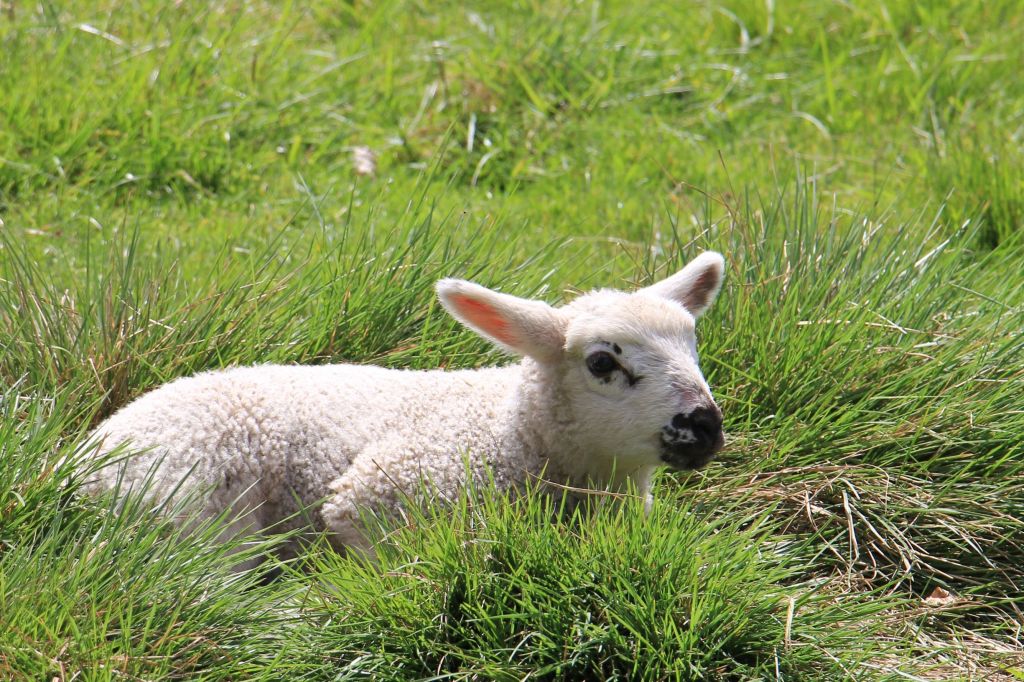
The sun was shining, the birds were singing, lambs frolicked playfully under the watchful eyes of their mothers, and the vistas offered by the Long Walk were uniformly pleasing. After long months confined to our own modest house and garden by the Covid restrictions it was great to escape its confines and to enjoy the wide open spaces that the Kedleston estate offers.

Aaah, cute!

Robert Adam was without doubt a genius: both the Hall (which I shall write about in a future post) and the parkland lift the spirits enormously. But if you ever visit Kedleston do spare a thought for the local peasantry, who lost their homes so that this magical place could be created as an exclusive pleasure ground for Baron Scarsdale and his idle-rich buddies!

The magic of bluebells

I do not think I have ever seen anything more beautiful than the bluebell I have been looking at.  I know the beauty of our Lord by itGerard Manley Hopkins (1844-1899)

The celebrated English Victorian poet Gerard Manley Hopkins clearly loved his bluebells. We do too, and one of our treats every spring is to seek out some local bluebell woods where we can enjoy them in all their majesty. That wasn’t possible in 2020 due to the Covid restrictions, so this year, as soon as government rules and the weather conditions permitted, we made a beeline for the gardens at Renishaw Hall. We weren’t disappointed! 

Renishaw Hall and Gardens can be found in the north-east corner of our home county of Derbyshire. I wrote briefly about their history in this post last year. Renishaw is famed for its stunning formal gardens, laid out in 1895 by Sir George Sitwell (1860-1943) in the classical Italianate style. However, wonderful though these are, it is the bluebell-rich woodland that is our favourite springtime feature at Renishaw. It’s an area known as Broxhill Wood, although on a map of the estate dating from the 18th century it’s referred to as the Little Old Orchard.

With their drooping habit and deep violet-blue colouring, bluebells are distinctive residents of woodlands throughout the length and breadth of the country. They go under various evocative names including Cuckoo’s Boots, Wood Hyacinth, Lady’s Nightcap, Witches’ Thimbles, Wood Bell and Bell Bottle.

They’re also referred to as the English Bluebell to distinguish them from the Spanish variety, which is available to buy from garden centres. The two species are subtly different: Spanish bluebells grow upright, with the flowers all around the stem, not drooping to one side like the English version. The Spanish species is a more vigorous plant, and may constitute a long-term threat to our more delicate native flower by out-competing or hybridising with it.

Bluebells are found all across Britain except Shetland, and although they’re also present in Western Europe the UK accounts for around half the world’s population of this beautiful bulb. Woodlands carpeted by masses of bluebells are magical features of the British countryside in late April and May, and have inspired generations of poets and writers. Here’s what the author Graham Joyce (1954-2014) had to say about them: 

The bluebells made such a pool that the earth had become like water, and all the trees and bushes seemed to have grown out of the water. And the sky above seemed to have fallen down on to the earth floor; and I didn’t know if the sky was the earth or the earth was water. I had been turned upside down. I had to hold the rock with my fingernails to stop me falling into the sky of the earth or the water of the sky. But I couldn’t hold on.

As Graham Joyce implies, bluebells are a bold, unmistakable presence in the British landscape, so it’s no surprise that a rich folklore has grown up around them. Bluebell woods are believed to be enchanted, fairies using them to lure unwary travellers into their nether world and trap them there. The bells are said to ring out when fairies summon their kin to a gathering, but if humans hear them death will surely follow. And, of course, fairies are by their nature capricious beings, so when you visit a bluebell wood it’s best not to trample on any of their precious blooms. You have been warned!

On a slightly different note, folk tradition has it that wearing a garland of bluebells will induce you to speak only the truth. This, of course, is why you will never see a politician bedecked with bluebells.

Our ancestors found various practical applications for bluebells. Their sticky sap was once used in bookbinding because it would repel attacks by insects, and in early times it was also used to glue the feathers onto the shaft of an arrow. Herbalists prescribed bluebells to help prevent nightmares, and as a treatment for snakebites and leprosy – perhaps a somewhat misguided course of action, given that the plant is poisonous.

The bluebell is traditionally associated with St George, England’s patron saint, probably because it starts to bloom around his feast day on 23rd April. In reality, the flower’s connection with England is much stronger than that of George himself. Bluebells have been found throughout the country at least since the last ice age, whereas the celebrated saint never actually visited these shores (the historical St George was born in Turkey in the late 3rd century CE, and died in Palestine in 303 CE.) 

The connection between St George and bluebells may be somewhat tenuous, but the popularity of the flower here is beyond dispute. In a 2002 national survey organised by the charity Plantlife, the bluebell was voted Britain’s favourite flower. So overwhelming was its victory that voting for bluebells was banned in a repeat of the research in 2004.

The popularity of bluebells is such that they are protected under the Wildlife and Countryside Act (1981). This prohibits anyone digging up the plant or bulb from the countryside, and landowners are similarly prevented from removing bluebells from their private land with a view to selling them. Trading in wild bluebell bulbs and seeds is an offence.

Bluebells are an enchanting, iconic part of the British countryside at springtime, and have clearly captured our collective imagination.  To put it crudely, we Brits just can’t get enough bluebells. Let’s give Anne Brontë (1820-1849), the notable Victorian novelist and poet, the final word on their very special charms:

The Bluebell

A fine and subtle spirit dwells
In every little flower,
Each one its own sweet feeling breathes
With more or less of power. 

There is a silent eloquence
In every wild bluebell
That fills my softened heart with bliss
That words could never tell.

My first butterfly of 2021

Winter always drags, but this year’s been worse than ever. Lockdown 3.0 was imposed just after Christmas, meaning that – other than a weekly trip to the supermarket and an occasional stroll around our suburban estate – we’re confined to Platypus Towers. No chance of a swift visit to a bird reserve on a fine day, and thanks to the regular visits of local cat Milky Bar, only birds with suicidal tendencies visit our garden. It’s a pretty miserable existence, and the lousy weather makes things worse.

But after several days of wintry conditions we wake up on 22 January to a dazzling morning, the sun blazing from a cloudless blue sky. We sit ourselves down in the garden room – which faces south – intent on making the most of this meteorological anomaly, when to our amazement a butterfly appears. It settles on the window ledge, just a metre away from us on the other side of the double glazing, and soaks up the rays for about 20 minutes before moving on again.

The Peacock is a spectacular and unmistakeable butterfly, and takes its name from the vivid pattern of eyespots that decorate all four wings. It’s one of just a handful of British butterflies that overwinter as dormant adults, hunkering down somewhere sheltered during the darkest months in readiness for an early start to the breeding season when spring arrives. However, as we discover today, even in the depths of winter a relatively warm day may rouse Peacocks and encourage them to take to the wing.

I’ve been interested in butterflies since I was a little kid, but have never spotted any this early in the year. And never have I been more grateful to see one of these magical insects: the last 12 months have been tough, and it’s good to be reminded that the beauty of nature will still be there for us to enjoy when the Covid restrictions are finally lifted.

* * * * *

In 2020 I saw my first butterfly around 6 March, and described it as a “symbol of hope in the darkest of days.” You can read my reflections about the symbolism of butterflies by clicking here.

The Devil is back! – Conservation programme enters new territory

The Tasmanian Devil is the world’s largest surviving marsupial predator. Once common throughout Australia, for thousands of years these iconic animals have been confined to the island of Tasmania. But even there they are now in big trouble due to a killer cancer known as Devil Facial Tumour Disease (DFTD). Conservation groups have been working tirelessly to protect the species, and a few weeks ago news began to circulate of a ground-breaking reintroduction programme in mainland Australia. The Devil is back!

* * *

Exactly four years ago we were at the start of our first and only visit to Australia. At the heart of our adventure was a road trip through Tasmania, where we spent five blissful weeks feasting our eyes on magnificent scenery and feisty wildlife. And the wildlife doesn’t come any feistier than the Tasmanian Devil, the island’s iconic marsupial predator.

tasmania-devilscradle-2016-16

Tasmanian Devil at the Devils@Cradle Sanctuary, November 2016

As well as visiting sanctuaries that are part of the captive breeding programme, we were privileged to see some truly wild Devils at the Mountain Valley Private Nature Reserve run by Len and Pat Doherty. Here’s how I described the experience in my blog of our Tasmanian road trip.

We are back in our cabins when Len arrives with a bucket full of chopped up wallaby, roadkill that is about to be recycled.  He spreads the meat about outside our cabin window.  A light on the porch means that lumps of flesh are illuminated and clearly visible from the cabin.  We settle down and wait for the action to begin. 

And wait … and wait.

At midnight we reluctantly decide to give up. Our quarry isn’t going to show tonight and, disappointed, we stumble off to bed.  However we leave the outside light on, and a floor-to-ceiling window means I can see the feeding area while laying in bed.

I’m soon asleep, but at 1.15am I wake up with a start.  Rubbing the sleep from my eyes I peer outside, and to my amazement glimpse the unmistakeable sight a Devil tucking into chopped up roadkill.

I nudge Mrs P, who is snoring softly in my ear’ole. “Devil,” I whisper urgently, “Devil!”

She grunts, but otherwise doesn’t respond.

“No, I’m not joking, there’s a Devil outside,” I say again, nudging her harder this time.

At last, it sinks in. Now she’s awake, creeping from the bed, groping silently in the dark for her camera. The light outside the cabin isn’t great for taking photos and flash is out of the question, but Mrs P does the best she can:

Encounter with the Devil: 1:15am, 23 November 2016

We watch, captivated, for about 15 minutes as the Devil systematically works his way through about 20 pieces of chopped up wallaby. Devils can eat 40% of their own bodyweight in a single night, so this is no more than a light snack.

The window is closed, of course. It’s bloody cold outside, and for that matter we’re bloody cold inside, halfway up a mountain in an unheated log cabin, clad only in our nightwear! But we ignore the discomfort, transfixed by the action just outside our window. And as we listen we can clearly hear our diabolical guest crunching ravenously on the bones, which he gobbles down together with the gory lumps of wallaby 

The next evening, the same thing happens. We go to bed at midnight and I’m woken shortly after 1:00am … only this time there are two Devils rather than just one.  They bicker and snarl at one another, battling over the spoils.

The light’s not great and flash is out of the question, but who cares? What an experience!

On the final evening of our stay at Mountain Valley three Devils turn up, thankfully a little earlier this time. We only ever see two at any one time, but we know there are three individuals as their size and white markings vary.

Again we relish watching the animals interact as they squabble, hurling abuse and grappling with one another over prime feeding rights.  They are feisty little things, and it’s great to see them going about their business blissfully unaware that every snap and snarl is being scrutinised.

* * *

Devils disappeared from mainland Australia around 3,000 years ago. The reasons are thought to be the introduction of dingoes, as well as other human activity and an increasingly arid climate. However they hung on in Tasmania, where there are no dingoes and the climate is more temperate.

When Europeans arrived in Tasmania they encountered a healthy population of Devils, which they named for their unearthly screams, snarls and growls. But peaceful co-existence between settlers and the Devils quickly proved impossible.

Sheep farming was big business amongst the settlers, and – although scavenging is their preferred way of getting a meal – the Devils were identified as sheep killers. Persecution followed, and Devil numbers plummeted.

Tasmanian Devil at the Devils@Cradle Wildlife Sanctuary, November 2016

Devils became very rare, and were seemingly heading for extinction. But in June 1941 they were given legal protection, and for the next 55 years numbers gradually recovered.

However in 1996 it became evident that the animals were again under threat, this time from Devil Facial Tumour Disease. DFTD is characterised by cancers, generally around the mouth and head. It is invariably fatal, and has resulted in a huge decline in Devil numbers.

In recent years the Tasmanian government has invested heavily in its Save the Tasmanian Devil Program, which includes advocacy, annual monitoring, captive breeding and active management of wild, disease-free populations on Maria Island and the Forestier-Tasman Peninsula.

* * *

Meanwhile, back on mainland Australia the conservation organisation Aussie Ark has been building an “insurance population” of Devils. It says

To date, more than 390 devils have been born and raised at Aussie Ark in a way that fosters natural behaviour in the animals, preparing them for release into the wild. Aussie Arks ‘Rewild Australia’ strategy is a key component, alongside Species and habitat recovery, in returning Australia to it pre-European state.

Aussie Ark website, retrieved 27 October 2020

During 2020 Aussie Ark have released 26 Devils into a 400-hectare (1,000-acre) sanctuary at Barrington Tops, around 120 miles north of Sydney in New South Wales. The animals won’t be living a completely wild existence: they will be confined within the boundaries of the sanctuary and receive supplementary feeding. Researchers will monitor them by remote cameras to learn more about how they adjust in their new environment.

However the long-term aim of the programme is to release Devils into targeted, non-protected areas in mainland Australia. Here it’s hoped they will contribute to keeping feral cat and fox populations under control, and thereby help protect native wildlife.

Tasmanian Devil at the Bonorong Wildlife Sanctuary, November 2016

This is a bold, ambitious programme, and has been compared with the project to return wolves to Yellowstone National Park in the USA. Over the past 12 months the wildlife news from Australia has been bleak, dominated by the huge losses that resulted from the devastating bushfires, so it was great to come across this inspiring good news story.

Having been privileged to see Tasmanian Devils in the wild, they will always have a special place in my heart. Let’s hope Aussie Ark’s project is successful, and they quickly make themselves at home on the mainland.