Sandwich terns and the miracle of migration

During a recent trip to the island of Anglesey in North Wales we were pleased to encounter a breeding colony of Sandwich terns at the Cemlyn Nature Reserve. Adult birds were rearing their chicks on little islands in a lagoon behind the beach, occasionally breaking off from parental duties to go fishing. It was such a pleasure to witness – cute little chicks exploring the islands of their birth while their parents looked on caringly or whizzed around in the skies above us, their beaks loaded down with lunch as they returned from fishing expeditions. And all around us, a cacophony of sound as the birds called out noisily to one another.

Despite the blustery wind, our morning spent at Cemlyn Bay was idyllic, just the sort of thing that brings joy to a birdwatcher’s heart. But such joys are transitory. In only a few weeks from now the birds we so admired will be at the other end of the world. We’ve all heard of migration, the process by which countless species of bird move from one geographical location to another in search of food or a suitable place to raise their young, but I think we underestimate the enormity of the undertaking.

Soon the Sandwich terns of Cemlyn Bay will be heading off to the coast of west Africa. The most intrepid amongst them will make it all the way to South Africa, a journey of around 10,000km (a little over 6,000 miles). And a few months later they’ll head back again, doing the journey in reverse!

So, in just a few short months these guys will fly around 20,000km, and in between those epic journeys they’ll spend a lot of time cruising over coastal waters on fishing expeditions. Their average lifespan of 12 years means that Sandwich terns can clock up over 250,000km (150,000 miles) in the course of their lives. What an extraordinary achievement for a creature weighing in at around 250 grams (9 ounces), and with a wingspan of roughly 100cm (39 inches).

Remember, also, that the UK plays host to four other species of tern during the summer months. One of these, the Arctic tern, breeds close to the Arctic circle, but spends northern hemisphere winters on the edge of Antarctica. Depending on the exact starting and finishing points, and the circuitous route taken in between, it is reckoned that one of these birds may fly between 71,000km and 95,000km (44,000 to 59,000 miles) over a period of 12 months. And Arctic terns are famously long-lived, with a lifespan of up to 30 years. During the course of their lifetime the oldest birds may therefore fly a distance equivalent to taking three round-trips to the moon. Eat your hearts out, NASA and SpaceX!

I find the numbers quoted above almost impossible to comprehend. Small birds, huge distances! The annual travels of Sandwich terns, Arctic terns and all their cousins leave me in no doubt that bird migration is a miracle worthy of our absolute respect. Way to go, guys.

If the Earth were to have a set of instructions…the wisdom of the Dalai Lama

The Global Birdfair is an event we attend every year, a great opportunity to hear eminent ornithologists and other conservation experts speaking on subjects that are dear to their hearts, and to ours too. One of the stand-out events at the 2026 Birdfair was a presentation by the British zoologist and author Mark Carwardine, which included an anecdote about a meeting in 1989 with His Holiness the 14th Dalai Lama.

At the time of their meeting, Carwardine was working with novelist Douglas Adams (creator of the wonderful Hitchhiker’s Guide to the Galaxy) on the BBC’s project Last Chance to See, in which the two presenters journeyed across the globe in search of some of the world’s most endangered species.

As part of the project Carwardine and Adams interviewed the Dalai Lama, hoping to gain a Buddhist perspective on nature, the environment, and humanity’s relationship with animals. Carwardine has previously spoken warmly of the Dalai Lama, describing him as one of the most intriguing and enchanting people he has ever met. It was clear from his Birdfair presentation that this encounter, which took place relatively early in his career, had a profound influence on him and helped shape how he communicates the urgent need to protect wildlife.

For the benefit of his Birdfair audience, Carwardine displayed on the screen his own brief summary of what the Dalai Lama said to him that day. It read as follows:

“If the Earth were to have a set of instructions, they’d be very simple. Much simpler than the instructions for recording a tv programme on a digital recorder, for example. Don’t poison the water – don’t chop down too many trees – don’t let the planet get too overcrowded – don’t touch the thermostat – and don’t kill all the wildlife. It really is a simple as that.”

Now that’s what I call wisdom. I have absolutely nothing to add.

Bad timing!

Don’t you just hate it when you make a bold public statement, only to be proved totally wrong just seconds later! We witnessed a perfect example during our visit to Sculthorpe Moor Nature Reserve in Norfolk a couple of weeks ago, when an enormous rat put in an unscripted – and thoroughly unwelcome – appearance, much to the dismay of one of the Reserve’s volunteer staff.

The Reserve is run by the Hawk and Owl Trust, and boasts a range of habitats including wetlands and woodlands. One of our favourite spots for birdwatching there is the Tower Hide. Sitting atop posts several metres tall, the wooden structure overlooks wetland to the east while offering great views into the tree canopy on the west. A bird table attached to the western side of the hide, directly in front of the viewing windows, is loaded with tasty and nutritious seeds. It enables visitors to admire at close quarters the birds that land there to feed. Unless, of course, the rats get there first!

Brown Rats are not native to the UK, but arrived here in the early-to-mid 18th century. Originating from Central Asia and Russia, they came as stowaways on ships, with some theories linking their arrival to timber trade ships from the Baltic – hence their Latin name rattus norvegicus. Once on British soil this resourceful rodent thrived, and became a menace to various species of birds by predating their eggs and chicks as well as spreading diseases like Salmonella. Needless to say, birdwatchers and Brown Rats are not the best of friends.

We visit Sculthorpe Moor most years, and have always been saddened to see Brown Rats partying on the bird table attached to the western edge of the Tower Hide. Their presence makes it difficult and possibly very dangerous for our avian friends to feed there, with the result that most birds approach with extreme caution, if at all. Whether you’re a bird or a birdwatcher you just don’t need it. So imagine our delight when we noticed, during our most recent visit, that rats were conspicuous by their absence.

The only other person in the Tower Hide at the time, a volunteer who works at the Reserve, explained that special measures had recently been taken to prevent rats accessing the table from both the surrounding trees and from the hide’s external walkways. These appeared to have been successful, she said, and the bird table had been declared a rat-free zone. It was, we all thought, a cause for celebration. And then, literally seconds after she had finished speaking, a rat clambered onto the bird table and, looking very pleased with itself, began to feast on bird food.

The poor volunteer was embarrassed and horrified in equal measure. She dashed out of the hide to chase away the wretched rodent, and then went off to inform her colleagues on the Reserve’s team that their efforts had been in vain. We, meanwhile, shook our heads in disbelief, both at the rat’s audacity and at the bad timing of the volunteer’s comments to us. You couldn’t make it up!

Following the departures of rat and volunteer a few birds began to return to the table, and we settled down to watch their feeding behaviour. But not for long, as just a few minutes later the rat re-appeared. And this time he brought a friend.

With all hope gone of seeing birds on the table any time soon we exited the hide and set off to explore other parts of the Reserve. About 40 minutes later we encountered the volunteer again and felt obliged to update her with the news that not one but two rats had found their way onto the bird table at the Tower Hide. She looked crestfallen, seemingly lost for words, so we simply wished her well and went on our way, leaving her to reflect no doubt on the masterful adaptability of Brown Rats and the embarrassment that may result from bad timing!

Celebrating World Wetlands Day with the heron family

Last Monday, 2 February, was World Wetlands Day. A wetland is a transitional area between land and water, an area where water covers the soil – or is present at or near the surface – either permanently or seasonally. Mrs P and I love a good wetland: it’s a distinct ecosystem that is a great place for a spot of birdwatching, and is notable as the favoured habitat of the handsome heron family

Grey Herons were my Mum’s favourite bird. This one has just caught itself a tasty snack.

When my father died over 30 years ago we bought my mother a set of binoculars and started taking her out on our birdwatching expeditions. She soon declared the heron to be her favourite bird, attracted I suspect by its large size and a distinctive appearance that includes a dagger-like bill, long spindly legs and an improbably bendy neck. I imagine she was also intrigued by the birds’ hunting style, in which they stand motionless for lengthy periods before stabbing explosively at any prey item foolish enough to venture too close to them. Spotting a heron quickly became Mum’s ambition whenever we took her out, and because we chose our birdwatching sites carefully she was rarely disappointed.

The species that Mum got to know and love is the Grey Heron, by a long way the most common member of the heron family in the UK, with over 60,000 birds overwintering here. Standing nearly 1m high and with a wingspan approaching 2m, it is an impressive bird. It feeds primarily on fish, but also eats amphibians, ducklings and other small birds, and tiny mammals such as voles. Interestingly, Grey Herons sometimes temporarily leave their wetland habitats in favour of nearby agricultural fields which they scour for rodents in the immediate aftermath of the harvest.

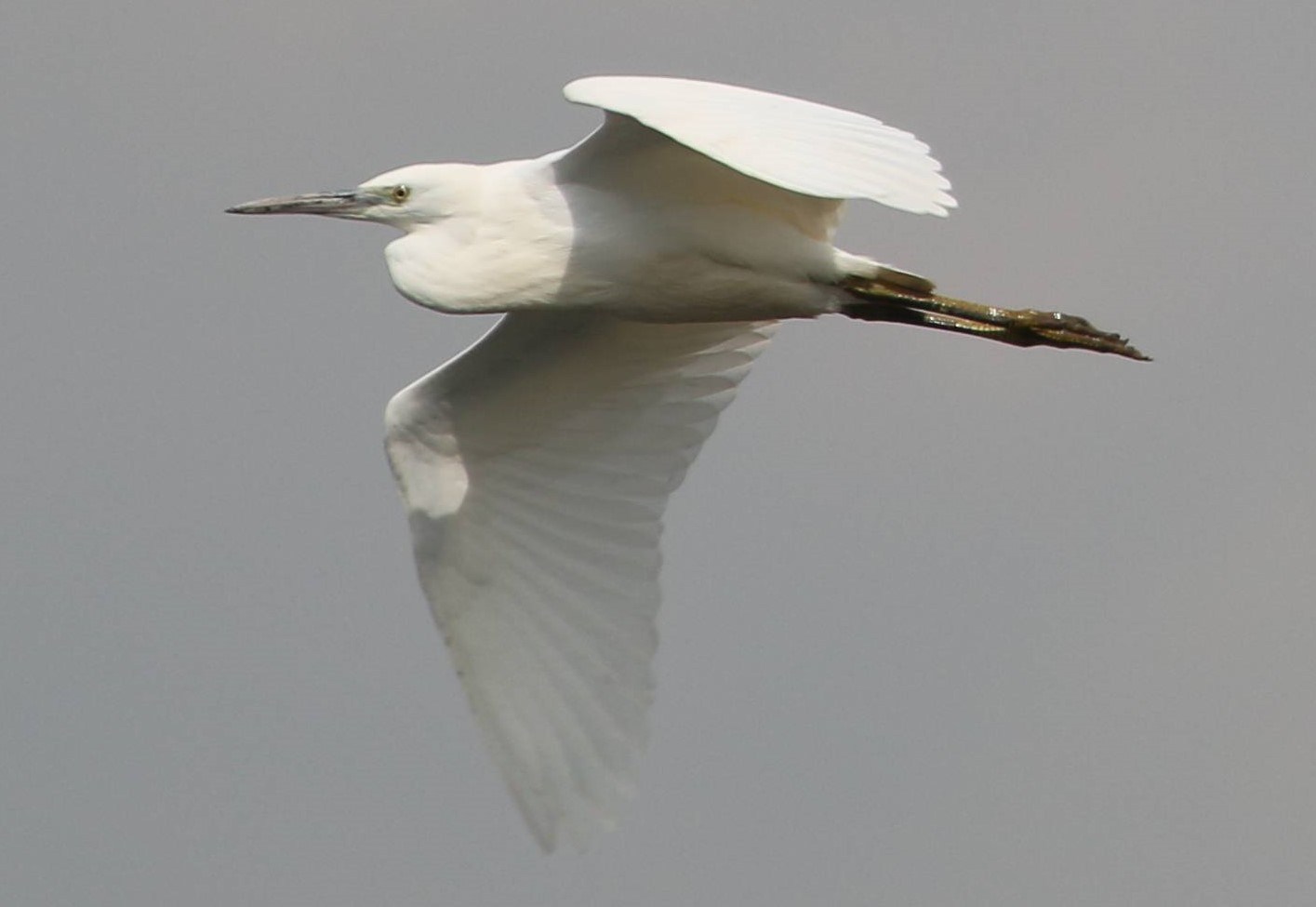
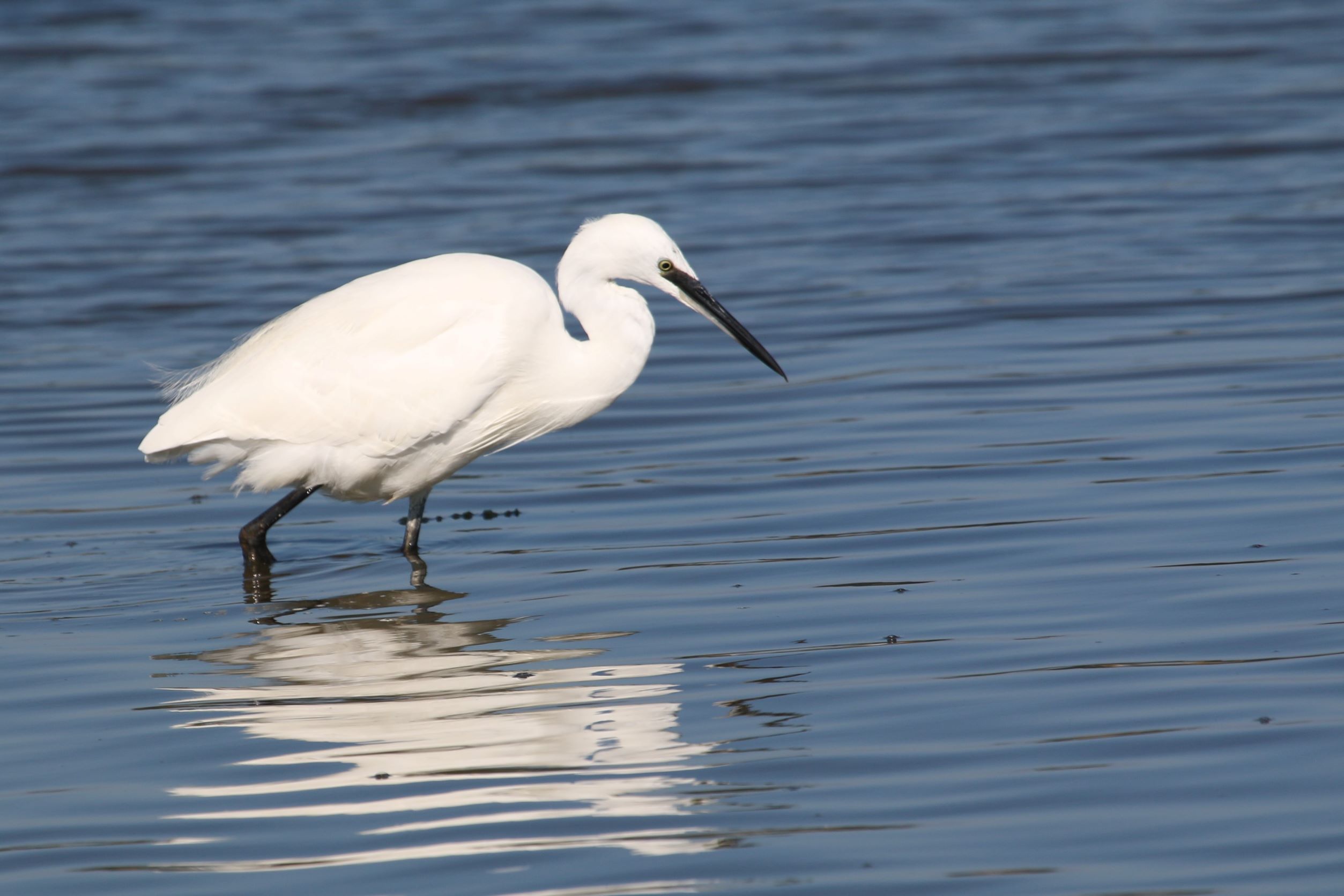
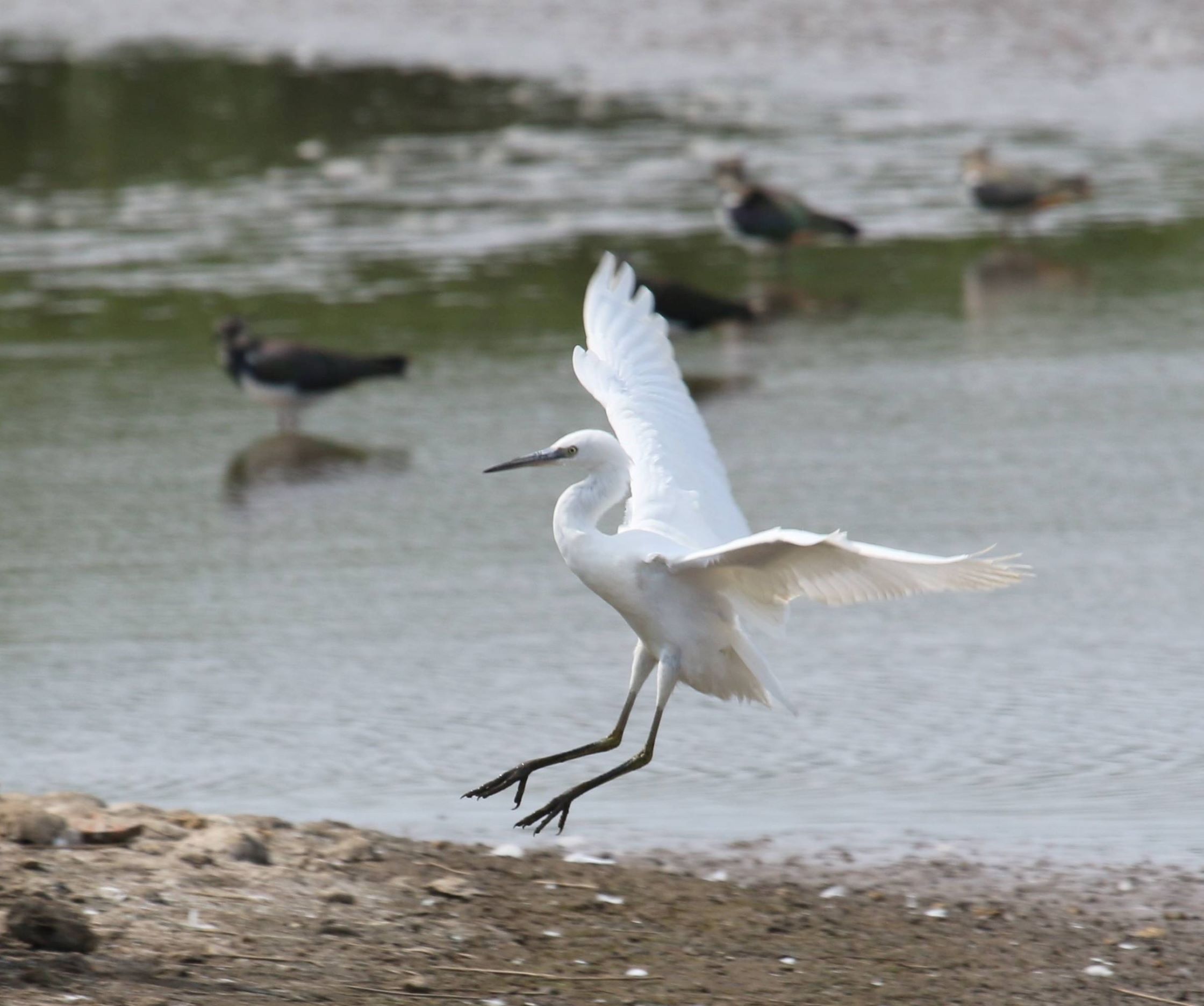
The UK boasts several other members of the heron family, although none is very common. The Bittern is vanishingly rare; Mrs P and I have rarely seen one, and have never got a decent photograph. Little Egrets were once common here, but were wiped out over 100 years ago thanks to the insatiable demand of the fashion industry for the birds’ elegant feathers. I wrote about the decline and fall of the Little Egret, and the important consequences this had on bird conservation in the UK, in a post I wrote in 2024.

Little Egrets began recolonising the UK in the late 20th century, and these days we see them quite often. Sadly their return came too late for my Mum, as did the more recent arrival of the Great White Egret. She would have been thrilled, I’m sure, to see both egret species, though I suspect neither would have supplanted the Grey Heron in her affections.

Across the whole world there are reckoned to be 75 separate species within the heron family, although some go under the names of egret or bittern. Herons’ solitary nature and their motionless hunting style have captured the imagination of cultures everywhere, often making them figures of mystery and deep spiritual significance as well as symbols of patience and wisdom. Every continent except Antarctica boasts resident species of heron, and as Mrs P’s photos show we’ve been privileged to see a number of these during our travels.

Almost all species of heron are closely associated with water, living and feeding as they mostly do on the margins of lakes, rivers, and swamps. They need wetlands, as do so many other species of birds, mammal and invertebrate, and it has been a pleasure to celebrate World Wetlands Day by featuring these magnificent birds here. My Mum, a heron lover until the very end, would definitely have approved!

Boat-billed Heron, Costa Rica 2008