Culture shock! Grand Sumo comes to London

A couple of weeks ago Mrs P and I took ourselves off to London for a few days to attend a sumo tournament. Almost without exception the people we told about our plans thought we’d gone crazy. You could see it in their eyes – “Why?” they wondered, “why would anyone pay good money to watch a load of semi-naked fat guys trying to beat each other up?” To which my response is this: please don’t criticise what you don’t understand.

Our connections with sumo

Mrs P and I first encountered sumo in the mid-1980s, when we were able to watch parts of a tournament on television during a vacation visit to Japan. We were intrigued, quickly spotting that this apparently crude and brutal sport is more subtle than it first appears, being rooted in at least 2,000 years of Japanese history and culture. We realised very quicky that if ever the opportunity arose we would like to get to know more about this unfamiliar, but strangely fascinating activity.

A few years later in 1991 the Japan Festival, which was held in London and across the UK, included the first-ever official sumo tournament to be held outside Japan. We managed to get tickets for one day of that event, which was held at the Royal Albert Hall, and so managed to watch sumo live and in the flesh for the first time.

Eight years later we returned for a second visit to Japan. We were staying with a friend who worked at the British Embassy, and through his connections were able to get tickets for one day of the September sumo tournament at the Kokugikan in Tokyo, the country’s foremost sumo arena. It was a wonderful, strangely exotic experience that we have never forgotten.

Although in recent years we have been able to follow sumo on television courtesy of broadcasts by NHK World, we assumed that we would never again get the chance to experience it first-hand. So, when we learned that Grand Sumo was to return to the Royal Albert Hall in October 2025, we were desperate to get tickets.

On the day that tickets went on sale Mrs P logged onto the ticket line the moment it went live, and found that there were already more than 1,000 people in the queue ahead of her! It was evident that the tournament was going to be a big success, and luckily, after a long wait and a lot of anxiety, she was able to bag tickets for the first two days of the five-day event.

Sumo’s history, rituals and rules

Sumo wrestling has an extraordinarily long history. Prehistoric wall paintings suggest that it evolved out of a ritual agricultural dance that was performed to pray for a good harvest. The earliest written references date from the early 8th century, and tell the story of a bout fought between two warlords – in the presence of the Emperor – in 23BCE.

Before the day’s sumo begins the wrestlers parade in all their finery

From the 8th century, ritual sumo was carried out at the imperial court to predict the year’s harvest and to pray for abundance and prosperity. Beginning in the 12th century, it evolved into a form of combat training for samurai warriors. A few hundred years later, Japan embarked upon a long period of isolation from the outside world. Peace reigned supreme, and because samurai warriors no longer needed to fight, sumo wrestling began to develop into a form of entertainment, often as a way to raise money for the repair of shrines and temples. Thus was sumo professionalised.

In the mid-nineteenth century Japan opened up again to foreign contacts and sumo was perceived to be old fashioned, a relic of the past that needed to be relegated to the pages of history. However, in 1884 the Emperor organised a tournament which proved to be a turning point for the sport. Instead of appearing old fashioned, sumo was now seen as a national symbol, part of a shared heritage in which all Japanese people could take pride. And so it remains today.

Grand champion Hoshoryu performs a traditional ring-entering ceremony. He went on to win the tournament (“basho” in Jananese) .

Rituals and ceremonies abound in sumo, and help make it like no other sport I’ve ever seen. These include (1) the ring-entering ceremonies at the beginning of each tournament day, in which the wrestlers (called rikishi in Japanese) parade into the ring wearing elaborate aprons over their belts (mawashi); (2) the tossing of salt into the ring (dohyo) by the wrestlers to symbolically clean it; (3) the rinsing of the mouth with “power water” (chikara-mizu) before a fight, which is similar to the ritual carried out before entering a Shinto shrine; (4) the stomping of the feet by rikishi before a bout begins, which is a ritual to scare away demons; (5) the bow-twirling ceremony (yumitori-shiki), which is performed at the end of each day’s wrestling. Dating back to the 1700s, it symbolises both the winner’s dance and a spiritual cleansing; (6) the ceremonial clothing worn by the referee (gyoji), which resembles that of a Shinto priest.

The bow-twirling ceremony marks the end of the day’s sumo

.

The basic rules of sumo are very, very simple: it is a form of wrestling in which a contestant loses if he is forced out of the ring first, or if any part of his body except the soles of his feet touch the ground.  Having said that, there are no fewer than 82 recognised techniques (kimarite) that can be deployed to achieve a winning outcome. Sumo is a lot more complex and subtle than it appears at first glance.

Unlike other fighting sports, sumo does not have weight classes; so long as he stands over 167cm tall and weighs over 67kg any man can participate. One of the most exciting aspects of watching sumo is the “David versus Goliath” battles, fights between two wrestlers with vastly different builds. In sumo, strength and power are important, obviously, but so too are technique and speed. The Davids of the sumo world often deploy their own special skills to defeat their Goliath opponents, much to the delight of most neutral onlookers.

The Grand Sumo Tournament, October 2025

Mrs P and I attended the first two days of the Grand Sumo tournament, and had a truly memorable time. The Royal Albert Hall was packed with spectators, and the atmosphere was electric. While some audience members may have attended out of idle curiosity, it was clear that most knew and understood sumo. It was great to finally be able to sit alongside and to speak with a few people who share our interest in a sport that clearly baffles most Brits.

The tournament attracted a good deal of coverage in the media and online. Wrestling took place in the evening, and earlier in the day the wrestlers – 40 of them, in total – got out and about visiting some of London’s tourist hotspots. If media reports are to be believed the wrestlers made quite an impression on the locals, and were widely perceived as “gentle giants”.

And the wrestlers could turn up – unannounced, of course – just about anywhere, so you can imagine how thrilled Mrs P and I were when we bumped into two of them one afternoon in the Natural History Museum. Shodai (one of our favourite wrestlers!) and Mitakeumi even agreed for a hastily snapped photo.

Ura is our #1 favourite sumo wrestler. He seems like a really nice guy! Other sumo fans clearly agree, as he won the “audience favourite” vote that was run for spectators at the tournament!

Sadly, we couldn’t get tickets for the final three days of the tournament, but fortunately it was televised by the BBC so we managed to see every single match (there were 100 bouts spread across the five days). It was great to be able to watch the conclusion of the tournament on television, but so much better to watch the first two days live and in person in the Royal Albert Hall. It was a surreal experience to be present at an event that is so quintessentially Japanese in a venue that is so very British. Surreal, but wonderful too!

I do understand why, when it is casually viewed without any background knowledge, sumo may be difficult to appreciate. The culture shock must be palpable. But I do wish more Brits would give sumo a chance – they might even get to like it!

And the opportunity to watch this sport here in the UK may arise again quite soon. There is a lot of speculation in the media right now that, following the undoubted success of the October 2025 tournament, sumo may return to London in the near future. I do hope so, I really do.
A touch of the exotic: the Mandarin Duck

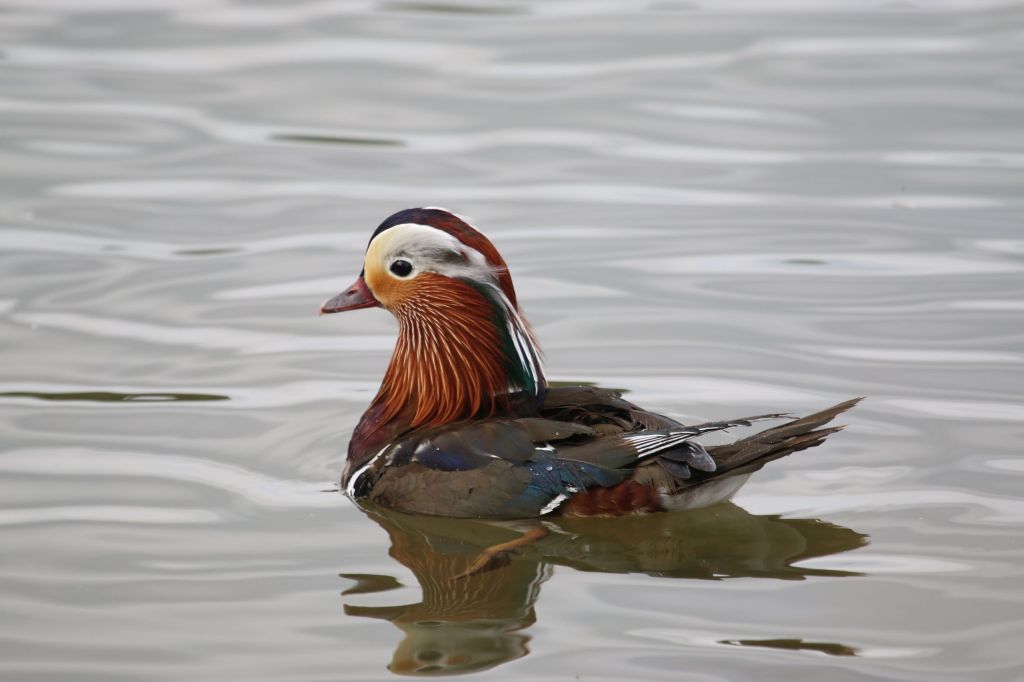
As the UK’s first Covid lockdown began to ease last June, one of our earliest trips out was to Straws Bridge nature reserve close to the small Derbyshire town of Ilkeston. It’s known to locals as Swan Lake because … well, because it’s a lake that boasts several handsome swans amongst its residents. The swans were out in force when we visited, but were overshadowed in our eyes by the unexpected sight of a family of mandarin ducks.

Mandarins favour small wooded ponds and avoid large expanses of open water, so the Straws Bridge reserve is ideal for them. Comprising three modest bodies of water set in a landscape of mixed woodland and meadows, it’s one of those habitats that shows how nature can bounce back when man lends a helping hand. In the 1970s and 1980s the area was scarred by open cast coal mining, but when the company concerned got into financial difficulties the local council took it on and restored the site as a wildlife habitat and local amenity. 

We’ve visited this reserve many times over the years and have always found it busy with families out for a stroll, often with a loaf of bread in hand to feed the swans and ducks and – inadvertently – sustain the burgeoning rat population at the same time.

In June last year the place was heaving with visitors, all grateful to get into the open air after the relaxation of the government’s stay-at-home Covid restrictions. None of them, other than Mrs P and I, appeared to have a clue that they were in the presence of a bird that’s regarded by many as the world’s most beautiful duck.

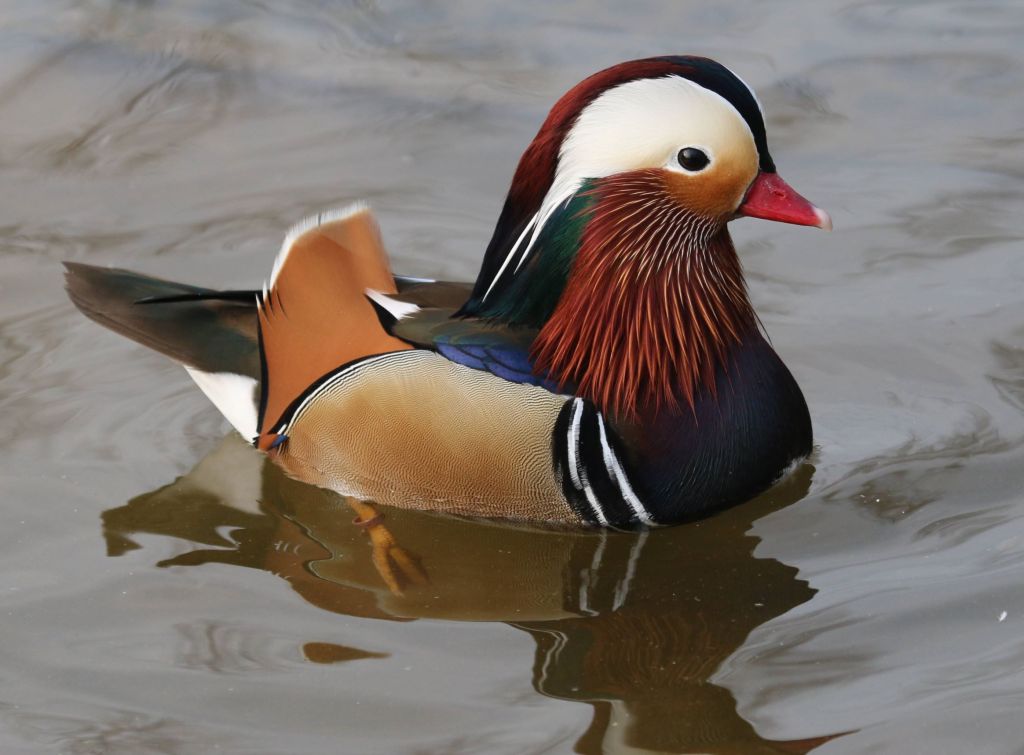
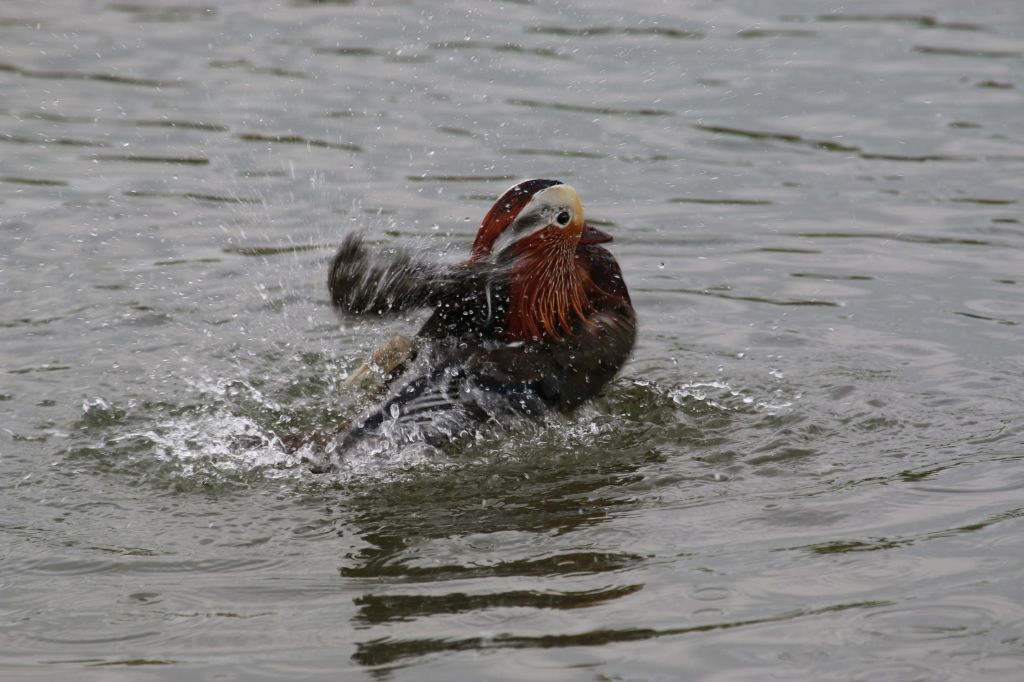
Mandarin ducks look far too exotic to be native British birds, and that’s absolutely right. They hail from East Asia – China, Japan and eastern Russia. The male sports a bright red bill, a reddish face with a large white crescent above the eye, a purple breast with two vertical white bars, and ruddy flanks. It also has two orange “sails” at the back. These comprise large feathers that stick up like the sails of a boat, and are perhaps the most eye-catching feature of what is a very elaborate bird.

The female, however, is drab, with a grey head, brown back and mottled flanks. Her white eye-ring and stripe can’t disguise the fact that, in common with the females of most duck species, she’s unremarkable.

Although the disparity in their looks might suggest otherwise, eastern folklore tells us that a pair of mandarins make the perfect couple. The birds are said to mate for life. In traditional Chinese and Japanese culture, mandarin ducks are therefore regarded as symbols of marital faithfulness. They are a favourite of artists, and also feature in Buddhist legends where they are said to represent compassion.

Male and female. No prizes for guessing which is which!

The supposed everlasting bond between mandarins is captured in a Japanese folktale, which begins with a great lord capturing a male bird so he can forever enjoy its beautiful plumage. Separated from its mate, the male is desperately lonely and begins to pine away. Seeing that the bird will soon die of a broken heart, the lord’s maidservant and her samurai lover decide to do the decent thing and reunite the lovelorn pair. However they get caught in the act and the furious lord condemns them to death for their treachery, proving beyond all doubt that for mankind and birdlife alike the course of true love does not always run smoothly!

* * *

It was in the mid-18th century when mandarins were first brought to Britain, with the intention of adding a bit of oriental glamour to the ornamental waterfowl collections of the idle rich. They escaped with monotonous regularity, and sometimes were deliberately released, but it wasn’t until the 1930s that a significant self-sustaining population of feral birds became established.

Juvenile mandarin

Since then numbers have grown rapidly, and there are now reckoned to be close to 8,000 mandarin ducks scattered widely throughout England. There are also feral populations in parts of continental Europe, as well as California and North Carolina in the US.

Spotting a lucrative gap in the market, China exported tens – or perhaps hundreds – of thousands of mandarins over several decades. Although the trade was banned in 1975 its impact, combined with widespread habitat loss, has resulted in a big fall in the wild Chinese population. Luckily mandarin ducks are reputed not to taste very good, otherwise pressures on the wild population would have been even greater in a country with over a billion mouths to feed.

Mandarins are notable for perching in trees, and the female invariably chooses a hole or cavity in a tree trunk in which to lay her eggs. After hatching, the ducklings jump to the ground and avoid injury thanks to the cushioning of their fluffy down. The mother swiftly gathers her brood together, and leads them to water. At Straws Bridge the female had plainly done a good job, and we got clear – although distant – views of some juveniles.

However, without doubt the male is the star of the mandarin show. What a looker!

Christmas dinner: let’s talk turkey!

As December rolls on we finally get around to planning our Christmas day. It doesn’t take long. Although government rules would allow us to “bubble” with Mrs P’s family we’ve opted not to do so: with vaccinations on the horizon, why take risks that could undermine the sacrifices we’ve all made this year? And as far as dinner is concerned there’s not a lot to plan – at the end of a year like no other, one thing will remain the same. On Christmas Day roast turkey will once again be the star of the show.

Turkeys first arrived in England in 1526, when Yorkshire-born voyager William Strickland acquired six birds from Native American traders and sold them at Bristol market for tuppence each. At that time the wealthy treated themselves to goose at Christmas, or maybe a boar’s head, while peasants scraped by with whatever meagre fare they could afford.

PHOTO CREDIT: “Roast Turkey” by Turkinator is licensed under CC BY-NC-ND 2.0

Taking time off from bedding mistresses and beheading wives, King Henry VIII is said to be the first Englishman to have eaten turkey for his Christmas dinner. The evidence for this is scanty, although a man who spent so much of his life pulling crackers would doubtless have welcomed such a substantial meal to bolster his virility.

Despite royal patronage the popularity of turkeys at Christmas grew only slowly. Even in the 19th century turkey was not the most popular Christmas roast, because of its relatively high cost. In northern England the wealthy favoured roast beef while in the south they preferred goose. Poorer families often had to make do with rabbit, or even worse.

Christmas is a family time and turkeys are family sized, so as disposable income increased after World War II more families began to treat themselves to a Big Bird as the centrepiece of their seasonal feast. Meanwhile the growing availability of refrigerators also encouraged consumers to think big. By the 21st century England at least 80% of Christmas roast dinners would feature turkey, with many of us eating leftovers for several days afterwards in curries, soups and sandwiches.

In the 19th century Attila the Bun would have been on the Christmas menu, but this year he and Mrs P will both be feasting on brussel sprouts. Yuk!

Eating roast turkey for Christmas is a peculiarly British habit. Although it’s not unknown in some other English-speaking countries, it hasn’t really caught on elsewhere. Fish, shellfish, ham, beef, pork and wild game are all Christmas day favourites in one country or another.

Curiously, in Japan, Kentucky Fried Chicken is said to be a popular Christmas dinner, a tradition dating from a big 1974 marketing campaign called “Kurisumasu ni wa kentakkii!” (“Kentucky for Christmas!”) The attraction of KFC at Christmas reportedly lasts to this day, causing some people to order their boxes months in advance or queue for two hours to get their annual fix.

I’ve visited Japan a couple of times and love the country, its culture and its people dearly. However this is one of its customs I’m definitely not going to adopt, although we’d struggle anyway as our lovely little town doesn’t have a KFC. Indeed, we don’t have a McDonald either, so some would say we are doubly blessed!

PHOTO CREDIT: by Adrianna Calvo from Pexels

No, on Christmas day the Platypus Man and Mrs P will be sitting down to a plate of roast turkey, a sausage or two, roast potatoes, a few garden peas and some decent gravy. Mrs P and our rabbit Attila the Bun will also have brussel sprouts. I, however, consider this vile vegetable to be the devil’s cohones, and will steer well clear.

We will wash our turkey down with a glass or two – or maybe three – of “bubbly” (champagne or sparkling white wine) and then retire to the toasty living room, turn on the television and snooze peacefully in front of it until teatime. Ah, the joys of Christmas day, chez Platypus.

Wherever you are, I wish you a joyous Christmas day and a tasty Christmas dinner. Perhaps you too will feast on turkey. But whatever else you find on your plate, I urge you to avoid the brussel sprouts. You have been warned!

PHOTO CREDIT: Public Domain Pictures via Pexels

***

What will you be having for Christmas dinner this year? Tell the world about your Christmas menu by submitting a comment.