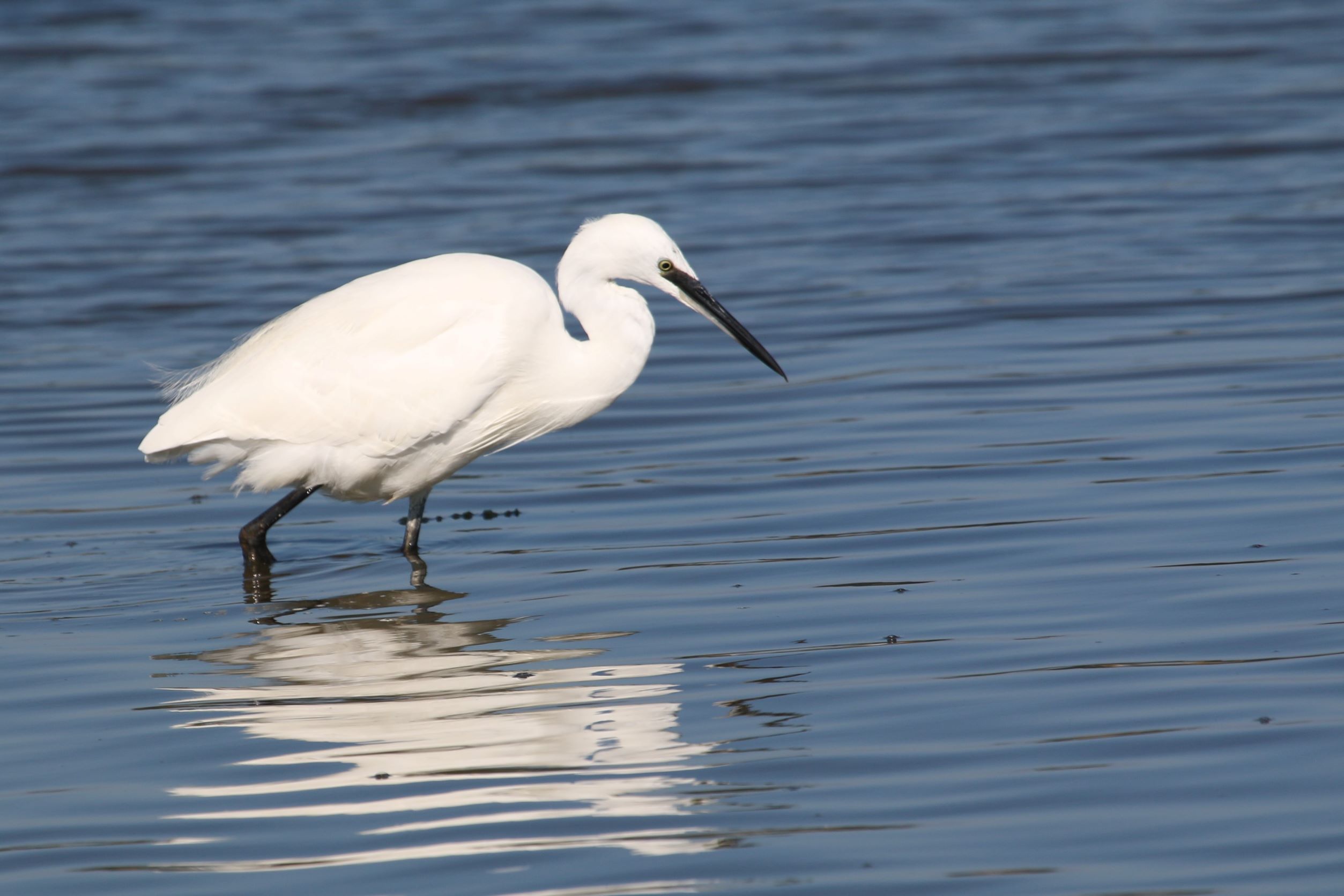
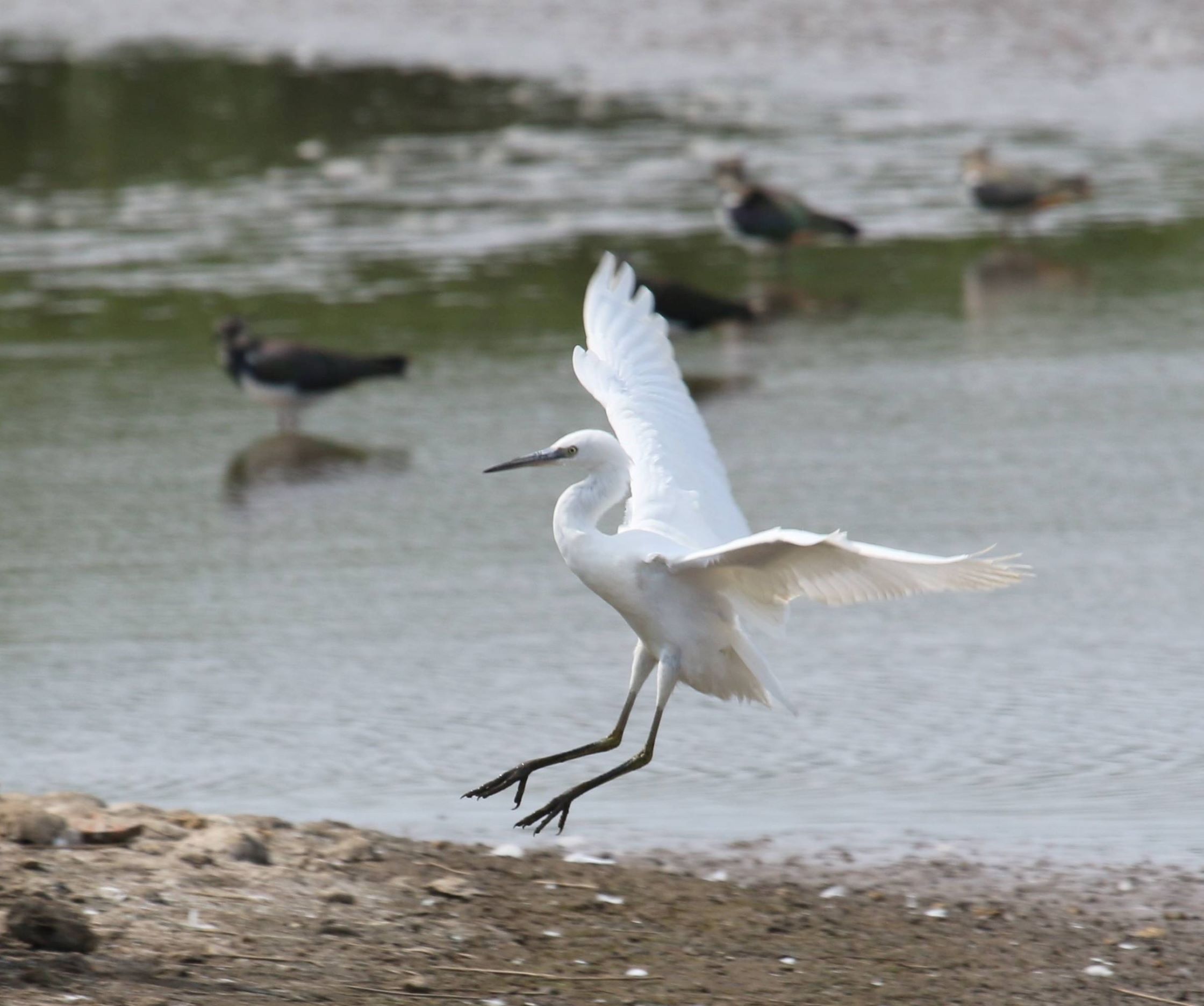
Celebrating World Wetlands Day with the heron family

Last Monday, 2 February, was World Wetlands Day. A wetland is a transitional area between land and water, an area where water covers the soil – or is present at or near the surface – either permanently or seasonally. Mrs P and I love a good wetland: it’s a distinct ecosystem that is a great place for a spot of birdwatching, and is notable as the favoured habitat of the handsome heron family

Grey Herons were my Mum’s favourite bird. This one has just caught itself a tasty snack.

When my father died over 30 years ago we bought my mother a set of binoculars and started taking her out on our birdwatching expeditions. She soon declared the heron to be her favourite bird, attracted I suspect by its large size and a distinctive appearance that includes a dagger-like bill, long spindly legs and an improbably bendy neck. I imagine she was also intrigued by the birds’ hunting style, in which they stand motionless for lengthy periods before stabbing explosively at any prey item foolish enough to venture too close to them. Spotting a heron quickly became Mum’s ambition whenever we took her out, and because we chose our birdwatching sites carefully she was rarely disappointed.

The species that Mum got to know and love is the Grey Heron, by a long way the most common member of the heron family in the UK, with over 60,000 birds overwintering here. Standing nearly 1m high and with a wingspan approaching 2m, it is an impressive bird. It feeds primarily on fish, but also eats amphibians, ducklings and other small birds, and tiny mammals such as voles. Interestingly, Grey Herons sometimes temporarily leave their wetland habitats in favour of nearby agricultural fields which they scour for rodents in the immediate aftermath of the harvest.

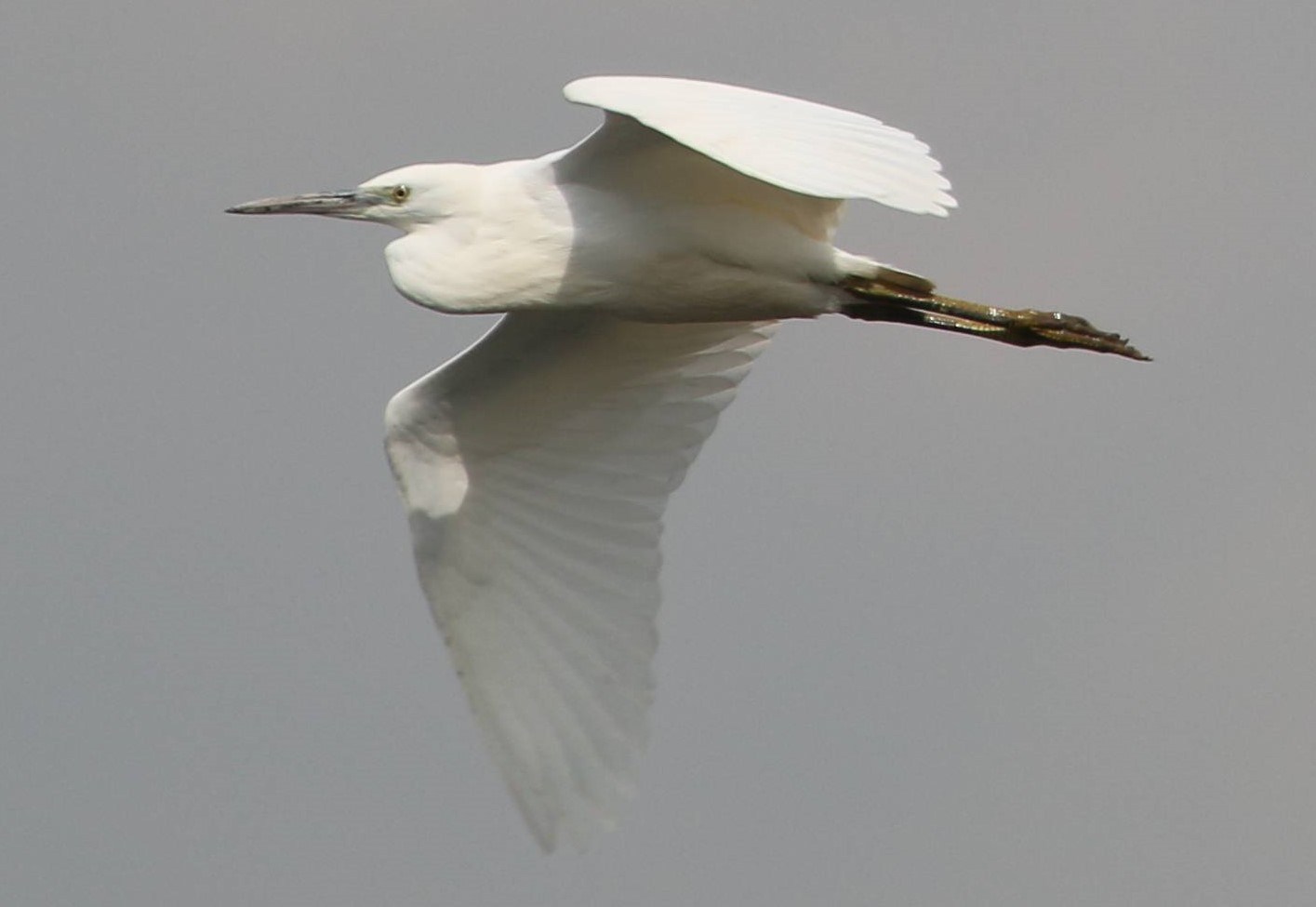
The UK boasts several other members of the heron family, although none is very common. The Bittern is vanishingly rare; Mrs P and I have rarely seen one, and have never got a decent photograph. Little Egrets were once common here, but were wiped out over 100 years ago thanks to the insatiable demand of the fashion industry for the birds’ elegant feathers. I wrote about the decline and fall of the Little Egret, and the important consequences this had on bird conservation in the UK, in a post I wrote in 2024.

Little Egrets began recolonising the UK in the late 20th century, and these days we see them quite often. Sadly their return came too late for my Mum, as did the more recent arrival of the Great White Egret. She would have been thrilled, I’m sure, to see both egret species, though I suspect neither would have supplanted the Grey Heron in her affections.

Across the whole world there are reckoned to be 75 separate species within the heron family, although some go under the names of egret or bittern. Herons’ solitary nature and their motionless hunting style have captured the imagination of cultures everywhere, often making them figures of mystery and deep spiritual significance as well as symbols of patience and wisdom. Every continent except Antarctica boasts resident species of heron, and as Mrs P’s photos show we’ve been privileged to see a number of these during our travels.

Almost all species of heron are closely associated with water, living and feeding as they mostly do on the margins of lakes, rivers, and swamps. They need wetlands, as do so many other species of birds, mammal and invertebrate, and it has been a pleasure to celebrate World Wetlands Day by featuring these magnificent birds here. My Mum, a heron lover until the very end, would definitely have approved!

Boat-billed Heron, Costa Rica 2008

Exotic no longer – the Great White Egret

Watching wildlife is addictive. Over several decades Mrs P and I have travelled the world to get our fix of animals and birds that we had no hope of ever seeing in the UK. Take Great White Egrets, for example. When we started our quest, they were impossible to find here. We encountered them first in the USA and India, and were well pleased with our achievement. And yet today we see them regularly in wetland habitats across the UK. The Great White Egret is exotic no longer.

At Nalsarovar Bird Sanctuary, Gujarat, India, 2013

The Great White Egret is a large, white heron. It is easy to distinguish from the Grey Heron, a species familiar to birders throughout this country, but can be confused with Little Egrets. The Little Egret is, as its name suggests, a good deal smaller than the Great White Egret, and has yellow feet and a black bill – the Great White, meanwhile, has black feet and a yellow bill. Confused? Me too! Numbers of Little Egrets have surged in recent years, something I wrote about in this post from 2021.

Seen in Texas, USA, 2012

Until around 15 years ago, Great White Egrets were impossibly rare visitors to these shores, and few birders ever got to see them. All that has now changed. The bird had been slowly expanding its range northwards and westwards in Continental Europe for some time, and around 2010 finally began to make the flight across the English Channel to see what the British Isles had to offer.

Great White Egret alongside the more familiar Grey Heron, at RSPB Blacktoft Sands Nature Reserve, East Yorkshire, 2024

The key drivers behind the expansion in Continental Europe are unclear. Possible explanations include improvements to habitat, reduced persecution, and – inevitably – climate change.

Whatever the reason, British birders are clearly beneficiaries. Accurate, up-to-date population data is difficult to track down, but it appears that overwintering Great White Egrets now number at least 100 individuals. They are most frequently found in south-east England and East Anglia, but are moving steadily northwards and can now also be seen in Scotland too.

At RSPB Welney Nature Reserve, Cambridgeshire, 2022

The species first bred in the UK in 2012, and there could now be more than 20 breeding pairs spread across the country. There is every likelihood that numbers will continue to grow for years to come, meaning that Mrs P and won’t be returning to the US or India when we feel the need to re-acquaint ourselves with this handsome heron!

Chilling out with Nature

We’ve booked to go out for lunch, and with a couple of hours to kill before our appointed time, we decide to treat ourselves to a spot of birdwatching. Straw’s Bridge Nature Reserve was once home to a sewage works and an opencast mine. It doesn’t sound promising, but in recent decades the local council has done a good job of restoring it as a wildlife habitat and local amenity. The locals call it Swan Lake, but the Reserve has plenty more besides the eponymous Mute Swan to tempt nature lovers.

On arrival we’re surprised to see that the Straw’s Bridge lakes are frozen in places. Instead of swimming elegantly across wide expanses of open water, the Mute Swans are reduced to an ungainly waddle and appear in mortal danger of ending up flat on their beaks at any moment. Meanwhile, Black-headed Gulls huddle together miserably on the ice, as if bemused by the sudden meteorological change that has turned their familiar surroundings into an unwelcome skating rink.

As we set off to walk a series of trails around the lakes we spy a robin sitting atop a rubbish bin. Like many of his species, our red-breasted friend seems unperturbed by proximity to humans, even as Mrs P creeps ever-closer in pursuit of the perfect, full-frame photo. She snaps away merrily, the robin sings lustily and I take a bit of video footage. Contentment reigns supreme!

A bit further on we watch an unexpected face-off between a Grey Heron and a mob of Mute Swans. The heron has staked its claim to a section of ice, and although they have a whole lake to choose from the swans evidently decide that the ideal place for a family gathering is the precise spot on which it’s standing. They close in on the heron, which eyes them warily. I train my video camera on them all, expecting to see feathers fly. But the heron clearly thinks better of it, and goes slip-sliding away from the mob in search of a swan-free life. Good luck with that at Swan Lake, my friend.

We continue our stroll around the lakes, revelling in the golden colours of the winter reedbeds. Despite the glorious sun beaming down at us from a clear blue sky, it’s a bitterly cold morning. But we’ve come prepared, wearing so many layers of thermal clothing that we feel comfortably toasty. In the leaf litter beneath a small stand of trees, a solitary redwing – a refugee from Scandinavia, where winters are much colder than our own – searches energetically for anything edible. Meanwhile, in the far distance we spot a flotilla of mallards and coots circling in a patch of open water, while a buzzard scans the landscape hopefully from its vantage point at the top of a nearby tree.

And finally, we happen upon the star of this morning’s birding expedition. It’s another Grey Heron, this one sitting amongst the dead vegetation at the edge of an ice-free section of the lake. The bird is indifferent to our presence as we creep ever closer, and looks majestic in the soft midwinter light.

Thoughts inevitably turn to my Mum. After Dad died in the mid-1990s, we started taking her out on birdwatching excursions with us. She got to love it, and the bird she loved most of all was the heron. The tall, long-legged, long-billed wader fascinated and enthralled her, and was her highlight of any outing to a wetland habitat. Such happy memories!

Far too soon, it is time to head back to the car and drive a couple of miles down the road to where we will be taking lunch. There’s one final surprise in store – in the lakeside car park we see a Pied Wagtail cavorting across a car bonnet, presumably in search of its own lunch of splattered insects.

It’s been an uplifting morning. As reserves go, Straw’s Bridge is hardly spectacular, its list of regularly occurring species totally unremarkable, and yet this is a truly wonderful place to chill out with Nature. We’ll be back again very soon, although next time I hope we can manage without the thermal underwear!