Where have all the sparrows gone?

Last Saturday, 20th March, was World Sparrow Day. Needless to say, no sparrows turned up in our garden to celebrate the occasion. When we moved in 35 years ago house sparrows were common here, squabbling noisily and boisterously on the bird table. Now, if we get half a dozen sightings over a 12 months period we class it as a good year for sparrows. Here, and throughout the UK, house sparrow numbers have been in serious decline for decades.

House sparrow

Growing up in West London half a century ago sparrows were the most familiar birds in our garden. Our name for them was spugs, or alternatively spadgers. They were very common, part of the wallpaper of our suburban lives, and we took them for granted. No one would have believed then that one day they would be “in trouble.”

The State of the UK’s Birds 2020 report published by the RSPB suggests that there were 5.3 million breeding pairs in the UK in 2018, making the house sparrow our third most common breeding bird behind the wren (11m) and the robin (7.3m), and marginally ahead of the woodpigeon (5.2m). It adds that “In the late 1960s there were 10 times more house sparrows than woodpigeons. We have lost around 10.7 million pairs of house sparrows in that time, a loss greater than for any other species, and gained 3.5 million pairs of woodpigeons.” No surprise, therefore, that the house sparrow is on the UK’s Red List for birds of conservation concern.

The latest figures offer a glimmer of hope: numbers are now thought to be stable or increasing in Scotland, Wales and Northern Ireland. However this is little consolation to those of us in England, where numbers continue to fall.

House sparrow

The cause of the rapid decline, particularly in urban and suburban environments, is unclear, although a lack of invertebrate prey for chicks – perhaps resulting from pollution or increased used of pesticides by gardeners – is believed to be a factor. Other proposed but as yet unproven reasons include reduced opportunities for nesting in the modern urban environment, and predation by domestic cats. Declines in rural house sparrow populations are thought to be linked to seasonal food shortages resulting from changes in agricultural practices, particularly the move to sowing cereal crops in the autumn.

* * *

Although the decline of house sparrows in the UK has been dramatic, the declaration of the first World Sparrow Day wasn’t a British initiative. Instead it was the brainchild of Nature Forever (NFS), an Indian non-governmental, non-profit organization which aims to “involve citizens from all walks of life, diverse backgrounds and different parts of the country and the world” in conservation projects. Nature Forever’s championing of the house sparrow is a good indication of the bird’s global reach.

Ted Anderson, Emeritus Professor of Biology at McKendree College in Illinois has argued that the house sparrow is the most widely distributed wild bird on Earth. It is believed to have originated in the Middle East, but having developed a close association with humans, it extended its range across Eurasia in tandem with the spread of agriculture. More recently Europeans have deliberately introduced the house sparrow to other parts of the globe, either as a pest control initiative or to remind them of home, and accidentally taken them to other locations as stowaways on their ships.

In happier times. House sparrow at Platypus Towers

It’s perhaps no surprise therefore that, in recent years, Mrs P and I have seen many more house sparrows on our visits to North America, Australia and New Zealand than we ever manage to spot in our own backyard. If numbers here continue to fall the time may well come when we have to go cap in hand to our former colonies and beg to have some of our sparrows back. Oh, the humiliation!

* * *

In folklore and literature sparrows have an enduring reputation for sexual promiscuity. Geoffrey Chaucer reflects this in the Canterbury Tales when he writes “As hot, he was, and lecherous as a sparrow . . .”  Two hundred years later, in 1604, William Shakespeare wrote in Measure for Measure that Sparrows must not build in his house eaves, because they are lecherous . . .”

Tree sparrow. Note the diagnostic brown crown and black cheek spot

Amazingly, modern science shows that these seemingly outrageous accusations are not entirely inaccurate. DNA analysis has shown that 15% of the chicks produced by a settled pair of house sparrows are in fact the offspring of a third party, proving once again that truth is stranger than fiction.

* * *

The house sparrow is not the only species of sparrow found on these shores. Although the so-called hedge sparrow, also known as a dunnock, isn’t really a sparrow at all (it belongs to the family birds called accentors), the tree sparrow really is a sparrow.

While house sparrows are regularly seen in both urban and rural settings, the tree sparrow is very much a bird of the countryside, particularly hedgerows and woodland edges. Their distribution tends to be localised, and they are much less plentiful than house sparrows: the latest population estimate is 245,000 breeding pairs. We have not and would not expect to see tree sparrows in our suburban garden, but there is a nature reserve within a few miles of Platypus Towers where we can often spot them.

Tree sparrow

It’s always a pleasure to see tree sparrows since they, like house sparrows, have suffered a calamitous decline in numbers (around 90%) since 1970, although in the last few years that fall has slowed and may have started to reverse. Again, changes in agricultural practice are the likely cause, and with no prospect of these being reversed the tree sparrow remains on the UK’s Red List for birds of conservation concern.

* * *

And finally, to conclude my little celebration of World Sparrow Day, I commend to you Dolly Parton singing “Little Sparrow.” The songs begins with these words

Little sparrow, little sparrow
Precious, fragile little thing
Little sparrow, little sparrow
Flies so high and feels no pain

Of course, the song isn’t really about sparrows at all. For Dolly, the sparrow is a simply a metaphor for gentle innocence, and anyway the North American sparrows about which she sings (Emberizidae) aren’t in the same family as Old Word sparrows (Passeridae). But whatever, that second line has always haunted me. In four words it captures perfectly the magic of birds both great and small, and encapsulates my feelings for them. Birds are precious and fragile, and even relatively common birds like the sparrow need our help if they are to continue to fly high and feel no pain.

The snowdrop – a flower not to be trifled with

Flowering at a time when pretty much nothing else is in bloom, snowdrops inevitably capture the imagination of all who encounter them in the British countryside. The ‘Fair Maids of February’ reassure us that the bleak midwinter is passing, and more congenial times lie ahead. Poets heap praise upon these humble harbingers of spring’s awakening, while storytellers speculate about their origins. Who doesn’t love a snowdrop?

Dimminsdale Nature Reserve, 2019

Interestingly, although snowdrops are widely distributed and recognised throughout the UK, they aren’t native to these islands. They originated in the damp woodlands and meadows of continental Europe, and were brought here – probably in the sixteenth century – to grace the estates of the idle rich. However these private collections inevitably ‘leaked’ into the surrounding countryside, and by the late 18th century the flower was reported as growing wild. Now completely naturalised, snowdrops can be found in shady woodland, on country estates and along river banks all over the country.

Hodsock Priory, 2016

Snowdrops are also a common sight in graveyards, and this could be the reason why they’re sometimes associated with ill-fortune and even death. In Victorian times it was widely believed that you should avoid bringing snowdrops into your house. If you disobeyed this rule the consequences could range from your milk turning sour to a member of your family dropping dead within a year. Plainly the snowdrop isn’t a flower to be trifled with!

Although these days we happily dismiss such dire warnings as fanciful nonsense, it’s worth noting that snowdrops are poisonous due to high concentrations of phenanthridine alkaloids, particularly in the bulbs. Now, I haven’t a clue what a phenanthridine alkaloid is, but (just like the average beer-swilling Saturday night out during my student days) it’s known to cause confusion, poor coordination, drooling, abdominal pain, vomiting, diarrhoea and seizures. I humbly conclude that excessive student partying and eating snowdrops are both best avoided!

Hopton Hall, 2017

Paradoxically although some people make a connection between snowdrops and death, others view them as symbols of hope. The reason, I suppose, is that they show themselves just as winter’s drawing to a close, and their appearance is a sure sign that the days are getting both longer and warmer, and that spring will soon arrive.

It’s for just this reason that, around about now every year, Mrs P and I traditionally mark the changing of the seasons by taking a trip to one of our local snowdrop hotspots. These include the gardens of Hopton Hall, an 18th-century country house in Derbyshire, the Dimminsdale Nature Reserve on Derbyshire’s border with Leicestershire, and two estate gardens in Nottinghamshire, at Hodsock Priory and Felley Priory. Each boasts a fine display of snowdrops, and looks splendid on a crisp and sunny February day

Dimminsdale Nature Reserve, 2019

Sadly, to visit one of these snowdrop havens in 2021 would contravene the government’s strict Covid lockdown rules and invite a fine of £200 (each!) from the local constabulary. Instead, we’ve had to get our annual snowdrop fix from Mrs P’s excellent photos and a small clump that survives against all odds in our unkempt front garden. Ah well, there’s always next year I suppose, once Covid’s back in its box.

Felley Priory, 2017

A touch of the exotic: the Mandarin Duck

As the UK’s first Covid lockdown began to ease last June, one of our earliest trips out was to Straws Bridge nature reserve close to the small Derbyshire town of Ilkeston. It’s known to locals as Swan Lake because … well, because it’s a lake that boasts several handsome swans amongst its residents. The swans were out in force when we visited, but were overshadowed in our eyes by the unexpected sight of a family of mandarin ducks.

Mandarins favour small wooded ponds and avoid large expanses of open water, so the Straws Bridge reserve is ideal for them. Comprising three modest bodies of water set in a landscape of mixed woodland and meadows, it’s one of those habitats that shows how nature can bounce back when man lends a helping hand. In the 1970s and 1980s the area was scarred by open cast coal mining, but when the company concerned got into financial difficulties the local council took it on and restored the site as a wildlife habitat and local amenity. 

We’ve visited this reserve many times over the years and have always found it busy with families out for a stroll, often with a loaf of bread in hand to feed the swans and ducks and – inadvertently – sustain the burgeoning rat population at the same time.

In June last year the place was heaving with visitors, all grateful to get into the open air after the relaxation of the government’s stay-at-home Covid restrictions. None of them, other than Mrs P and I, appeared to have a clue that they were in the presence of a bird that’s regarded by many as the world’s most beautiful duck.

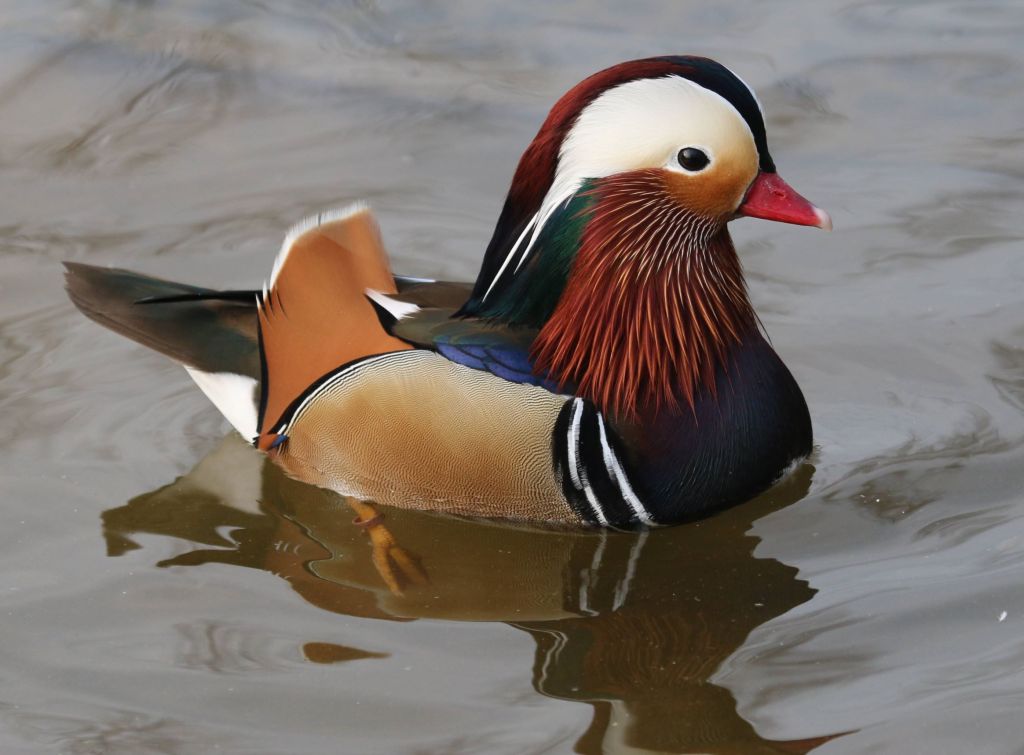
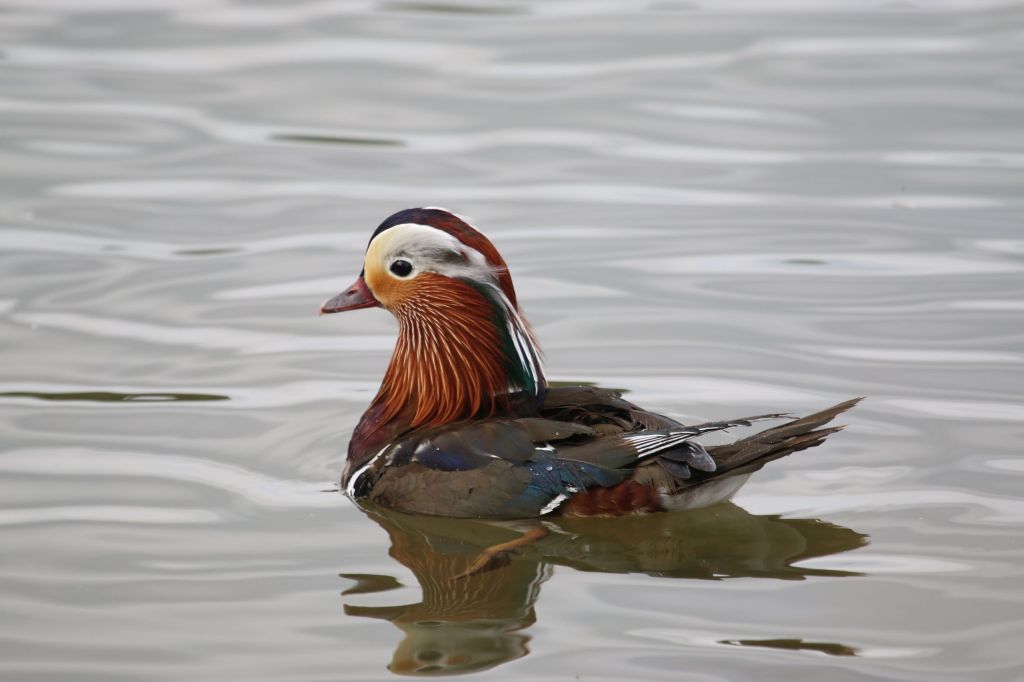
Mandarin ducks look far too exotic to be native British birds, and that’s absolutely right. They hail from East Asia – China, Japan and eastern Russia. The male sports a bright red bill, a reddish face with a large white crescent above the eye, a purple breast with two vertical white bars, and ruddy flanks. It also has two orange “sails” at the back. These comprise large feathers that stick up like the sails of a boat, and are perhaps the most eye-catching feature of what is a very elaborate bird.

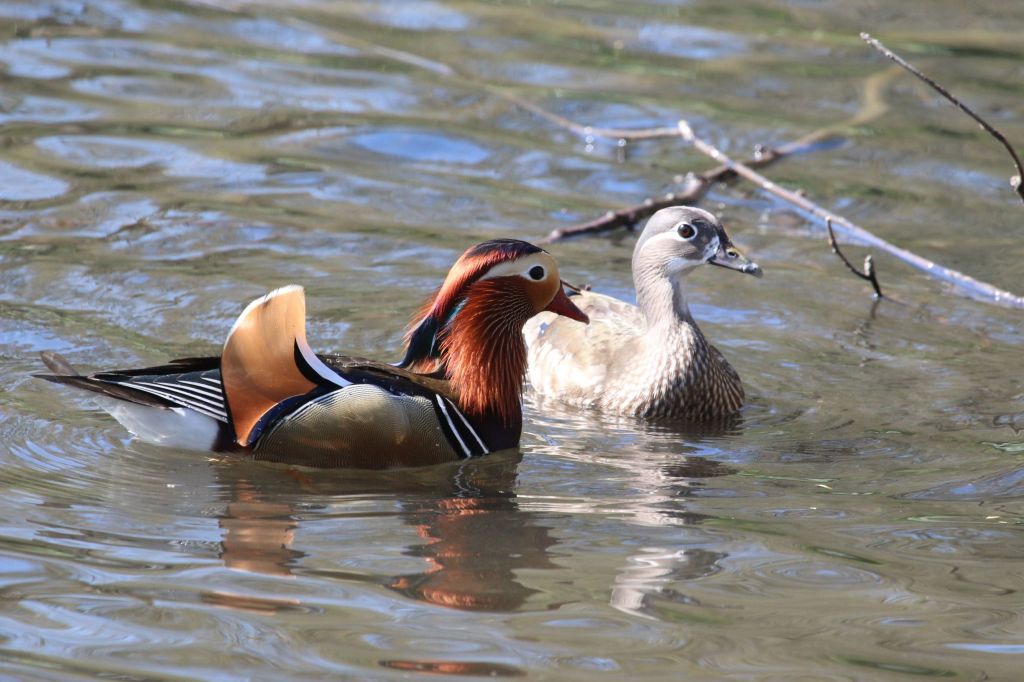
The female, however, is drab, with a grey head, brown back and mottled flanks. Her white eye-ring and stripe can’t disguise the fact that, in common with the females of most duck species, she’s unremarkable.

Although the disparity in their looks might suggest otherwise, eastern folklore tells us that a pair of mandarins make the perfect couple. The birds are said to mate for life. In traditional Chinese and Japanese culture, mandarin ducks are therefore regarded as symbols of marital faithfulness. They are a favourite of artists, and also feature in Buddhist legends where they are said to represent compassion.

Male and female. No prizes for guessing which is which!

The supposed everlasting bond between mandarins is captured in a Japanese folktale, which begins with a great lord capturing a male bird so he can forever enjoy its beautiful plumage. Separated from its mate, the male is desperately lonely and begins to pine away. Seeing that the bird will soon die of a broken heart, the lord’s maidservant and her samurai lover decide to do the decent thing and reunite the lovelorn pair. However they get caught in the act and the furious lord condemns them to death for their treachery, proving beyond all doubt that for mankind and birdlife alike the course of true love does not always run smoothly!

* * *

It was in the mid-18th century when mandarins were first brought to Britain, with the intention of adding a bit of oriental glamour to the ornamental waterfowl collections of the idle rich. They escaped with monotonous regularity, and sometimes were deliberately released, but it wasn’t until the 1930s that a significant self-sustaining population of feral birds became established.

Juvenile mandarin

Since then numbers have grown rapidly, and there are now reckoned to be close to 8,000 mandarin ducks scattered widely throughout England. There are also feral populations in parts of continental Europe, as well as California and North Carolina in the US.

Spotting a lucrative gap in the market, China exported tens – or perhaps hundreds – of thousands of mandarins over several decades. Although the trade was banned in 1975 its impact, combined with widespread habitat loss, has resulted in a big fall in the wild Chinese population. Luckily mandarin ducks are reputed not to taste very good, otherwise pressures on the wild population would have been even greater in a country with over a billion mouths to feed.

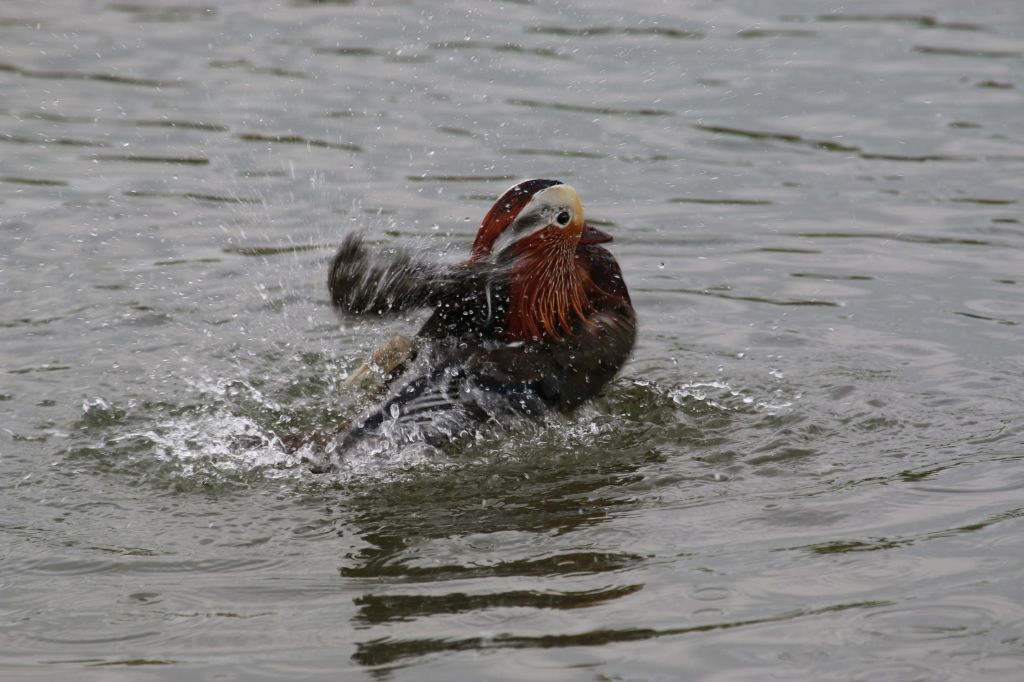
Mandarins are notable for perching in trees, and the female invariably chooses a hole or cavity in a tree trunk in which to lay her eggs. After hatching, the ducklings jump to the ground and avoid injury thanks to the cushioning of their fluffy down. The mother swiftly gathers her brood together, and leads them to water. At Straws Bridge the female had plainly done a good job, and we got clear – although distant – views of some juveniles.

However, without doubt the male is the star of the mandarin show. What a looker!

Wassailing: extortion, boozing and blessings

Yesterday – 5th January – was 12th Night, the last of the 12 Days of Christmas. It is traditionally marked by a range of festivities, many involving the consumption of food or drink in various forms and copious quantities. Wassailing is a practice belonging to this tradition, and dates back many hundreds of years.

According to Anglo-Saxon lore, at the beginning of each year the lord of the manor would greet his assembled subjects with the toast waes hael, meaning “be well” or “be in good health.” In response his followers would proclaim drinc hael, or “drink well.” Toasts duly completed, all parties would then get down to some serious boozing.

Orchard Wassailing ceremony. PHOTO CREDIT: “Barker’s Wassail 2013” by muffinn is licensed under CC BY 2.0

Clearly it’s just a small step, linguistically speaking, from the first of these Anglo-Saxon proclamations of good cheer to the word wassail that we use today. But just to confuse things a little there are two types of wassailing. House Wassailing involves groups of merrymakers going from one house to another, wassail bowl in hand, singing traditional songs and offering the occupants a swig of their brew in return for a material reward, often financial. In contrast, Orchard Wassailing is a distinctly pagan ceremony concerning itself with the blessing of fruit trees.

* * *

The great and the good usually played along with house wassailing, recognising that a bit of seasonal generosity dispensed with a tolerant smile would enhance their image. However things sometimes got out of hand, with rowdy gangs of youths gaining entry to the homes of wealthy neighbours and demanding free food and drink as the price of moving on to torment someone else instead. We have a word for that sort of thing today: it’s called extortion, and the law takes a dim view of it.

Mostly, however, wassailing was conducted in good humour on both sides. Many fine wassailing songs have survived in the folk tradition, including the Gower Wassail from the Gower Peninsula in South Wales. The lyrics – shown below – illustrate how the relationship between the parties was meant to play out:

A-wassail, a-wassail throughout all the town
Our cup it is white and our ale it is brown
Our wassail is made of the good ale and cake 
Some nutmeg and ginger, the best you can bake

Our wassail is made of the elderberry bough
And so my good neighbours we'll drink unto thou
Besides all on earth, you have apples in store
Pray let us come in for it's cold by the door

There's a master and a mistress sitting down by the fire
While we poor wassail boys stand out in the mire
Come you pretty maid with your silver headed pin
Pray open the door and let us come in

It's we poor wassail boys so weary and cold
Please drop some small silver into our bowl
And if we survive for another new year
Perhaps we may call and see who does live here

We know by the moon that we are not too soon
And we know by the sky that we are not too high
And we know by the stars that we are not too far
And we know by the ground that we are within sound

We hope that your apple trees prosper and bear
So that we may have cider when we call next year
And where you have one barrel we hope you'll have ten
So that we may have cider when we call again

There are countless recorded versions of the Gower Wassail. I’m particularly fond of this one, by the ephemeral Derbyshire folk band Cupola Ward. Listen to them perform Gower Wassail by clicking on the YouTube link below:

House Wassailing is a thing of the past, and rarely if ever happens these days. However, it has morphed into another form in which groups of people go from door-to-door singing Christmas carols. And in the words of one of those carols – We Wish You a Merry Christmas – there is a hint of the extortion into which wassailing sometimes descended, when the singers demand “now give us some figgy pudding,” and then threaten “we won’t go until we’ve got some!”

* * *

Although House Wassailing survives only in Christmas carolling, Orchard Wassailing is alive and well in those parts of England that have a tradition of making cider, and in some parts of the USA and Canada too. If you search YouTube you can find various short films capturing modern celebrations of Orchard Wassailing. This one is informative as well as entertaining.

In the Orchard Wassailing tradition, participants drink and sing to the health of an orchard’s apple trees with the intention of encouraging a bumper autumn harvest. Although this can take many forms, some of the standard elements are as follows.

The wassailers select one tree in the orchard, usually the biggest or the oldest, to be the focus of the ceremony. They also choose, from amongst their number, a queen to carry out certain ceremonial duties. The participants process through the orchard and around the chosen tree. Songs are sung, blessings are proclaimed, and the wassail queen hangs from one of the tree’s branches a slice of toast soaked in cider. The intention is to attract good spirits, or possibly robins as these are regarded as lucky birds.

Having duly invited benevolent spirits to appear, malevolent forces are driven away by shouting and the banging together of pots and pans. Then the tree is given a drink of mulled cider.

Inevitably, after the tree has had its fill there is still some alcohol left, at which point the wassailers selflessly help out by knocking it back themselves. They also sing a few jolly songs, encouraging the tree to be a prolific producer of apples in the year ahead. The orchard owner may also get involved, rewarding the revellers with some form of warm, spiced alcoholic beverage from a communal wassail bowl or cup.

By the end of the proceedings everyone’s feeling suitably merry, and it’s only the tree that won’t wake up with a headache in the morning!

Although house and orchard wassailing differ in their origins and underlying purpose, it’s interesting to see how they overlap. Look again at the the Gower Wassail lyrics above, and note that although this song is clearly designed to be sung at a wealthy man’s door with the intention of financial gain (“Please drop some small silver into our bowl“), the singers also express enthusiasm for a bountiful apple harvest in the the autumn (“We hope that your apple trees prosper and bear / So that we may have some cider when we call next year.”)

In the modern parlance I suppose you would say that – in pursuit of merriment and material advancement – singers of the Gower Wassail were covering all the bases. And who can blame them, life’s way too short to be shy in coming forward.

* * *

Folk traditions and folk music aren’t static, so it should come as no surprise that in the hands of gifted exponents the wassail tradition continues to evolve. Mrs P and I have recently started listening to the music of Vicki Swann and Jonny Dyer, and a couple of weeks ago treated ourselves to a live gig on Zoom. One of the songs they performed that evening was the Essex Wassail, which they wrote as recently as 2012 “based on all the Wassails that we could find.” You can find the lyrics here, and to hear Vicki and Jonny performing their wassail song simply follow the YouTube link below. Enjoy!

Celebrating National Robin Day

The good folk at SongBird Survival (SBS), an independent charity which funds research into the declining numbers of Britain’s songbirds, have declared next Monday – 21 December – to be National Robin Day. And who can blame them? The instantly recognisable robin has an appeal that extends way beyond dedicated birders, so celebrating this bird table superstar is an inspired way of gaining more publicity for their worthy cause. To mark the day, I thought I’d share some random facts and folklore about this iconic bird.

1 Robins are British Christmas card icons

It’s no accident that the SBS chose mid-December as the best time to celebrate National Robin Day. In Britain robins have been associated with Christmas since the 19th century, when postmen were dubbed robin redbreasts because of their red tunics. The mail they delivered at Christmas brought happiness to householders across the country, and the link was quickly made between redbreasts and seasonal merriment. Robins soon started appearing on Christmas cards, and they’ve been there ever since.

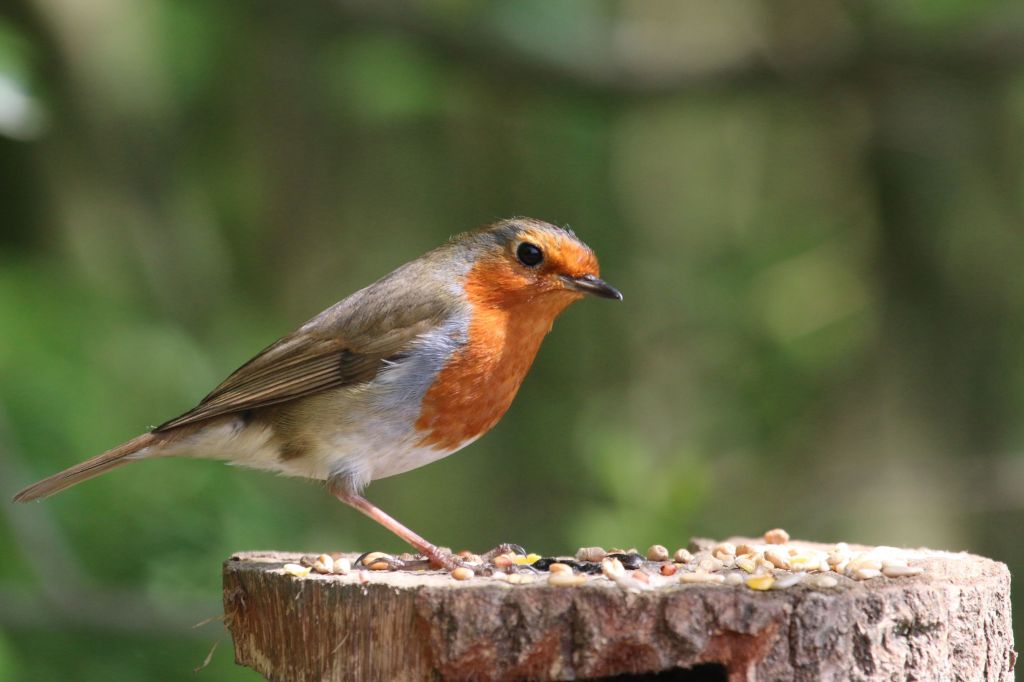
Worthy of a Christmas card

2 The naming of robins

The original English name for the robin was purely descriptive: our ancestors called it the redbreast. But they got it wrong. Even a cursory inspection in good light will reveal the bird’s breast to be orange, or perhaps an orangey-red, rather than pure red. The word orange, describing a colour, was unknown in English until the 16th century when it appeared as the name of the now-familiar citrus fruit. But by this time earlier generations had already adopted the next most appropriate word in the language – red – to describe the colour of the robin’s signature plumage.

The word robin, when applied to the bird, emerged in the 15th century when it became popular to give human names to familiar species. This new practice resulted in the birds becoming known as robin redbreast, which was eventually shortened to robin

3 The robin is Britain’s unofficial National Bird

In the 1960s the Times newspaper organised a poll of its readers to find Britain’s most popular bird, and the robin came out on top. Around half a century later, in 2015, popular birdwatcher and author David Lindo organised a similar survey. Over 200,000 people took part and the robin won again, having received 34% of votes cast, ahead of the barn owl (12%) and the blackbird (11%). Despite these public votes the UK government has remained on the fence and, for now at least, officially we don’t have a National Bird. Unofficially, however, the robin clearly takes the title.

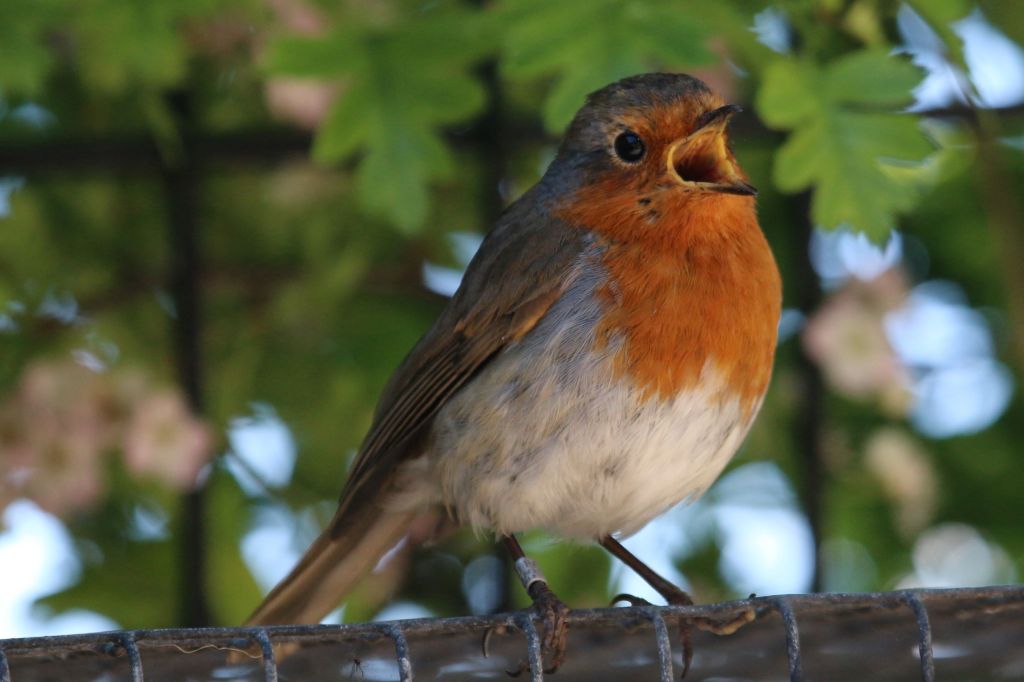
Britain’s unofficial National Bird sings out, warning others to keep clear of its territory

4 Robins are nestbuilding mavericks

When it comes to choosing a place to nest, robins aren’t fussy. Just about anywhere will do. Most commonly their nests can be found about two metres off the ground, within some kind of hollow or crevice and sheltered by vegetation. But others will nest on the ground, perhaps behind the overhang of a grassy tussock, or occasionally beneath fallen twigs covered by leaf litter.

However, radical freethinkers within the robin population choose to nest amongst the flotsam and jetsam of human life. Old teapots, discarded kettles, watering cans, coat pockets, wellington boots, farm machinery, flowerpots, hats, barbecues, an unmade bed and the body of a dead cat have all been selected by robins as a suitable place to bring up a family!

Although their nestbuilding strategy may seem bizarre, it delivers the goods. There are estimated to be 6,700,000 breeding territories in the UK. Since 1970 the robin population has increased by around 45 per cent.

5 Male and female robins both have vivid breast plumage

Robins are highly territorial, and – particularly in the breeding season – adult males like to show off their vividly coloured breasts in an attempt to intimidate other males. Although females are less competitive, they too have orangey-red breasts. The two sexes look very similar, and their brightly coloured breast plumage got them into trouble towards the end of the 19th century when robin skins were for a time a popular adornment for ladies’ hats.

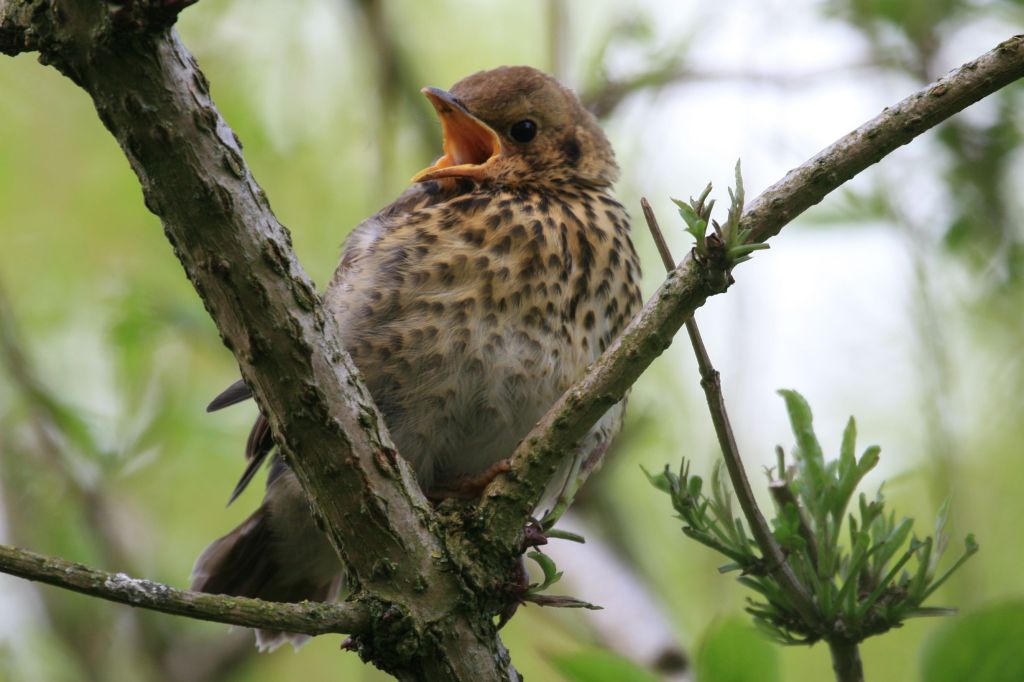
It’s worth noting that juvenile robins have a speckled brown breast and don’t develop the species’ distinctive plumage until after their first moult. The youngsters therefore belong to the group that is the nemesis of birders everywhere: they are Little Brown Jobs.

Juvenile robin (aka a Little Brown Job)

6 Robins sometimes fight to the death

You wouldn’t think it to look at them, but robins are aggressive little birds prone to acts of violence. It’s all about territory. It begins with a singing contest, males belting out their songs at one another while trying to get to a higher perch from which to flaunt their brightly coloured breasts. If one or the other doesn’t back down the dispute can become physical, resulting in injuries and even – on occasion – the death of one of the combatants. Shockingly, in some populations, up to 10 per cent of adult mortality is due to these avian turf wars.

7 Robins, friends to gardeners everywhere

Putting aside the connection with Christmas festivities, another reason for the robin’s popularity is its confiding nature. The robin presents as a friendly, trusting bird, more so than any other species that regularly visits British gardens.

Gardeners in particular often get up close and personal with robins. As ground feeders, robins enjoy nothing more than cheekily scavenging earthworms and other invertebrates dug up by gardeners going about their business. They’re also regular visitors to bird tables during the winter months, feisty feeders that aren’t shy about claiming their share of the feast.

Interestingly, robins are less confiding on continental Europe. This is thought to be because in many parts of the continent, particularly in the southern part of the robin’s range, the locals have the detestable habit of hunting small birds. It therefore pays the robin to keep its head down, skulking in the undergrowth, where hunters are less likely to find them. In Britain, where this horrible hunting tradition doesn’t exist, there is no evolutionary incentive for such caution.

The robin is a regular visitor to British bird tables

8 How the robin became

Unsurprisingly for a bird that associates so closely with humans, many stories have grown up to explain the robin’s distinctive colouring. One legend says that when Jesus was dying on the cross, a robin flew to his side and sang into his ear in order to comfort him. At this point the robin’s plumage was a dull, unremarkable brown colour. However the blood from Jesus’ wounds stained the robin’s breast. In that moment the world welcomed its first robin redbreast, and from that day onwards all robins bore the mark of Christ’s blood.

An alternative version of this tale tells us that one day an ordinary brown bird was flying high over Golgotha, near Jerusalem, when it looked at the ground below and spotted Christ suffering on the cross. Determined to ease Jesus’ torment it flew down and tried to remove His crown of thorns, but as it tugged in vain at the cruel affliction some of the Lord’s blood stained its breast. And this was how the robin became.

A third robin creation myth also makes a link between Jesus and the robin’s colouration. According to this story, shortly after Mary had given birth in the Bethlehem stable a small brown bird appeared and – in a noble attempt to keep the Christ Child warm – started to fan the flames of the dying fire. However, embers from the fire scorched its chest feathers, leaving the bird red-breasted. Mary saw what had happened and declared that the red breast was a sign of the bird’s devotion to the Lord. She went on to promise that the bird and all its descendants would forever onwards wear a red breast in memory of this selfless act of love.

9 Q: When is a robin not a robin? A: When it’s an American robin

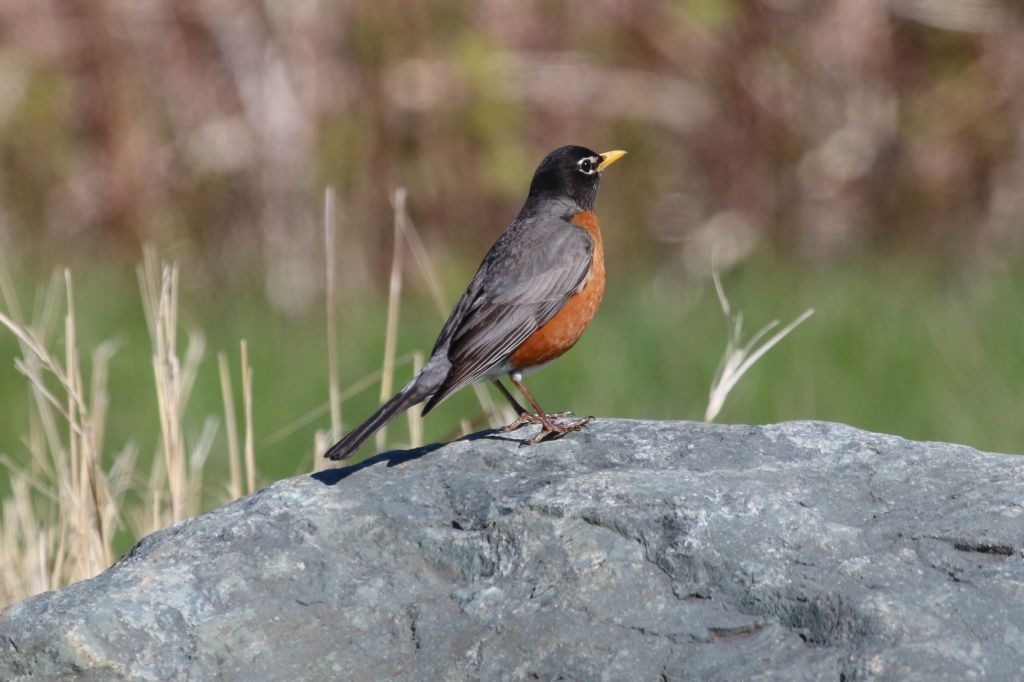
The species of robin seen in British gardens is found all over Europe, extending as far east as Western Siberia and south to North Africa. Robins are also found in North America…or are they? Well, no, actually they’re not. The American Robin isn’t really a robin at all, and belongs instead to the thrush family. Early European settlers in the Americas, desperate for reminders of home, noticed its reddish coloured breast and named it after the bird they knew from back home. Ornithology plainly wasn’t their strong point as, other than the colour of the breast, the two species bear little resemblance.

Interestingly, in the 1964 movie Mary Poppins starring Julie Andrews, the director got the wrong bird. Despite Dick van Dyke’s laughable attempt at a London accent, Mary Poppins is clearly set in England. However the bird that lands on Mary’s finger during the song A Spoonful of Sugar is an American Robin rather a European robin. Why am I not surprised by Hollywood’s cavalier relationship with factual accuracy?

The American Robin…is not really a robin at all!

10 Who killed cock robin?

The robin appears in the well-known English nursery rhyme Who Killed Cock Robin?, a gruesome tale describing the murder and the funeral of a robin. The unfortunate redbreast is shot by a sparrow, and subsequent verses reveal who organises his funeral, who digs his grave and who plays the role of chief mourner. The person who concluded that such a verse constitutes suitable entertainment for children was clearly in need of therapy.

The nursery rhyme first appeared in print in 1744, in a volume entitled Tommy Thumb’s Pretty Song Book. However the story appears already to have been an established part of England’s oral tradition. A stained glass window dating from the 15th century and showing a robin killed by an arrow can be seen Buckland Rectory (Gloucestershire), while in the early 1500s John Skelton wrote and published a similar story called “Phyllyp Sparowe.”

There are now multiple versions of the nursery rhyme, some of which have been put to music. My favourite is by the American folk-singing duo Dana and Susan Robinson. They are brilliant performers – we’ve seen them perform on a couple of occasions in the UK – and for us Who Killed Cock Robin? is always the highlight of their gigs.

So, dear reader, as you reach the end of this little post, please join me in celebrating our National Robin Day by listening to Dana and Sue’s rendition of the tragic tale of one robin’s untimely end, courtesy of the YouTube link below.