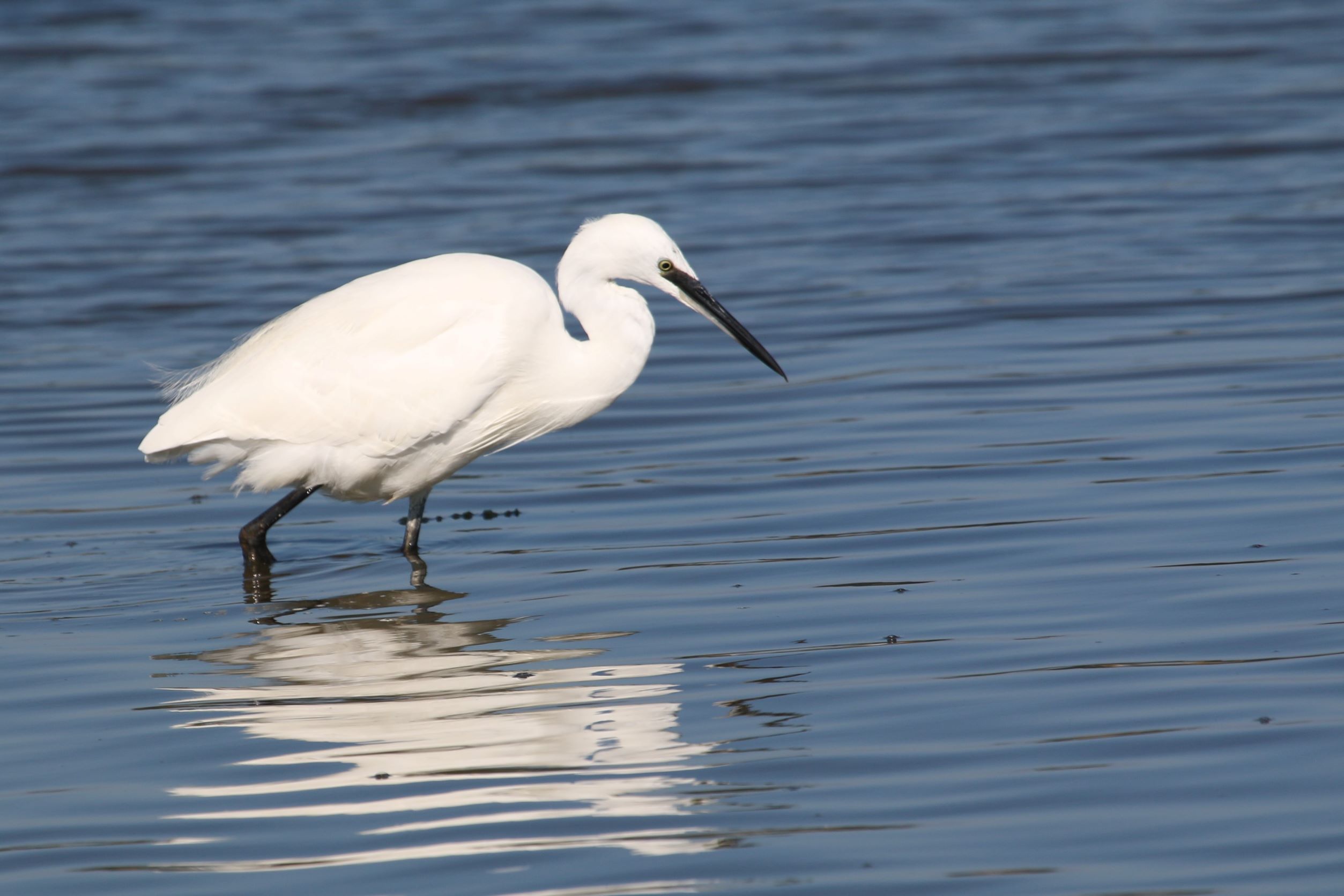
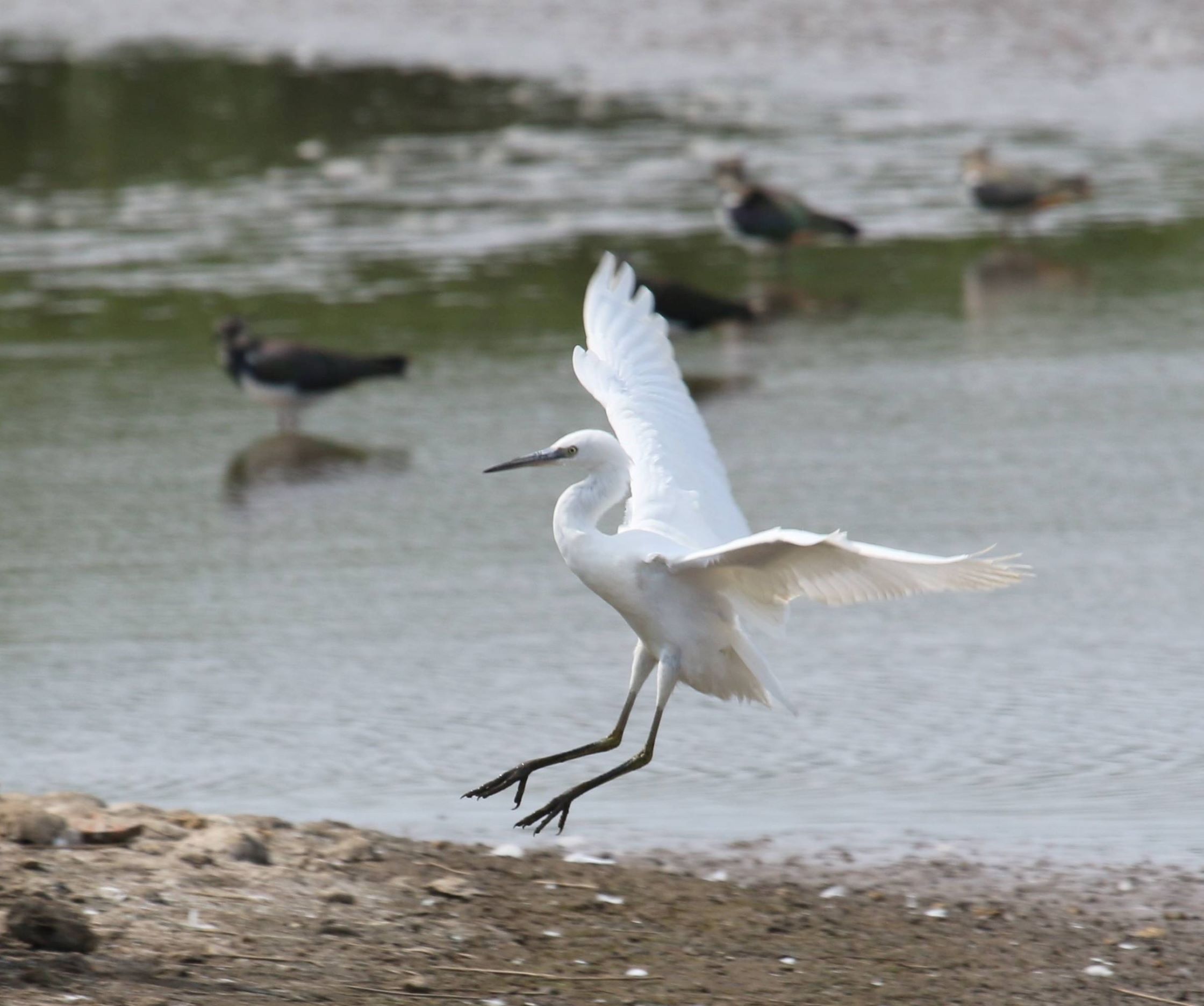
Celebrating World Wetlands Day with the heron family

Last Monday, 2 February, was World Wetlands Day. A wetland is a transitional area between land and water, an area where water covers the soil – or is present at or near the surface – either permanently or seasonally. Mrs P and I love a good wetland: it’s a distinct ecosystem that is a great place for a spot of birdwatching, and is notable as the favoured habitat of the handsome heron family

Grey Herons were my Mum’s favourite bird. This one has just caught itself a tasty snack.

When my father died over 30 years ago we bought my mother a set of binoculars and started taking her out on our birdwatching expeditions. She soon declared the heron to be her favourite bird, attracted I suspect by its large size and a distinctive appearance that includes a dagger-like bill, long spindly legs and an improbably bendy neck. I imagine she was also intrigued by the birds’ hunting style, in which they stand motionless for lengthy periods before stabbing explosively at any prey item foolish enough to venture too close to them. Spotting a heron quickly became Mum’s ambition whenever we took her out, and because we chose our birdwatching sites carefully she was rarely disappointed.

The species that Mum got to know and love is the Grey Heron, by a long way the most common member of the heron family in the UK, with over 60,000 birds overwintering here. Standing nearly 1m high and with a wingspan approaching 2m, it is an impressive bird. It feeds primarily on fish, but also eats amphibians, ducklings and other small birds, and tiny mammals such as voles. Interestingly, Grey Herons sometimes temporarily leave their wetland habitats in favour of nearby agricultural fields which they scour for rodents in the immediate aftermath of the harvest.

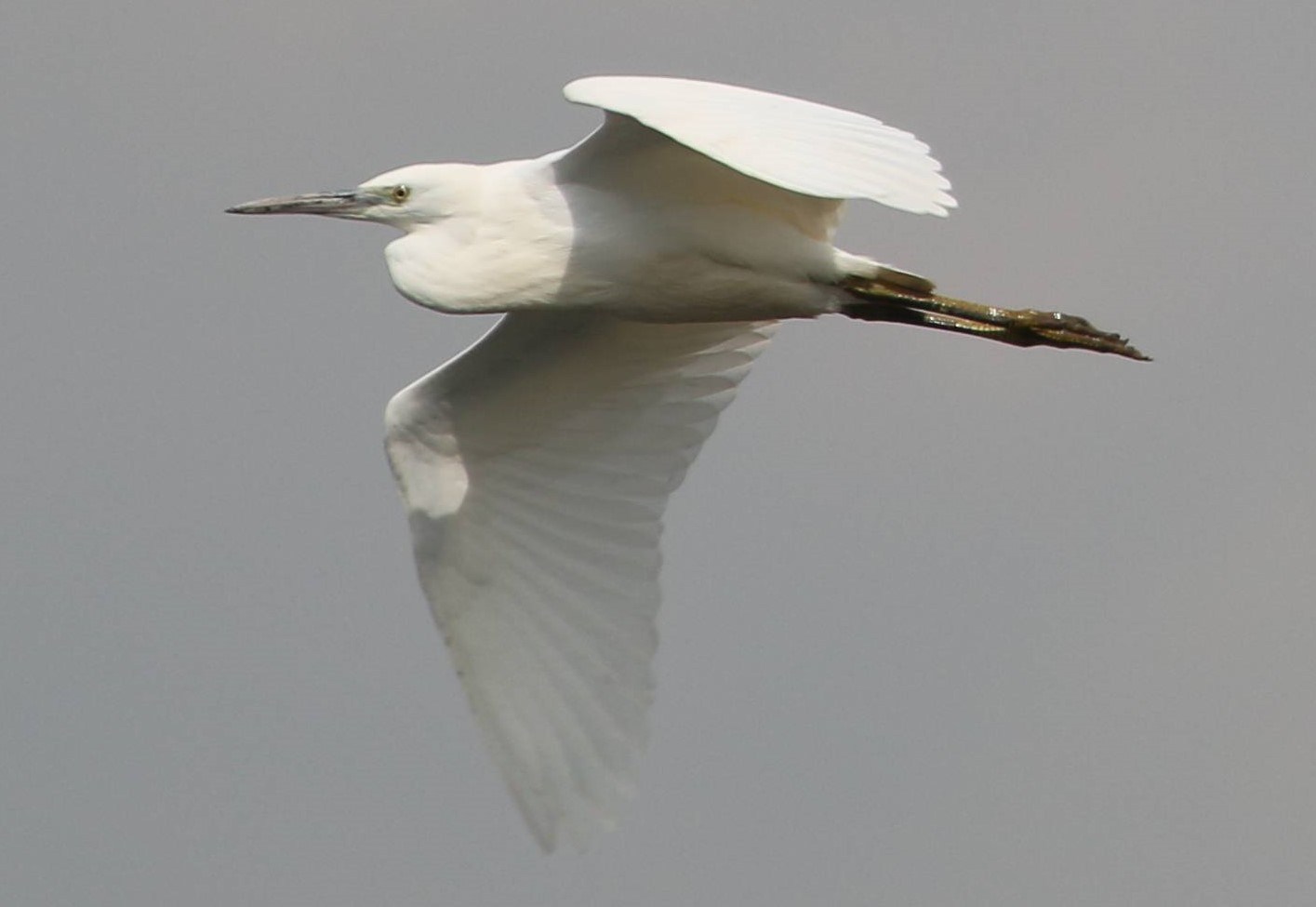
The UK boasts several other members of the heron family, although none is very common. The Bittern is vanishingly rare; Mrs P and I have rarely seen one, and have never got a decent photograph. Little Egrets were once common here, but were wiped out over 100 years ago thanks to the insatiable demand of the fashion industry for the birds’ elegant feathers. I wrote about the decline and fall of the Little Egret, and the important consequences this had on bird conservation in the UK, in a post I wrote in 2024.

Little Egrets began recolonising the UK in the late 20th century, and these days we see them quite often. Sadly their return came too late for my Mum, as did the more recent arrival of the Great White Egret. She would have been thrilled, I’m sure, to see both egret species, though I suspect neither would have supplanted the Grey Heron in her affections.

Across the whole world there are reckoned to be 75 separate species within the heron family, although some go under the names of egret or bittern. Herons’ solitary nature and their motionless hunting style have captured the imagination of cultures everywhere, often making them figures of mystery and deep spiritual significance as well as symbols of patience and wisdom. Every continent except Antarctica boasts resident species of heron, and as Mrs P’s photos show we’ve been privileged to see a number of these during our travels.

Almost all species of heron are closely associated with water, living and feeding as they mostly do on the margins of lakes, rivers, and swamps. They need wetlands, as do so many other species of birds, mammal and invertebrate, and it has been a pleasure to celebrate World Wetlands Day by featuring these magnificent birds here. My Mum, a heron lover until the very end, would definitely have approved!

Boat-billed Heron, Costa Rica 2008

A remarkable woman, Little Egrets and birth of the RSPB

Our birdwatching has been limited this year, as a result of the Covid restrictions and our continuing caution in the face of this frightening pandemic. We’ve seen no rarities during our occasional birding forays, but one bird we have been pleased to meet up with is the Little Egret. When we started birdwatching over three decades ago these elegant members of the heron family were almost entirely absent from the UK, but they can now routinely be seen in many parts of the country. Their return is a conservation success story.

* * *

Little Egrets were once present here in large numbers, but were wiped out by mankind’s greed. In 1465, for example, 1,000 egrets were served up at a banquet held to celebrate the enthronement of a new Archbishop of York. A century later they were becoming scarce and by the 19th century they’d all but disappeared.

Egrets in continental Europe fared little better, although here it was fashion rather than food that drove the decline. They had been a major component of the plume trade since at least the 17th century, but in the 19th century demand exploded for feathers, and other bird parts, to decorate the hats of wealthy upper- and middle-class women. We know, for example, that in the first three months of 1885, 750,000 egret skins were sold in London, while in 1887 one London dealer sold 2 million egret skins.

Seen from a modern perspective the wanton slaughter of any species to feed the vanity of shallow fashionistas is appalling. Fortunately, however, it also appalled some of the women at whom the plume trade was notionally directed, initiating a chain of events that led to the formation of the Royal Society for the Protection of Birds (RSPB). Today the RSPB is the UK’s largest nature conservation charity.

One of the women determined to stop the slaughter was Emily Williamson (1855-1936). At first she appealed to the all-male British Ornithologists’ Union to take a stand, but when they ignored her letters she realised this was a problem that women themselves could solve.

In 1889 Emily invited a group of like-minded women to her home in Didsbury on the outskirts of Manchester, to discuss how to the stop the vile plumage trade. The meeting established the Plumage League. Its rules were simple, and to the point:

  • ‘That members shall discourage the wanton destruction of Birds, and interest themselves generally in their protection.’
  •  ‘That Lady-Members shall refrain from wearing the feathers of any bird not killed for the purposes of food.

Two years later, in 1891, the Plumage League joined forces with the Fur and Feather League. This was also an all-female group and had been set up in the south of England by Eliza Phillips (1823-1916), who shared Emily’s values and aspirations.

Their new organisation was called the Society for the Protection Birds. Led by Emily Williamson, Eliza Phillips and Etta Lemon (1860-1953), and with the Duchess of Portland Winifred Cavendish-Bentinck (1863-1954) as president, the Society grew rapidly. By 1893 it boasted 10,000 members. In 1904, just 13 years after it was founded, the Society received a Royal Charter from Edward VII, making it the Royal Society for the Protection of Birds (RSPB).

One hundred years ago, on 1 July 1921, after nearly 30 years of campaigning by the Society, Parliament finally passed the Importation of Plumage (Prohibition) Act. The Act banned the importation of exotic feathers, and thereby helped save many species from extinction.

Since then the RSPB has gone from strength to strength, campaigning to protect habitats and species both in the UK and across the globe. The RSPB’s nature reserves are also a valued resource for British birdwatchers, and Mrs P and I are proud supporters (Life Fellows, in fact) of this brilliant conservation organisation.

From small acorns do might oak trees grow, and Emily Williamson can never have imagined that her humble initiative in a Manchester suburb would have such profound consequences. She and her fellow founders of the Society were remarkable individuals, all the more so when we reflect on the degree to which women were marginalised in Victorian society.

Thankfully, Emily Williamson is finally starting to receive the recognition she deserves. In April 2023 a statue of Emily will be unveiled in Didsbury’s Fletcher Moss Park, close to her former home.

* * *

Needless to say, Emily Williamson was not at the forefront of our minds when we spotted our Little Egrets a few weeks ago. I’m sure, however, that she would have been thrilled to see them back in the UK and fully protected under the Wildlife and Countryside Act, 1981.

Little Egrets first returned to the UK in significant numbers in 1989. They arrived here naturally, following an expansion of their range into western and northern France during the previous decades. They first bred in 1996, in Dorset, and continue to thrive. There are now thought to be around 700 breeding pairs in the UK, while the over-wintering population is around 4,500 birds.

Little Egrets are handsome birds, and a welcome addition to any wetland habitat. It’s great to have them back here, where they belong.

* * *

Postscript: This essay on The History Press website provides further details on women’s role in the foundation of the RSPB