Spending time with the Gruffalo and his pals

A few days ago we took an evening trip to Twycross Zoo to spend a bit of time with the Gruffalo and his pals. The Zoo is highly regarded for its work on the protection and breeding of endangered species, particularly primates, but the Gruffalo is a recent addition to their collection! He will be staying at Twycross for just a few weeks, and so was attracting a lot of interest.

The Gruffalo eyes up the mouse, probably thinking “mmm, looks tasty!”

If you’re not familiar with it, The Gruffalo is a world famous children’s picture book written by English author Julia Donaldson and illustrated by German artist Axel Scheffler. First published in 1999, the book has been translated into over 100 languages and has sold over 13.5 million copies worldwide. The story was later made into a 30-minute animated film and has been adapted into several stage productions. A follow-up book, The Gruffalo’s Child, was published in 2004 and has also proved to be hugely popular. This much-admired youngster also made a guest appearance at Twycross, alongside his even more famous father.

The mouse fights for his life by telling the owl about his fierce protector, the Gruffalo.

The plot of The Gruffalo is simple: a mouse takes a walk through the woods in search of food, where he meets three animals – an owl, a fox and a snake – each of whom would like to eat him for dinner. In order to escape the mouse invents a scary story, telling each predator that he is on his way to meet the fierce and fearsome Gruffalo, who will be very very displeased if anything bad happens to him. And so the mouse is released unharmed, but is then shocked to meet a real, live Gruffalo who also fancies snacking on mouse.

Can the little mouse survive the terrible tusks, claws, teeth, and jaws of the horrid Gruffalo? To find out what happens next, you’ll just have to track down a copy of the book! Maybe your local library will have one?

North American Wilds zone: salmon leap, while a beaver watches

It’s no surprise that the Gruffalo has become an iconic character in children’s literature, and so it is also no surprise that Twycross Zoo chose him to lead their special Lanterns of the Wild Christmas event. The mile (1.6km) long trail was lit by more than 2,000 vibrantly coloured lanterns, all carefully designed and deployed to dazzle the eyes and stimulate the imagination. But it wasn’t all about the Gruffalo. The trail also featured lantern dioramas of 10 environmental eco-zones, including lush rainforests, icy tundra and deep oceans.

North American Wilds zone: the carved presidents of Mount Rushmore watch over wildlife typical of the American Plains, including bison and elk, while a wolf howls from the mountain top.

Each eco-zone starred some of the wonderful wildlife found in that part of the world, making a clear link with the zoo’s primary mission. As well as being bright and cheerful, some of the dioramas were highly imaginative, such as the beaver dam in the North American Wilds zone, a dam over which salmon were attempting to leap while baffled beavers looked on. A second diorama of the North American Wilds featured the iconic carved heads of former US presidents at Mount Rushmore, complete with local wildlife including elk, bison and a wolf.

Tigers are the stars of the Asian Jungle zone

A third diorama that particularly caught my eye was the Asian Jungle eco-zone, in which majestic tigers were the stars of the show. Many years ago Mrs P and I were fortunate to visit India to watch wild tigers, and when I saw the lanterns at Twycross the memories came flooding back.

We were not alone as we walked the lantern trail. Visitors were there in huge numbers, all them seeking a bit of colourful pre-Christmas entertainment. Hopefully the event raised lots of additional, much needed income for Twycross, and maybe also raised its profile amongst people who previously knew little about the Zoo’s efforts to support wildlife conservation across the globe.

Bodies like Twycross Zoo play a vital role in species conservation, and in educating the public on conservation issues. Well done to the management for coming up with this seasonal initiative to help get their message across; if the numbers and reaction of people on the night is any guide, Lanterns of the Wild was a big success. The word on the streets is that there will be another lantern trail next Christmas, although probably without the Gruffalo. If there is, Mrs P and I will be keen to support it, Gruffalo or no Gruffalo.

Liebster Award for blogging (part 1)

This blog celebrates its first birthday at the end of May so it felt timely that a couple of weeks ago a fellow blogger, New Zealander Liz Cowburn from the Exploring Colour blog, nominated me for a Liebster Award. Our paths first crossed digitally late last year when she began reading and commenting on my earlier blog about a road trip around New Zealand. I was flattered by her interest, and I’m reet chuffed today that she feels my blogging is worthy of recognition. Thank you, Liz.

Memories of New Zealand: Mount Ngauruhoe

Given the title of her blog, it’s no surprise that Liz writes about colour, both in nature and in the human world. Her photos, and those of husband Nigel, complement her words perfectly. Through those words and pictures Liz presents a fascinating – and sometimes quirky – glimpse of life in New Zealand. She also touches on lots more interesting stuff, from the impact of last year’s Australian bushfires and Covid-19 on her homeland, to Irish pubs and the poetry of Rabbie Burns! If you haven’t already done so, I thoroughly recommend a visit to Liz’s excellent blog.

What’s a Liebster Blogger award?

So just what is the Liebster Award? Another of Liz’s nominees, Ann Mackay, summarised it perfectly, and rather than reinvent the wheel I’ll simply quote below what she has to say. Ann’s blog Inspired by Nature – Creative Explorations in Photography, Art and Writing, reflects her passion for gardening and the flowers she grows, and is definitely worth visiting.

Now you may be wondering just what the ‘Liebster’ (German for ‘favourite’ or ‘dearest’) Award is. It’s a means to allow readers to discover new blogs and by the recipients nominating more blogs, lots of bloggers have a chance to be found. (A sort of bloggers-helping-other-bloggers chain letter!)

SOURCE: Ann Mackay, Camassias: And Some Blog Love (1)

So, what do nominees have to do?

  1. Thank the blogger who nominated you and give a link to the blog.
  2. Answer the 11 questions given to you
  3. Share 11 facts about yourself
  4. Nominate between 5-11 other bloggers
  5. Ask your nominees 11 questions
  6. Notify your nominees once you’ve uploaded your post

Having explained what I’m up to I’ll dedicate the rest of this post to tackling Liz’s questions. Then, next week, I’ll move on to the “Big Reveal,” when I will declare 11 facts about the Platypus Man to an expectant blogosphere, before nominating a few folk to answer some cunning questions of my own devising!

Liz’s questions and my replies

1. What connection (if any) do you feel that you have with New Zealand? 🙂

Prior to our trip there in 2019 my knowledge of New Zealand was fairly limited, and could best be summarised thus: “a country that is a bloody long way from anywhere else, very good at rugby but not so clever at cricket, a home to flightless birds facing extinction and lots of sheep.”

Our visit opened my eyes, and allowed me to glimpse briefly a place far more interesting and beautiful than I had imagined. What a great country, what lovely people, albeit people whose vowel sounds – to English ears anyway – are seriously weird! In various ways NZ feels quite British, much more so than Oz or Canada, but the elements of Māori culture give it a unique Pacific spin. Definitely one of my favourite places.

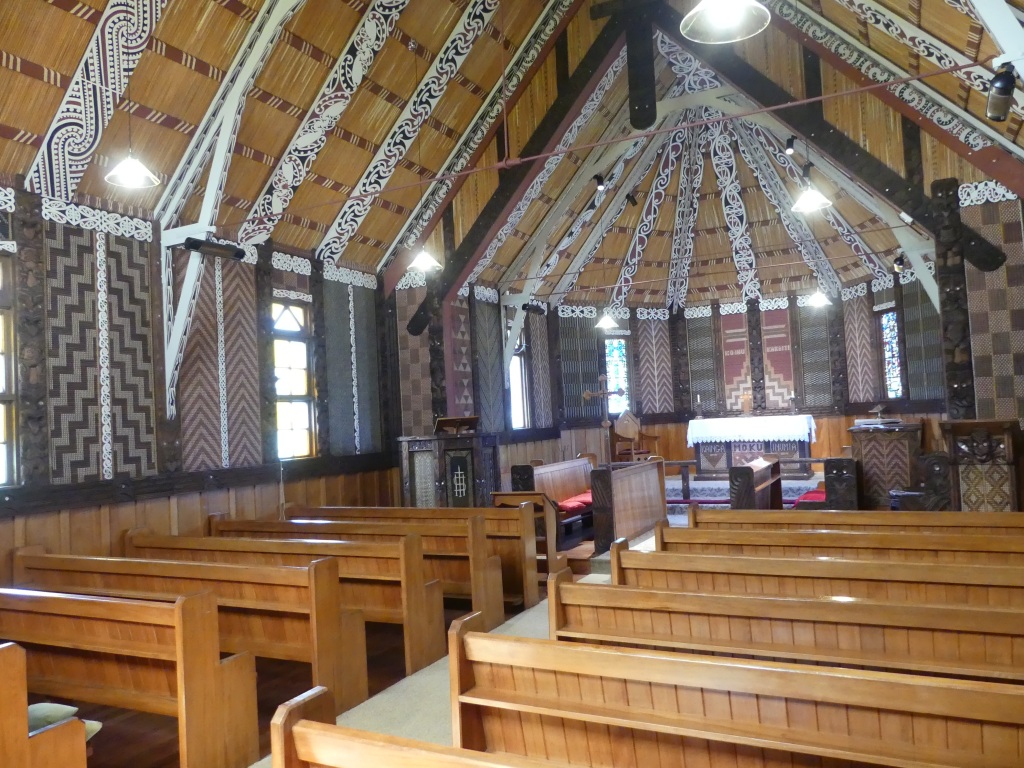
The Māori church at Putiki, in the suburbs of Wanganui, North Island, New Zealand

2. What place in this world do you most love?

The Orkney Islands, off the north coast of Scotland, are remote, beautiful and scattered with relics and reminders of their Neolithic and Viking past. There are more sheep than people, and more birds than sheep, which makes it my kind of place! Without family commitments I think Mrs P and I would have made a life there, but instead we must make do with visits every couple of years. We were due to go again in September, but we’ve had to cancel due to Covid-19. Next year, maybe?

3. Your favourite colour(s) are what? –and what do you associate with the colour?

I guess these days I would single out the colour of autumn. You know what I mean, that distinctive but elusive golden amber hue suffused with shadowy hints of blood, rust and decay, that subtle tone which is a beautiful but poignant reminder of time’s passing. All things must pass.

The colours of autumn: Maine, USA, September 2012

4. What connection do you feel/experience with Nature?

Nature – wildlife, countryside, open spaces – makes life worth living. I’ve always been into it, but I find my interest grows with the passing of the years. All 5 of my blogs have focused heavily on aspects of nature. For example, I’ve enjoyed writing about close encounters with devils in Tasmania and whales in Newfoundland, with grizzlies in Yellowstone and penguins in New Zealand. We are part of Nature, not separate from it, and my life is made infinitely richer by time spent alongside creatures great and small.

Spotted shortly after midnight, a wild Tasmanian Devil dining on wallaby roadkill, November 2016

5. Your favourite ‘active’ recreational activity …?

I played cricket in my teenage years, but retired due to gross incompetence. These days “active recreation” equates to a gentle stroll around a nature reserve or bird sanctuary, binoculars and video camera slung from my neck. My bad back, knackered knees and passion for chocolate cake prohibit strenuous physical activity … well, anyway, that’s my story and I’m sticking to it!

6. Your favourite ‘quiet’ hobby/interest?

Mrs P and I started taking a serious interest in birds during a visit to Scotland in the early 1990s, when we carelessly mistook buzzards for golden eagles! Since then our passion for birdwatching, and for watching other wildlife too, has just grown and grown. This shared activity is fundamental to who we are, individually and as a couple.

Puffin: Orkney, 2011

7. Is there something you enjoy ‘having a go at’ regardless of skill?

I was going to answer “no” on the basis that life’s too short to waste time on stuff one is bad at. But on reflection, I do enjoy singing in the bath, and Mrs P will tell you in no uncertain terms that I am the most tone-deaf person who ever walked on god’s green earth.

8. What was (or is) your favourite children’s book?

My parents told me that when I was young I used to love Alice in Wonderland. I still appreciate it now, not least because it contains one of my all time favourite literary quotes. I’ve had cause to trot out these wise words at various stressful moments over the years, for example when our rental car broke down on a remote gravel road in an out-of-the-way corner of a sparsely populated island off the coast of Tasmania, and we couldn’t get a signal on our cell phone! Lewis Carrol’s insight goes like this:

“We’re all mad here. I’m mad. You’re mad,” [said the Cheshire Cat]

“How do you know I’m mad?” said Alice.

“You must be,” said the Cat, “or you wouldn’t have come here.”

More recently, Philip Pullman’s His Dark Materials trilogy is an extraordinary work of literature. The movie and television adaptations completely fail to do justice to an outstanding piece of imaginative writing which, although notionally aimed at the teenage market, transcends all attempts at categorisation.

Other children’s volumes that grace the groaning bookshelves at Platypus Towers include Wind in the Willows (Kenneth Grahame), Holes (Louis Sachar), The Machine Gunners (Robert Westall), The Milkman’s on His Way (David Rees), the Tripods trilogy (John Christopher), Goodnight Mr Tom (Michelle Margorian), The Turbulent Term of Tyke Tiler (Gene Kemp) and Noughts and Crosses (Malorie Blackman). The best writing for children is brilliant, and should never be dismissed as “childish” or “just for kids.” Some of the greatest writers out there are writing books aimed, in the first instance at least, at a young audience.

9. Your current or past ‘occupation’ ie. work / study / keeping busy is …what?

Before retiring at the end of March 2018 I spent the best part of 40 years working in the UK public library sector, the last 15 running a city library service serving a quarter of a million people. I made this career choice because I knew that libraries can change lives. My father left school at a young age and did menial jobs throughout his life, yet thanks to the local library he was one of the wisest, best educated people I’ve ever known. Libraries made him, and in a slightly different way they’ve made me too.

Library at the National Trust’s Lyme Park country estate, Cheshire, UK

10. What’s your favourite creative activity.. what do you have a passion for?

I enjoy cooking, particularly experimenting with Indian, Chinese and Thai-inspired dishes. I also relish writing, pulling together stuff that interests or amuses me, rather than the endless boring reports that my employers had me churning out for decades. I do it for my own amusement, and blogging is my outlet. If other people enjoy reading it that’s great, but the whole point is that I enjoy writing it!

11. Is there something you can share about a challenge you face, or have faced?

Interesting question. Like anyone of my age I’ve had my fair share of setbacks and heartache, but nothing out of the ordinary. I guess I’ve been very lucky. I found university challenging, not academically but in terms of my self-confidence and sense of belonging. If I had my time again I’d cope better and make more of the opportunity that uni offered me. I blogged about my experience of Cambridge University last year.

Kings College, Cambridge, viewed from “the backs”, August 2019

The truth is out there – just ask a librarian

There’s no shortage of information currently circulating about the causes of, and cures for, Covid-19. Trouble is, much of it is just plain wrong, being based on ridiculous conspiracy theories – for example, that 5G phone networks are to blame for spreading the virus – or profound ignorance. The latter is exemplified by the recent speculation that ingesting or injecting household disinfectant could cure the infection. Bloody hell, words fail me!

The crisis has only been around a few months, yet already Wikipedia offers a 16,000 word piece on “Misinformation related to the COVID-19 pandemic.” So the burning question is, just who can you trust to point you in the right direction?

Personally, I would always trust a librarian to do just that. One way or another, I’ve spent most of my life in and around libraries. I always get a buzz of excitement in them. All human knowledge is available in, or accessible via, a properly run library. All you have to do is find it, and there’s no better way to do that than to ask the librarian.

Librarians are information professionals. It’s their job to help us find the information we need, accurate information from reliable sources. Many also have a wicked sense of humour. The image below was sent to Mrs P by one of her friends. Just read the book titles from top left to bottom right, and have a quiet chuckle at the creativity of one immensely knowledgeable librarian, albeit someone who maybe has too much time on his – or her – hands at the moment!

Libraries in the UK – and many other countries, I think – are struggling right now, so when the current crisis has passed why not pop into your local branch and check it out? You may be pleasantly surprised by what’s on offer. Meanwhile, you could try out the library’s digital offer. Various library services are available online these days, and could have been designed for lockdown living!