A long way from home

At last, as the weather starts to improve, we take out first tentative steps back into nature. Poolsbrook Country Park, just a few miles from where we live, is a good place to start. Created on the site of a colliery that closed down in 1986, today Poolsbrook boasts a mosaic of habitats including lakes, wet grassland, wildflower hay meadows, woodland and hedgerows, all carefully managed for the benefit of wildlife. I have written previously about the Country Park’s history and key features.

We go to Poolsbrook quite often, and know what to expect. Our first visit of 2025 does not disappoint. All the usual suspects are on show, including Coot, Mallard, Great Crested Grebe and the inevitable Canada Geese. There are no rarities, but who cares – it’s just good to be out watching birds again after a long, miserable winter.

But what’s that? Cruising on the lake alongside a flotilla of Mallards is a duck we’ve never seen before. The head and neck are an iridescent blue-green colour, while the cheeks are white and the bill is bluish grey with a black tip. The breast is barred white and black, the flanks are orange-brown and the back is dark grey with white streaks.

We spend a lot of time watching birds in wetland habitats, and can readily identify most that we encounter. But this guy is a total mystery. Somehow it looks like a mixture of several other species, and we debate whether it’s some sort of weird hybrid. More research is clearly required, so as soon as we get back home we consult Professor Google.

The good professor reveals the truth. Our mystery bird is neither a natural hybrid nor the result of an unfortunate accident in a bio-lab. Instead, our investigation reveals it to be a Chiloé Wigeon. We learn that it is a very long way from home. Also known as the Southern Wigeon, the Chiloé Wigeon is native to southern parts of South America, its name coming from an archipelago lying off the coast of Chile.

Being relatively easy to care for, it appears that the Chiloé Wigeon is a popular bird in exotic wildfowl collections. The bird at Poolsbrook must be an escapee from one of these collections – it plainly has not arrived in this country naturally.

Further research reveals that the Poolsbrook bird has been in residence for well over a year. How did we miss it during all our previous visits, we wonder?

On reflection, I don’t know how I feel about seeing this unexpected bird on one of our local reserves. On the one hand, it is of course exciting to encounter a species that we will never see on its home territory, particularly as it is clearly thriving at the Country Park.

On the other hand, I can’t help thinking the bird might be better off back in South America, where it would be amongst its own kind and have the opportunity to breed. That, sadly, will not happen here and our Chiloé Wigeon will be unable to pass on its genes. Hopefully, however, it will continue to do well alongside its Mallard cousins at Poolsbrook. We’ll be sure to look out for it next time we visit.

Wordless Wednesday – Cheerful Chairs

Wordless Wednesday is a simple blog post featuring a photo. It seeks to convey a message, but speaks for itself without using words. Mrs P took this photo of some cheerful chairs, with Parrsboro Lighthouse in the distance beyond, in Cumberland County, Nova Scotia in 2015.

No ordinary apple tree – Isaac Newton was here!

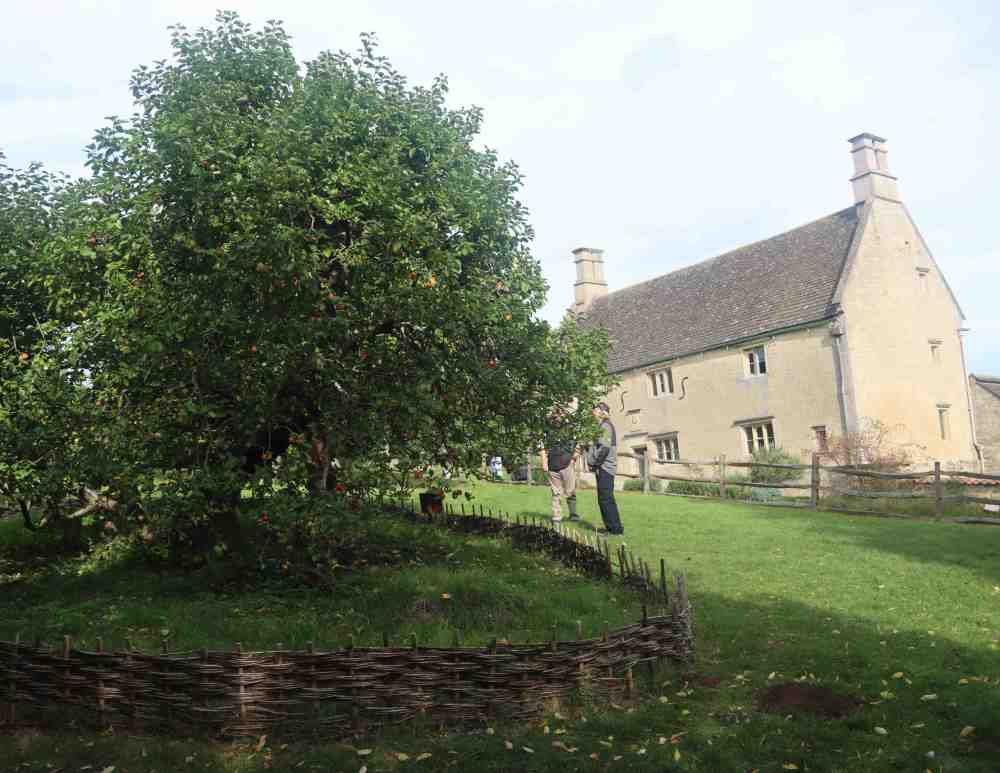
At first glance it is just an ordinary apple tree, its sturdy branches heavy with delicious fruit waiting patiently to be plucked. Not an uncommon sight, the casual observer might reasonably conclude, hardly worthy of a second glance. But why, that observer wonders, is this apparently modest tree surrounded by a low, woven wicker fence. Perhaps the tree is a bit special after all? And indeed it is: the apple tree in the grounds of Woolsthorpe Manor in the English county of Lincolnshire is perhaps the most famous tree ever in the history of mathematics and science!

Isaac Newton’s apple tree, in the grounds of Woolsthorpe Manor

In the mid-17th century Woolsthorpe Manor was the childhood home of one Isaac Newton. He was a bright lad, so bright that in 1661 he was admitted to Cambridge University’s Trinity College. Four years later an outbreak of plague temporarily drove students away from the university, and Newton returned home to Woolsthorpe.

There, with time to kill, Newton lazed beneath an apple tree in the manor’s grounds, pondering whatever it was that students pondered before the advent of Instagram and TikTok. As he did so, he saw an apple fall from the tree. It may or may not have struck him on the head – the jury’s out on that one – but the incident definitely caused him to wonder why the apple fell downwards, rather than upwards or sideways.

To our sophisticated 21st century minds the reason seems blindingly obvious, but back in the day nobody had heard of gravity. Isaac Newton was about to change all that. Having given the apple’s behaviour due consideration he formulated his law of universal gravitation. This states that two objects are attracted to each other by a force which is proportional to the product of their masses and inversely proportional to the square of the distance between them!

Make any sense to you? No? Me neither! But the essence of it really isn’t so complicated. All you genuinely need to know about gravity is that if you throw yourself off the top of a tall building in a crazy attempt to fly like Superman, you’re gonna go straight down rather than upwards or sideways. You will fall quickly, hit the ground hard and almost certainly die. Clever guy, that Isaac Newton!

But never forget, dear reader, that without Newton’s apple tree, gravity would remain a total mystery to us all. Or maybe not, as doubtless another bright spark would eventually have figured it out, with or without the assistance of random pieces of falling fruit.

Newton’s apple tree prospered until 1820, when it was blown over in a violent storm (gravity strikes again!) However the roots clung dearly on to life, and in due course the tree sprouted from them again. Over two centuries later the born-again tree looks remarkably healthy, and seems likely to survive for many more years. And such is its fame amongst scientists that it lives on in another guise too. In 1954 a cutting from it was grafted onto the stock of another variety of apple, and planted in the garden of Trinity College, Newton’s Cambridge alma mater, to remind one and all that “Isaac Newton was here!”

More remarkably still, in 2015 a pip from Newton’s born-again tree was taken by British astronaut Major Tim Peake to be germinated on the International Space Station. Having been safely brought back to Earth, the germinated seed was planted at Woolsthorpe, where today it can be seen growing close to the original tree.

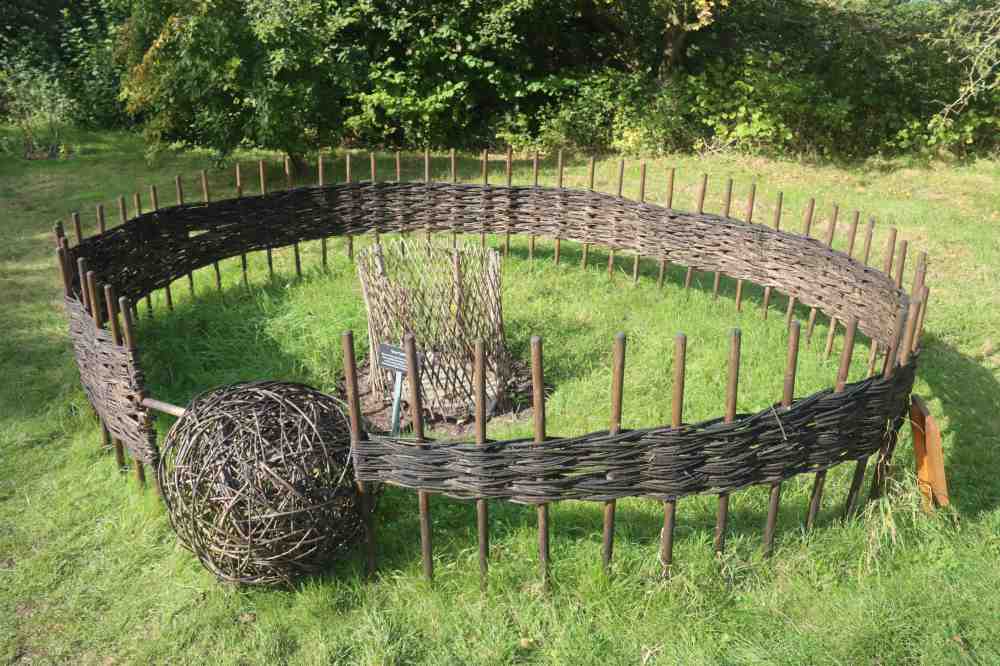
Heavily protected behind the fencing (and invisible on this photograph!) is the sapling apple tree that was germinated on the International Space Station. We may have to wait some time before it bears any fruit!

As well as viewing both trees, modern visitors to Woolsthorpe like Mrs P and I can also wander through the manor house itself, which has been restored and dressed by the National Trust to look how it was in Newton’s day. The building is as unremarkable as the trees in its grounds, and it is difficult for the ordinary visitor to fully appreciate the significance of the mathematical and scientific discoveries to which house and garden once played host. I would not for one minute pretend that I understand the complexities of those discoveries, but the quirky story of Newton’s apple tree renders his story more accessible to mere laymen like me. Long may it prosper.

Big boys’ toys

What is it about trains, particularly steam engines, that so captivates the imaginations of young and old alike? Many youngsters love playing with model train sets, “driving” their tiny trains around circuits of track in their bedrooms or a convenient garden shed. Just a bit of harmless fun for kids, you probably think, keeping them entertained when school’s out and foul weather makes it impossible to play outside.

Only for some of those kids the fascination never goes away, and they’re still mucking about with trains when their childhood is just a distant memory. For some folk, trains are the ultimate “big boy’s toy.”

Last summer we visited the Leatherhead Miniature Railway, which is run by the Surrey Society of Model Engineers. The society was formed by enthusiasts in 1978, and has since grown in size and ambition. Its website boasts that “we run miniature trains, with guards, station masters, a ticket office, ticket collectors, and refreshments.” Clearly the big boys – who are all super-keen volunteers, of course – are fond of dressing up as well as playing with their toys!

The society holds around a dozen open days each year when, for a small fee, members of the public can admire the volunteers’ handiwork and take a ride on one (or more!) of their trains. When we visited, the railway was doing great business. Kids were loving it. Their adult carers were no less thrilled, and were probably grateful that looking after the kids gave them a chance to relive their own childhoods without any embarrassment.

The Leatherhead Miniature Railway is clearly run by eccentrics on behalf of other eccentrics, meaning that a great time is had by all. Long may it continue.

* * * * *

A bit later in the year, and nearly 400 miles (640km) north of Leatherhead, we paid a visit to the Heatherslaw Light Railway in Northumberland. As a 15-inch (38cm) gauge railway it’s a good deal larger than the Leatherhead Miniature Railway, but it still counts as a “big boy’s toy”, not least because it began life as the brainchild of just one man, model railway enthusiast Neville Smith.

Neville was an engineer who had built smaller locomotives in the past, but harboured an ambition to up his game by building a passenger-carrying railway in 15 inch narrow gauge. His dream came to the attention of Lord Joicey, owner of the Ford and Etal Estates in Northumberland. Joicey was looking for an initiative that would encourage more tourists to visit his estates, and he quickly recognised that Neville might have the answer.

In 1989 Lord Joicey and Neville Smith agreed to work together, and the result was a Light Railway connecting Heatherslaw village and Etal castle, a round trip of around 4 miles (6.4km). Today, hourly services run during the tourist season, as well as Santa Specials in December. Steam and diesel locomotives haul vintage-looking wooden passenger coaches, some of which were originally built on site by Neville himself.

The Light Railway has not been without its problems. The track runs along the banks of the River Till, and although this gives passengers some attractive views of the Northumberland countryside and Cheviot Hills, it is prone to flooding. The floods in 2008 washed away part of the track and caused major damage to some of the locomotives and rolling stock. For a while the future of the whole railway seemed in doubt, but the combined efforts of its management, staff and friends ensured that closure was averted.

The popularity of the Heatherslaw Light Railway, as demonstrated by the hordes of happy passengers during our visit, proved once again the enduring popularity of railways with adults and children alike. Big Boys (and Big Girls too, for that matter!) have no intention of being separated from their toys any time soon.

Ladies and gentlemen, let’s hear it for rats!

Rats have always had a bad press. When, around 60 years ago, our pet cat gifted my mother a dead rat and expected to be praised for his hunting skills, mum lost it completely, freaking out in a way that I never witnessed at any other point in her life. And when, in the 1932 film Taxi, James Cagney famously addressed Buck Gerrard as “you dirty yellow-bellied rat”, it was not a term of endearment! No one, it seems, thinks highly of rats.

This branch is just a metre above a bird table. Within seconds of this photo being taken, the rat was down and snacking enthusiastically.

Just why is it that rats are so widely loathed and feared? Their perceived connection with disease has a lot to do with it. Rats have long been associated with plague, their fleas being held responsible for the spread of the Black Death that wiped out one third of Europe’s population in the mid-14th century. Except it’s not true, as recent research has shown. The Black Death was mostly spread by human lice and fleas. So if any species deserves to be loathed and feared because of the ravages of the plague, it is presumably us and not the poor old rat!

Rats are also associated with filth – witness Cagney’s reference to a dirty rat. Wrong again! The rat is by instinct a clean critter, and will immediately start to groom itself if its fur gets dirty. Of course, some of the places in which rats hang out are themselves dirty – sewers, rubbish dumps and so on. But hey, we’ve all got to live somewhere, and at least – just like cats – rats work hard to keep themselves clean.

The James Cagney quote also implies that rats are mean, callous animals. But this too is a misconception: research has shown that rats demonstrate emotional intelligence, and are strongly supportive of one another within their social groups.

Historically, rats have also been feared for the threat they pose to human food stocks, particularly grain stores. In the famous German folk-tale, the Pied Piper of Hamelin was hired to deal with just this problem. It is a conflict of interests that is probably less of an issue today thanks to modern bio-secure storage systems, although admittedly that may well not be true in the developing world.

And if rats move on from our grain stores to dine out instead on the take-away food that our species carelessly throws away in the streets, so be it. The solution is simple: don’t buy what you can’t eat, but if you get this wrong then at least dispose of your unwanted fries or burger or kebab somewhere that wandering rats can’t get at it. Scavenging behaviour amongst rats is for them a matter of survival; thoughtless littering by members of our own species is simply a matter of lazy selfishness.

With human food stores no longer available to them, some rats now turn to bird food. The only rats I ever see are grazing on or around bird tables and feeders, nibbling enthusiastically upon the food people have left out for their avian friends. Mrs P’s photos clearly illustrate this behaviour. It upsets some birders, but I regard it as a privilege to be able briefly study an animal that is otherwise largely hidden from me. The rats don’t hang around for long, and the birds are soon back. Everyone’s a winner.

Away from the bird table it is true that rats can be a threat to birds, disturbing nests, driving away parent birds and predating eggs and chicks. The problem is most serious on islands with no history of rodents. On such islands, if rats arrive and become established – normally thanks to the folly of humankind – the effect on seabird colonies can be devastating. In such circumstances the only way to save the birds is to eradicate the rats, a project that is lengthy, laborious and expensive. It can be done, however, as was demonstrated when invasive rats – which had arrived as stowaways on ships – were finally eradicated from Lundy, a small island off the Devon coast in the south of England.

Although their effect on bird colonies cannot be denied, rats can also be beneficial to wildlife. The African Giant Pouched Rat, which is native to the savannahs of southern Africa, can be trained to assist in the prevention of wildlife crime by using its acute sense of smell to detect smuggled ivory, rhino horn and pangolin scales. Cheaper to train than sniffer dogs, and able to operate in spaces that are inaccessible to canines, these so-called “hero rats” are an important new weapon in the war for wildlife. They have also been used elsewhere in other innovative ways, including the detection of landmines and tuberculosis pathogens.

Rats are intelligent animals, more complex than they appear at first glance. They will always be controversial. I hate the devastation they cause in some island seabirds colonies, and accept that their presence in our well-ordered 21st century lives may sometimes be unsettling. But the rats are only doing what comes naturally for them, and from an evolutionary perspective they are doing it rather well. Overall, I would suggest, they are not nearly as bad as popular culture and urban myth would have us believe. And so, ladies and gentlemen, let’s hear it for rats!

A hidden jewel – Lady Waterford Hall

Viewed from the outside, Lady Waterford Hall in the tiny Northumberland estate village of Ford is unremarkable, pretty enough in its own way but easily forgotten. Take a look inside, however, and everything changes. The Hall’s interior is extraordinary, the walls lined with a series of outstanding watercolour murals featuring Biblical subjects. Perhaps even more surprisingly, this magnificent work of art was once the village schoolhouse.

The murals were painted in life-sized watercolour on paper stretched on wooden frames or panels, which were then washed with distemper to tighten them before being mounted on the walls. Louisa painted them in her studio at Ford Castle. .

The schoolhouse and its 16 massive murals were a decades-long project of Louisa Anne Beresford, Marchioness of Waterford (1818-1891). Her well-connected father was appointed British Ambassador to France in 1816, and Louisa spent much of her childhood in Paris. Given her high society background it was no surprise that she married well in 1842, when she got it together with Henry Beresford, 3rd Marquess of Waterford.

The exterior of Lady Waterford Hall offers no hint of the marvels to be found within

Louisa spent most of her married life at her husband’s family home in County Waterford, southern Ireland. When he died in a riding accident in 1859, he left Ford Castle and its estate in Northumberland to his widow. She was clearly a kind and caring person, and as such she wasted no time in turning the redevelopment of Ford village, and the welfare of her tenants, into her “great experiment”.

Jesus Midst the Doctors (Luke, ch.2, v.46)

Building a schoolhouse for the village children was one of Louisa’s priorities. Work began in 1860, but did not end with bricks and mortar, nor with desks and blackboards. She was an accomplished artist who had received some tuition from the Pre-Raphaelite master Dante Gabriel Rosetti, and she decided to use her talents to paint a series of magnificent murals to help decorate the school’s interior walls.

Left: Moses and Miriam (Hebrews, ch.11, v.23). Right: Samuel and his Parents (1 Samuel, ch.2)

As well as showcasing Louisa’s artistic abilities, the murals’ religious theme enabled her to shine a light on her deeply-held Christian beliefs. Her paintings were intended to act as a teaching aid, encouraging pupils at the school to learn from the moral lessons underpinning the Biblical stories she depicted. In an attempt to make these seem more relevant to their intended audience, she used local estate workers, villagers and children as models for the people featured in her paintings.

Joseph sent to his Brethren (Genesis, ch.1, v 14)

The murals took Louisa just over 20 years to complete, and one can only imagine the pupils’ wonder as they watched their school gradually morphing into a wondrous art gallery. The building continued to operate as the village school until 1957, meaning that several generations were able to benefit from her efforts.

The Child Saviour (Luke, ch.2, v51)

Today known as Lady Waterford Hall, the former schoolhouse is now managed by a charitable trust which aims to preserve the building and the collection housed within it.

Left: The Sacrifice of Cain and Abel (Genesis, ch.4, v.7). Right: Abraham and Isaac (Genesis, ch.22, v.7 & 8)

In addition to its current role as an accredited museum that celebrates Louisa’s artistic legacy and philanthropic endeavours, the building continues to serve the local community by acting as the local village hall. Until we visited a few months ago I had never heard of Louisa Beresford nor encountered any of her work; from what we witnessed and learned during our time there, she clearly deserves to be better known.

Snowmen and snowdogs

It snowed overnight on Saturday. No surprise there, the forecasters had been banging on about the possibility for days, but there was not nearly as much “white stuff” as they predicted. Certainly not enough to build a snowman, but who cares – we had our fill of snowmen a few weeks ago, and spotted some snowdogs too, when we explored a couple of local sculpture trails organised by Wild in Art.

Eight Maids a-Milking, by Donna Newman

Both trails were inspired by the work of Raymond Briggs (1934 – 2022), a notable illustrator of children’s books. The Snowman was first published in 1978, and remains his most celebrated work. It is a story told entirely without words, relying instead upon a sequence of simple pencil crayon illustrations.

The Snowman is a magical tale of a boy who builds a snowman in his garden and is astonished when his creation comes to life at the stroke of midnight. Boy and snowman play together happily, but without making a sound to avoid waking the boy’s parents. Later, after a shared candlelit feast, the loveable snowman flies through the air above the snowclad English countryside with the entranced boy held tightly under his arm.

When their flight is over the pair return home, the boy to his bed and the snowman to the garden. Upon waking the next morning the boy rushes into the garden to re-join his new best friend, but a thaw has set in and the snowman is little more than a pile of slush. It’s a sad end, a reminder that nothing is forever and that all things must pass, but the abiding memory is of the cheerful, chubby, larger-than-life character of the snowman.

Such was the impact of Briggs’ enchanting story that in 1982 it was adapted into a 30 minutes long animated film for television. The film caught viewers’ imagination and brought The Snowman story to a whole new audience. It has been repeated regularly ever since.

Today the loveable snowman is a Christmas icon, recognised by one and all, so it was no surprise to see Briggs’ creation starring in a sculpture trail at Clumber Park, Nottinghamshire, during the final weeks of 2024. The trail featured a series of sculptures of our hero, his ample body covered with designs inspired by the ever-popular festive song “The Twelve Days of Christmas”.

As I’ve written previously about similar Wild in Art sculpture trails that we’ve followed in recent years, this one wasn’t about sophisticated art or high culture. It was nevertheless a great way to get into the Christmas spirit, to throw off the miseries that Covid had inflicted upon us just a couple of weeks earlier, and to have some much-needed fun.

* * * * *

The impact of the original snowman film was so great that canny television executives craved a sequel. It duly came to pass in 2012. Raymond Briggs gave The Snowman and the Snowdog his blessing, although he was not personally involved in the project. The story introduces a brand new character, a snowdog, who enjoys a series of magical adventures alongside the snowman and the boy.

Ru Dog, by Donna Newman

The snowdog inspired his own sculpture trail in October 2024, in the elegant Derbyshire town of Buxton. If I’m honest, this one was not quite up to the standard of the snowman trail that we visited a few weeks later, with several of the designs seeming a little lacklustre. Nevertheless tracking down the snowdog sculptures was a good excuse for a day out, free entertainment in a part of Derbyshire that we really should try to visit more often. Later in the year, maybe…