Gloomy London, viewed from the River Thames

Our recent trip to London to watch a sumo tournament also gave us the opportunity to act like regular tourists for a while, ticking off a few things that have been on Mrs P’s list for many years. One of these was to take a boat trip along the River Thames, downriver from Westminster and through the Thames Barrier. Although I’m a Londoner by birth, I don’t usually enjoy the experience of re-visiting a city that I find crazily crowded and annoyingly noisy. Travelling through it by boat, however, offered the opportunity of a different perspective, more scenic and less frenetic, so although on our chosen day the weather was relentlessly gloomy I was keen to give it a try.

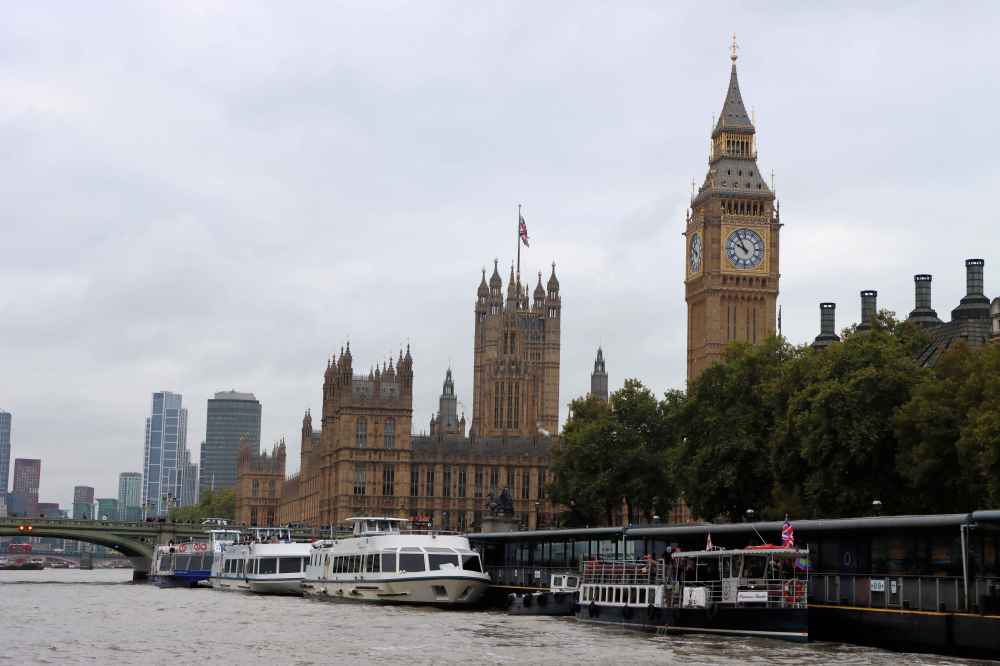
The Houses of Parliament, including Big Ben (aka Elizabeth Tower) as viewed from the Thames. In front of it are several boats that take tourists on trips along the Thames.

Boarding our Thames Clipper boat at Westminster, we were immediately able to admire the Palace of Westminster (aka the Houses of Parliament), including its unmistakeable clock tower. More properly known as the Elizabeth Tower, the clock tower is popularly referred to as Big Ben (in fact, Big Ben is the great bell housed within the tower, rather than the tower itself). These iconic symbols of British democracy date from the mid-19th century, when they replaced earlier buildings that were destroyed by fire in 1834.

The London Eye, and to its right County Hall, which once was the home of London’s local government. Today it houses various attractions, venues, and hotels.

Opposite the Houses of Parliament, on the south bank of the Thames, is the more frivolous but no less recognisable London Eye. Originally known as the Millennium Wheel, the London Eye was opened by Prime Minister Tony Blair on 31 December 1999. It was originally conceived as a temporary project that was due to remain standing for just five years, but it proved so popular that it was soon given permanent status. The Eye is the world’s tallest cantilevered observation wheel, and the UK’s most popular tourist attraction with over 3 million paying visitors per year.

Tower Bridge. To the left is the Shard, and to the right of the bridge is the Walkie-Talkie Building, aka 20 Fenchurch Street.

Heading downriver it was not long before our boat reached another of London’s “must-see” tourist destinations, Tower Bridge. Built in the neo-Gothic style and constructed between 1886 and 1894, the central sections of the road bridge lift to allow tall ships to pass though safely.

The Shard, and on the river in front of it the museum ship HMS Belfast. This cruiser was commissioned in August 1939. In June 1944 she took part in Operation Overlord, supporting the Normandy landings.

Other buildings visible from this section of the river showcase modern architecture, demonstrating that for all its historic attractions London is not stuck in the past. Located on the south bank of the Thames and standing just over 1,000 feet (309.6m) high, the pyramid-shaped Shard is a 72-storey mixed-use development built between 2009 and 2012. This iconic landmark is the tallest building in Western Europe, and the 7th tallest in Europe as a whole behind one in Poland and five more in Russia.

The Walkie-Talkie Building

On the opposite side of the river, the Walkie-Talkie building is equally recognisable, although it comes up short when compared with the Shard as it stands a mere 528 feet (160m) tall! More properly known as 20 Fenchurch Street, the Walkie Talkie’s highly distinctive top-heavy form appears to burst upward and outward. There are 34 storeys of office space, above which can be found a further 3 floors of bars and restaurants.

Metropolitan Wharf, Wapping

Londinium was founded by Roman invaders around AD 47-50. The site was selected because it would make an ideal port and commercial hub, being narrow and shallow enough to put a bridge across, and yet deep enough to welcome seagoing ships. The Thames remained key to the growth and development of the city long after the departure of the Romans, with the wharves and docks that lined its banks handling ever-growing volumes of imports and exports. Countless wharves still remain, although most have been converted to residential or office use.

The piers of the Thames Barrier straddle the Thames

As we neared the end of our boat trip downriver we passed through the Thames Barrier, which is one of the world’s largest movable flood defence barriers. Spanning 520 metres across the Thames, its purpose is to protect central London from flooding caused by tidal surges in the North Sea.  It is made up of 10 massive steel gates; the four main gates are 61 metres wide and, when raised, stand as high as a five-storey building. In normal conditions, only the piers that support the gates and the hydraulic mechanism are visible. The gates lie flat on the riverbed, allowing river traffic to pass freely. When a high tide and potential storm surge are forecast the hydraulic machinery is used to rotate the gates upward, forming a solid steel wall against the water.

Difficult to believe that massive steel plates lie on the river bed between these piers, steel plates that may one day save London from a catastrophic flood

The Thames Barrier was just one of several London landmarks that we were pleased to see during our boat trip. A boat trip along the Thames most definitely offers a new outlook on the UK’s capital. Maybe I’ll do it again one day, but hopefully when the sun is shining!

Wordless Wednesday: Covered Bridge

Wordless Wednesday is a simple blog post featuring a photo. It seeks to convey a message or tell a story, but speaks for itself without using words. Mrs P took this photo of the Taftsville covered bridge in Vermont, USA, in 2007. Built in 1836, it is one of the oldest covered bridges in Vermont.

The Lost World of Post-War Prefab Houses

Next Thursday (May 8) is VE (Victory in Europe) Day, when events will be held across the UK to mark the 80th anniversary of the end of World War 2 in Europe. The war dragged on in the Far East until August 1945, but from a domestic perspective, May 1945 was when the UK could begin to focus its attention on recovery from five and a half years of brutal conflict.

One of the main priorities at the time was to deal with a serious shortage of housing caused by German air raids, limited resources and adjusted priorities during the war years. Prefabs – prefabricated homes that are built in factories and then erected on site – were seen as an integral part of the solution.

The looming problem of post-war domestic housing was identified as early as 1942, with Prime Minister Winston Churchill declaring in a speech “The first attack must evidently be made upon houses which are damaged, but which can be reconditioned into proper dwellings…the second attack on the housing problem will be made by what are called the prefabricated, or emergency, houses.

Although Churchill was no longer Prime Minister, around 156,00 prefab bungalows were erected between 1945 and 1949, spread across a mix of 18 different designs. The intention was that they should be a temporary solution, lasting around 10 years until they could be replaced with houses constructed in a more traditional way. However, many survived decades longer than this and a few are still lived in today. Others have found their way into museums, including the Chiltern Open Air Museum, where we were pleased to encounter one a few months ago.

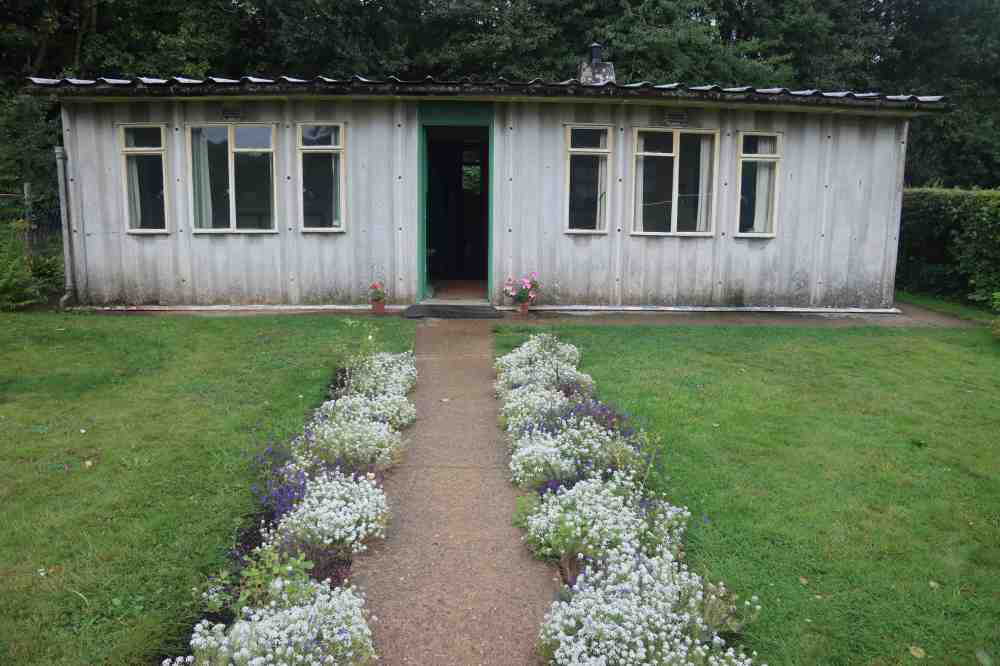
The prefab on display at the museum dates from 1947. It was one of 46 erected on the Finch Lane Estate in the Buckinghamshire town of Amersham, a little way north of London. The bungalow is built from 26 asbestos cement panels bolted together on a wood and steel frame, all laid out on top of a concrete base. These days, of course, building with asbestos would be strenuously avoided, but back then asbestos cement offered a swift and affordable solution to a massive social problem.

The Finch Lane Estate was demolished in 1987. Recognising that the prefabs were an important part of local and social history, managers at the Chiltern Open Air Museum arranged for one to be dismantled and kept in storage. It was finally reconstructed at the museum in 1992/93 and fitted out as it might have looked in 1950, with furnishings appropriate to that period.

To our 21st century eyes they may appear small, drab, miserable buildings in which to live out one’s life, but the people who lived in prefabs often saw them very differently. They called them palaces!

Many prefab occupants had previously lived an uncomfortable existence in crowded cities like London, often in shared accommodation with outside toilets and no hot water system. Prefabs addressed these shortcomings, and came with a range of modern conveniences such as a refrigerator. There was even some garden space wrapped around the building in which kids could play and adults could grow fruit and vegetables to supplement whatever food they could afford to buy in the shops

They may have owed their origins to some of the darkest days in our modern history, but, ugly though they are from a modern perspective, prefab houses were an important step up for many ordinary folk. Visiting the museum’s prefab offers visitors a tantalising glimpse of a lost world, and an opportunity to reflect on our good fortune to live at a time when such buildings are reduced to simple museum curiosities.

No ordinary apple tree – Isaac Newton was here!

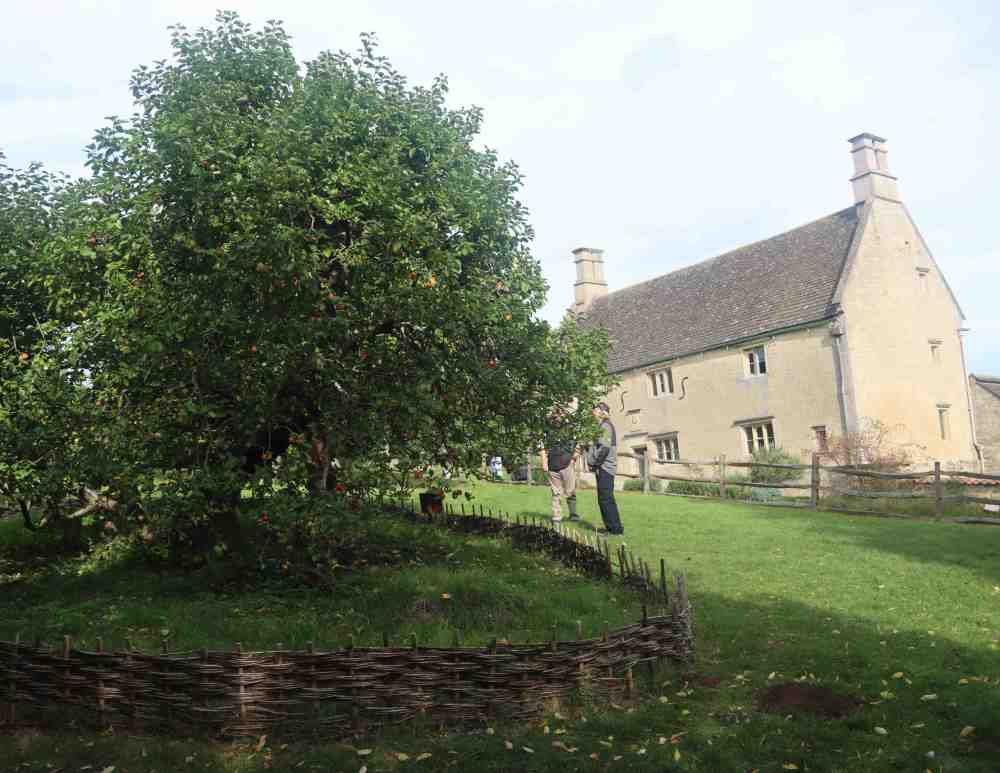
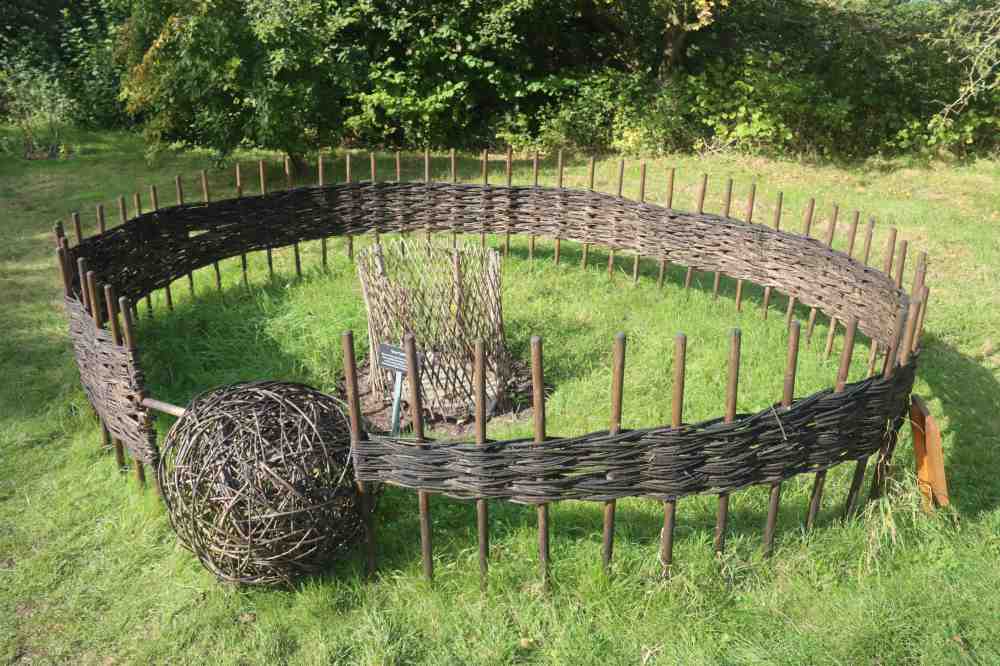
At first glance it is just an ordinary apple tree, its sturdy branches heavy with delicious fruit waiting patiently to be plucked. Not an uncommon sight, the casual observer might reasonably conclude, hardly worthy of a second glance. But why, that observer wonders, is this apparently modest tree surrounded by a low, woven wicker fence. Perhaps the tree is a bit special after all? And indeed it is: the apple tree in the grounds of Woolsthorpe Manor in the English county of Lincolnshire is perhaps the most famous tree ever in the history of mathematics and science!

Isaac Newton’s apple tree, in the grounds of Woolsthorpe Manor

In the mid-17th century Woolsthorpe Manor was the childhood home of one Isaac Newton. He was a bright lad, so bright that in 1661 he was admitted to Cambridge University’s Trinity College. Four years later an outbreak of plague temporarily drove students away from the university, and Newton returned home to Woolsthorpe.

There, with time to kill, Newton lazed beneath an apple tree in the manor’s grounds, pondering whatever it was that students pondered before the advent of Instagram and TikTok. As he did so, he saw an apple fall from the tree. It may or may not have struck him on the head – the jury’s out on that one – but the incident definitely caused him to wonder why the apple fell downwards, rather than upwards or sideways.

To our sophisticated 21st century minds the reason seems blindingly obvious, but back in the day nobody had heard of gravity. Isaac Newton was about to change all that. Having given the apple’s behaviour due consideration he formulated his law of universal gravitation. This states that two objects are attracted to each other by a force which is proportional to the product of their masses and inversely proportional to the square of the distance between them!

Make any sense to you? No? Me neither! But the essence of it really isn’t so complicated. All you genuinely need to know about gravity is that if you throw yourself off the top of a tall building in a crazy attempt to fly like Superman, you’re gonna go straight down rather than upwards or sideways. You will fall quickly, hit the ground hard and almost certainly die. Clever guy, that Isaac Newton!

But never forget, dear reader, that without Newton’s apple tree, gravity would remain a total mystery to us all. Or maybe not, as doubtless another bright spark would eventually have figured it out, with or without the assistance of random pieces of falling fruit.

Newton’s apple tree prospered until 1820, when it was blown over in a violent storm (gravity strikes again!) However the roots clung dearly on to life, and in due course the tree sprouted from them again. Over two centuries later the born-again tree looks remarkably healthy, and seems likely to survive for many more years. And such is its fame amongst scientists that it lives on in another guise too. In 1954 a cutting from it was grafted onto the stock of another variety of apple, and planted in the garden of Trinity College, Newton’s Cambridge alma mater, to remind one and all that “Isaac Newton was here!”

More remarkably still, in 2015 a pip from Newton’s born-again tree was taken by British astronaut Major Tim Peake to be germinated on the International Space Station. Having been safely brought back to Earth, the germinated seed was planted at Woolsthorpe, where today it can be seen growing close to the original tree.

Heavily protected behind the fencing (and invisible on this photograph!) is the sapling apple tree that was germinated on the International Space Station. We may have to wait some time before it bears any fruit!

As well as viewing both trees, modern visitors to Woolsthorpe like Mrs P and I can also wander through the manor house itself, which has been restored and dressed by the National Trust to look how it was in Newton’s day. The building is as unremarkable as the trees in its grounds, and it is difficult for the ordinary visitor to fully appreciate the significance of the mathematical and scientific discoveries to which house and garden once played host. I would not for one minute pretend that I understand the complexities of those discoveries, but the quirky story of Newton’s apple tree renders his story more accessible to mere laymen like me. Long may it prosper.

A hidden jewel – Lady Waterford Hall

Viewed from the outside, Lady Waterford Hall in the tiny Northumberland estate village of Ford is unremarkable, pretty enough in its own way but easily forgotten. Take a look inside, however, and everything changes. The Hall’s interior is extraordinary, the walls lined with a series of outstanding watercolour murals featuring Biblical subjects. Perhaps even more surprisingly, this magnificent work of art was once the village schoolhouse.

The murals were painted in life-sized watercolour on paper stretched on wooden frames or panels, which were then washed with distemper to tighten them before being mounted on the walls. Louisa painted them in her studio at Ford Castle. .

The schoolhouse and its 16 massive murals were a decades-long project of Louisa Anne Beresford, Marchioness of Waterford (1818-1891). Her well-connected father was appointed British Ambassador to France in 1816, and Louisa spent much of her childhood in Paris. Given her high society background it was no surprise that she married well in 1842, when she got it together with Henry Beresford, 3rd Marquess of Waterford.

The exterior of Lady Waterford Hall offers no hint of the marvels to be found within

Louisa spent most of her married life at her husband’s family home in County Waterford, southern Ireland. When he died in a riding accident in 1859, he left Ford Castle and its estate in Northumberland to his widow. She was clearly a kind and caring person, and as such she wasted no time in turning the redevelopment of Ford village, and the welfare of her tenants, into her “great experiment”.

Jesus Midst the Doctors (Luke, ch.2, v.46)

Building a schoolhouse for the village children was one of Louisa’s priorities. Work began in 1860, but did not end with bricks and mortar, nor with desks and blackboards. She was an accomplished artist who had received some tuition from the Pre-Raphaelite master Dante Gabriel Rosetti, and she decided to use her talents to paint a series of magnificent murals to help decorate the school’s interior walls.

Left: Moses and Miriam (Hebrews, ch.11, v.23). Right: Samuel and his Parents (1 Samuel, ch.2)

As well as showcasing Louisa’s artistic abilities, the murals’ religious theme enabled her to shine a light on her deeply-held Christian beliefs. Her paintings were intended to act as a teaching aid, encouraging pupils at the school to learn from the moral lessons underpinning the Biblical stories she depicted. In an attempt to make these seem more relevant to their intended audience, she used local estate workers, villagers and children as models for the people featured in her paintings.

Joseph sent to his Brethren (Genesis, ch.1, v 14)

The murals took Louisa just over 20 years to complete, and one can only imagine the pupils’ wonder as they watched their school gradually morphing into a wondrous art gallery. The building continued to operate as the village school until 1957, meaning that several generations were able to benefit from her efforts.

The Child Saviour (Luke, ch.2, v51)

Today known as Lady Waterford Hall, the former schoolhouse is now managed by a charitable trust which aims to preserve the building and the collection housed within it.

Left: The Sacrifice of Cain and Abel (Genesis, ch.4, v.7). Right: Abraham and Isaac (Genesis, ch.22, v.7 & 8)

In addition to its current role as an accredited museum that celebrates Louisa’s artistic legacy and philanthropic endeavours, the building continues to serve the local community by acting as the local village hall. Until we visited a few months ago I had never heard of Louisa Beresford nor encountered any of her work; from what we witnessed and learned during our time there, she clearly deserves to be better known.

The scariest thing about going to a museum

What’s the point of museums? Maybe they exist to remind us, as novelist L. P. Hartley explained in The Go Between, that “the past is a foreign country; they do things differently there”. Museums reveal the weird and wacky ways of our ancestors, and in so doing make us grateful we’ve not had to live like that. We don’t expect to see our own lives on display in a museum.

Street scene from Beamish 1950s Town

A couple of months ago Mrs P and I made a return visit to the Beamish Open Air Museum in County Durham, a “living, working museum that uses its collections to connect with people from all walks of life and tells the story of everyday life in the North East of England.” Since our last visit in 2019, they’ve opened a major new exhibit: The 1950s Town. And this was where Beamish Museum got spooky – I was born in the 50s, and many of the items on display seemed achingly familiar. I was home again, in a land I’d all but forgotten.

The 1950s Town comprises several houses dressed and furnished in the style prevalent at the time. Walking through them I feel as if I’m back in my dear old grandmother’s West London terrace, the living room with its tedious wallpaper, chunky brown furniture and a curvy clock ticking happily on the mantelpiece; the kitchen with its plain, glass-fronted cupboards, “Belfast sink” and shiny white enamelled cooker. I almost expect her to walk through the door and offer to make me a bread pudding, one of my childhood favourites. Yes please, nan!

There is also a reconstructed street comprising shops and similar outlets, done out in 1950s style. These include a music shop, displaying vinyl records and various electrical appliances that must have been state-of-the-art back in the day. There was no streaming back in the 50s, no Spotify, no Amazon! How did they ever manage, we wonder ironically?

The street also houses a toy shop stocked with items that were popular with mid-century kids, and here I stumble across an item that takes my breath away. It must be nearly 60 years since I last saw or thought about my Bayko Building Set, “the fascinating never failing diversion for Boys and Girls”, but here’s one, staring back at me from its friendly yellow box.

Bayko was a construction toy based on plastic and metal components, and could be used to build little houses of various designs. Other kids in my class had Lego, but I had Bayko and I loved it. For a few months it was my go-to toy, and as I stand in the shop at Beamish the memories come flooding back. Oh, happy days!

I never managed to build anything as grand as this. But I could dream!

But how odd it feels, to see part of my childhood behind glass in a museum display cabinet. I can just imagine kids born a few years ago dragging their attention away from their mobile phones for a few moments to inspect the exhibit, then saying “Mummy, did children really play with THAT sort of thing? Did they? Really?”

And that, I think, is the scariest things about going to the museum – finding your own treasured past put out there for everyone to inspect, and then dismissed as boring or quirky or quaint. A reminder, if ever we needed one, that all things pass, and that stuff which today seems so important will eventually be regarded as odd and inconsequential. Nothing is forever,